MercoPress. South Atlantic News Agency
Tag: Donald Trump
-
Wednesday, June 24th 2026 - 09:36 UTC
“Evidence” on Iranian nuclear weapons is about as reliable as Trump himself
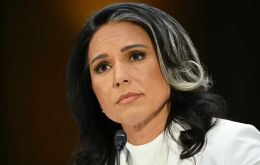
By Gwynne Dyer - Tulsi Gabbard, the recently resigned, retired or fired U.S. Director of National Intelligence told Congress just two months ago that U.S. intelligence agencies had concluded Iran was not building nuclear weapons. Indeed, she said, experts also determined Iran had not resumed its suspended 2003 nuclear weapons program.
-
Tuesday, June 23rd 2026 - 18:02 UTC
De la Espriella says Colombia will join the US-led 'Shield of the Americas' on August 7
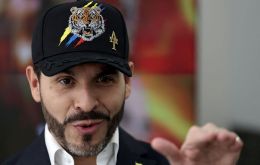
Colombia's president-elect, Abelardo de la Espriella, said on Tuesday that the country will join the “Shield of the Americas,” the US initiative against drug cartels, on August 7, when he takes office in place of Gustavo Petro. “From August 7, Colombia will be part of the Shield of the Americas. Colombia will no longer be governed by a government complacent toward narcoterrorism; we will move to combat it as it deserves,” he wrote on the social network X, in response to a congratulation from US War Secretary Pete Hegseth.
-
Friday, June 19th 2026 - 17:34 UTC
Trump opens a new rift with Meloni by claiming she 'begged' him for a G7 photo
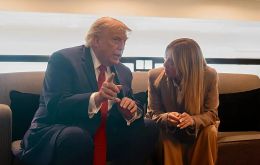
US President Donald Trump opened a new rift with Italian Prime Minister Giorgia Meloni by claiming that she “begged” him for a photo during the G7 summit and that he obliged out of “pity.” Meloni called the account fabricated, and in response Italy's foreign minister canceled a planned trip to the United States this weekend.
-
Wednesday, June 17th 2026 - 19:21 UTC
US-Iran memorandum sets Hormuz reopening, $300 billion reconstruction and sanctions relief
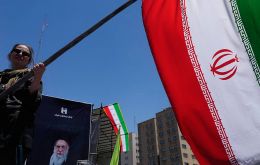
The United States government on Wednesday released the official text of the agreement reached with Iran to end the war, a 14-point document called the “Islamabad Memorandum of Understanding” that provides for the reopening of the Strait of Hormuz, a reconstruction plan of at least $300 billion and the lifting of sanctions. The text, read by a senior official of Donald Trump's administration, will be signed on Friday in Switzerland and will open a 60-day period to negotiate the definitive agreement.
-
Wednesday, June 17th 2026 - 19:05 UTC
Trump calls Brazil 'politically difficult'; Lula says he should learn about 'civilized elections'
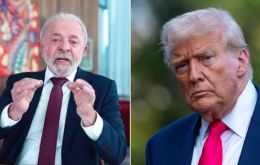
Brazilian President Luiz Inácio Lula da Silva on Wednesday asked his US counterpart, Donald Trump, not to interfere in Brazil's elections, a matter he stressed is exclusive to Brazil, just as his country does not seek to meddle in the electoral processes of the United States. The demand was a response to remarks Trump had made about Brazil hours earlier.
-
Monday, June 15th 2026 - 15:38 UTC
Macron skips the planned protocol and does not greet Trump in person at the G7 in France
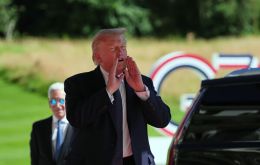
French President Emmanuel Macron skipped the planned program on Monday and did not personally receive his US counterpart, Donald Trump, on his arrival at the G7 summit in Évian, in the French Alps. The provisional agenda for the meeting had Trump as the only leader to be personally received by the host.
-
Monday, June 15th 2026 - 08:21 UTC
US and Iran announce a deal to end their war and reopen the Strait of Hormuz
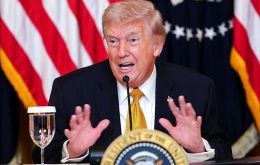
The United States and Iran reached a preliminary peace deal on Sunday to end nearly four months of war in the Middle East and reopen the Strait of Hormuz, Pakistan, the mediating country, announced. The agreement, confirmed by both US President Donald Trump and Tehran, will be officially signed on Friday, June 19, in Switzerland.
-
Sunday, June 14th 2026 - 12:35 UTC
'Honduras Gate' audios linking Milei to a disinformation network stir controversy, and denials
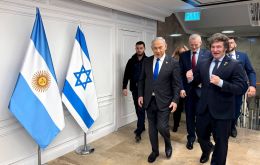
A set of leaked audios, released in late April by left-leaning Spanish media outlets and dubbed “Honduras Gate,” has stirred political controversy in Latin America by alleging a regional disinformation network and naming Argentine President Javier Milei as one of its financiers. The recordings' authenticity is in dispute: the main figure named called them false, and the others mentioned denied or did not respond to the accusations.
-
Saturday, June 13th 2026 - 19:02 UTC
Trump says a US strike killed Niño Guerrero, leader of Venezuela's Tren de Aragua gang

US President Donald Trump announced on Friday night that his country's Southern Command had killed, in a “swift and lethal” strike, Héctor Rusthenford Guerrero Flores, alias Niño Guerrero, whom he described as the leader of Tren de Aragua, “one of the most bloodthirsty terrorist organizations on the planet.” Venezuela's government confirmed hours later the death of the criminal boss, which occurred in Bolívar state, in the country's southeast.
-
Thursday, June 11th 2026 - 08:12 UTC
US and Iran trade fire for a second night as Tehran says it has closed Hormuz
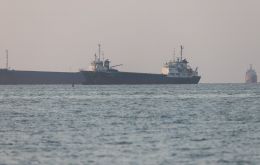
The United States and Iran traded fire for a second consecutive night, in what amounts to a more dangerous phase of the war in the Persian Gulf and raises the prospect of a return to open hostilities. As US forces again struck Iranian targets, the Revolutionary Guard said it had hit bases with a US presence in the region, and Iran's General Staff announced the “absolute” closure of the Strait of Hormuz. President Donald Trump threatened new strikes on Thursday if Tehran does not accept his conditions for peace.