MercoPress. South Atlantic News Agency
Tag: Donald Trump
-
Sunday, June 14th 2026 - 12:35 UTC
'Honduras Gate' audios linking Milei to a disinformation network stir controversy, and denials
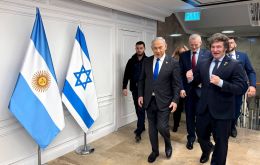
A set of leaked audios, released in late April by left-leaning Spanish media outlets and dubbed “Honduras Gate,” has stirred political controversy in Latin America by alleging a regional disinformation network and naming Argentine President Javier Milei as one of its financiers. The recordings' authenticity is in dispute: the main figure named called them false, and the others mentioned denied or did not respond to the accusations.
-
Saturday, June 13th 2026 - 19:02 UTC
Trump says a US strike killed Niño Guerrero, leader of Venezuela's Tren de Aragua gang

US President Donald Trump announced on Friday night that his country's Southern Command had killed, in a “swift and lethal” strike, Héctor Rusthenford Guerrero Flores, alias Niño Guerrero, whom he described as the leader of Tren de Aragua, “one of the most bloodthirsty terrorist organizations on the planet.” Venezuela's government confirmed hours later the death of the criminal boss, which occurred in Bolívar state, in the country's southeast.
-
Thursday, June 11th 2026 - 08:12 UTC
US and Iran trade fire for a second night as Tehran says it has closed Hormuz
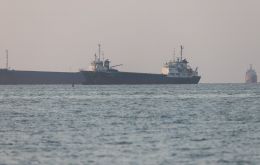
The United States and Iran traded fire for a second consecutive night, in what amounts to a more dangerous phase of the war in the Persian Gulf and raises the prospect of a return to open hostilities. As US forces again struck Iranian targets, the Revolutionary Guard said it had hit bases with a US presence in the region, and Iran's General Staff announced the “absolute” closure of the Strait of Hormuz. President Donald Trump threatened new strikes on Thursday if Tehran does not accept his conditions for peace.
-
Wednesday, June 10th 2026 - 13:52 UTC
US launches strikes against Iran in retaliation for the downing of an Apache helicopter
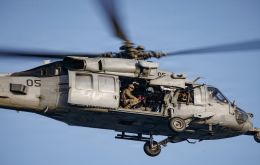
The United States launched a series of strikes against Iran on Tuesday in retaliation for the downing of a US Apache helicopter over the Strait of Hormuz, Central Command (Centcom) said. The action marks a sharp escalation that deepens doubts over the ceasefire in place since April 8 and over the peace negotiations that President Donald Trump says are within reach.
-
Monday, June 8th 2026 - 23:01 UTC
Trump interested in buying Chagos Islands with the strategic Diego Garcia air base
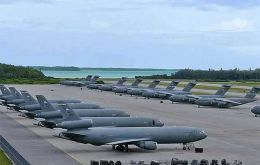
The US president Donald Trump is considering a plan to buy the Chagos Islands from Mauritius amid stalled plans from the UK to cede sovereignty of the territory, the Telegraph reported over the weekend.
-
Sunday, June 7th 2026 - 21:24 UTC
Trump says he will urge Netanyahu not to retaliate after Iran's missile attack on Israel
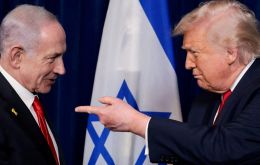
US President Donald Trump said he would call Israeli Prime Minister Benjamin Netanyahu to ask him not to respond to the missiles Iran fired at Israel on Sunday, in an effort to prevent a new escalation and salvage a deal with Tehran that he considers “very close.” It was Iran's first direct attack since the ceasefire reached on April 8.
-
Sunday, June 7th 2026 - 21:17 UTC
Trump's 'Shield of the Americas' reshapes Central America's war on drug cartels
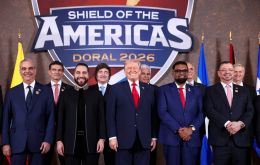
Donald Trump's return to the White House and the launch of the “Shield of the Americas” —a militarized anti-narcotics coalition that excludes Mexico and that Washington unveiled in Miami in March— have reshaped the security landscape in Central America. The pressure, intensified after the capture of Venezuelan President Nicolás Maduro in January, has pushed trafficking routes into international waters and forced uneven responses across the isthmus, according to a report by EL PAÍS.
-
Thursday, June 4th 2026 - 10:40 UTC
US proposes forced-labor tariffs on 60 economies, with Brazil and China facing 12.5%
The US government proposed tariffs of up to 12.5% on 60 economies —59 countries and the 27-nation European Union— for failing to ban or effectively enforce the prohibition on imports of goods made with forced labor. The measure, announced Tuesday night by Trade Representative Jamieson Greer, relies on Section 301 of the 1974 Trade Act and is the White House's most ambitious step yet to rebuild its tariff policy.
-
Tuesday, June 2nd 2026 - 15:48 UTC
Israel and Hezbollah keep firing despite Trump's announcement of an end to hostilities
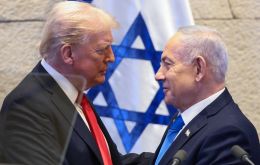
A day after US President Donald Trump announced an agreement to end the military clashes in Lebanon, the fighting continued on Tuesday with little change from previous days. Israel is limiting itself to not striking Beirut, but its bombings killed 12 people in various parts of the country. Hezbollah, for its part, kept firing, though it stopped aiming at the Israeli towns farthest from the border that it had recently been targeting.
-
Saturday, May 30th 2026 - 07:31 UTC
United States and Iran acknowledge preliminary agreement but disagree on its essential terms
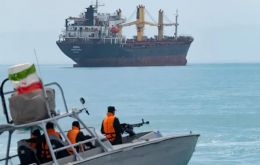
The administrations of US President Donald Trump and the Iranian government confirmed on Friday the existence of a preliminary agreement aimed at extending the current ceasefire by sixty days and opening formal talks on Iran's nuclear program, in what amounts to the most significant diplomatic advance since the start of the war three months ago. However, the versions disseminated by Washington and Tehran on the content of the understanding differ substantially on the central points: the reopening of the Strait of Hormuz, the fate of the highly enriched uranium under Iranian control, and the possible payment of frozen funds to the Islamic Republic.