MercoPress. South Atlantic News Agency
Tag: Nicolas Maduro
-
Thursday, August 2nd 2018 - 07:35 UTC
Santos convinced that Maduro's days in Venezuela are numbered, “in the near future”
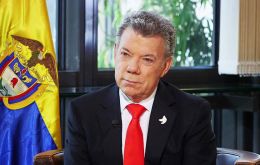
Nicolas Maduro's days as president of crisis-ravaged Venezuela are numbered, his outgoing Colombian counterpart Juan Manuel Santos told the French government news agency.“I can see it happening in the near future,” said Santos, pointing to the International Monetary Fund's latest projection that Venezuela's inflation will hit one million percent this year.
-
Tuesday, July 31st 2018 - 07:00 UTC
Venezuela scarce gasoline will be sold only to the politically loyal
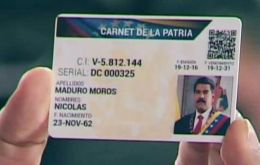
Venezuela is taking steps to direct dwindling motor fuel to politically loyal vehicle owners. President Nicolas Maduro ordered a national census on 3-5 August to determine how many vehicle owners possess a homeland identity card, a document created in first quarter 2017 to strengthen the government's social and political surveillance capabilities.
-
Saturday, July 14th 2018 - 19:53 UTC
Corruption unleashed: Venezuelan government denounced for enriching itself with aid funds
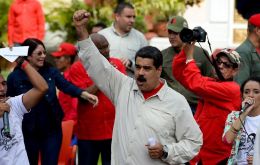
According to a financial intelligence panel that met Friday in Cartagena, Colombia; in Venezuela, Maduro's government “uses food and humanitarian aid as a weapon for social control.”
-
Friday, July 6th 2018 - 08:41 UTC
Trump planned invading Venezuela
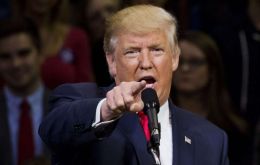
Associated Press (AP) revealed that last August, during a meeting in the Oval Office, US President Donald Trump asked a question that startled his advisors: given that the situation in Venezuela threatens regional security, why does the United States not invades the South American country?
-
Saturday, June 30th 2018 - 14:54 UTC
Pence urges Latin America to isolate Venezuela which is falling to “dictatorship, deprivation and despair”
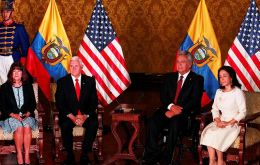
U.S. Vice President Mike Pence urged Latin American countries to help isolate crisis-stricken Venezuela, an ideological adversary of Washington that is struggling under a severe and prolonged economic crisis.
-
Saturday, June 23rd 2018 - 09:05 UTC
Hundreds of arbitrary killings by Venezuela security forces, claims UN
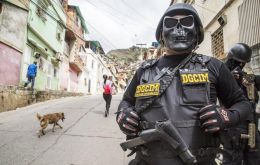
Venezuelan security forces have carried out hundreds of arbitrary killings under the guise of fighting crime, the UN's human rights body says. In the report it cites “shocking”accounts of young men being killed during operations, often in poor districts, over the past three years.
-
Thursday, June 14th 2018 - 08:23 UTC
Miami media says US$ 800 million in assets of Diosdado Cabello frozen in the US, but he flatly denies the version
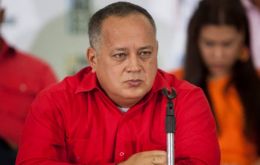
The U.S. government has frozen about US$ 800 million in assets from senior Venezuelan leader Diosdado Cabello Miami journalist Oscar Haza reported Tuesday during his morning radio show on Miami’s Spanish-language Zeta 92.3.
-
Thursday, June 7th 2018 - 23:10 UTC
The Uruguayan Foreign Ministry describes the number of immigrants arriving in the country as “never seen before”
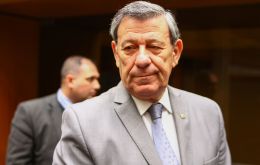
Immigration to Uruguay, Argentina and Chile has exploded exponentially in recent years. It is receiving an “unprecedented” daily requests for refuge in the southern country, according to the Director of Human Rights and Humanitarian Law of the Uruguayan Ministry of Foreign Affairs, Dianela Pi, who explained to MercoPress that “There are acts of discrimination and xenophobia that are emerging in Uruguay as never before” as a result of the migratory phenomenon. This wave comes mostly from citizens of Venezuelan origin.
-
Wednesday, June 6th 2018 - 08:57 UTC
Venezuela closer to being suspended from OAS
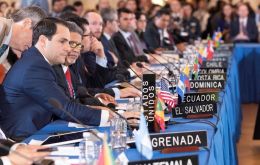
The Organization of American States (OAS) on Tuesday passed a resolution to call an extraordinary assembly to vote on suspending Venezuela from the 34-member group after President Nicolas Maduro’s widely condemned re-election last month.
-
Wednesday, June 6th 2018 - 08:52 UTC
Venezuela's oil delivery contracts could suffer 50% haircut
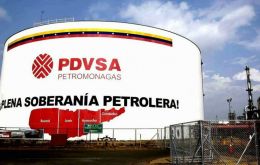
Venezuela’s state-owned PDVSA is considering a declaration of force majeure on some of its oil supply contracts in June unless its clients agree to accept volume reductions of up to 50%, Argus reported on Tuesday, citing PDVSA officials.