MercoPress. South Atlantic News Agency
Uruguay
-
Wednesday, July 29th 2026 - 22:54 UTC
US seeks Uruguay as destination for deported migrants; Montevideo stops short of confirming deal

The United States government has been negotiating with Uruguay for months over the possibility that the South American country receive deported migrants, The New York Times reported on Wednesday. Uruguay's foreign ministry confirmed that talks are underway but said nothing has been settled and that the discussions are not limited to Cuban nationals.
-
Monday, July 27th 2026 - 22:00 UTC
Uruguay prepares protocols for the risk of El Niño flooding in the spring
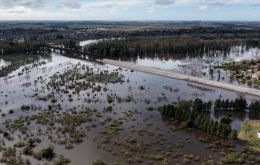
Uruguay's government is drawing up a set of contingency protocols for the flooding risk associated with the El Niño phenomenon, which climate projections indicate will have its greatest impact on the region during the southern hemisphere spring. President Yamandú Orsi announced at the Congress of Departmental Governors that the measures will be presented in August, ahead of what may occur from September and October.
-
Saturday, July 25th 2026 - 09:10 UTC
Uruguay: nearly half of those polled say the government is falling short of expectations

For 49% of Uruguayans surveyed, Yamandú Orsi's government is performing below the expectations they held at the start of the administration, according to the latest poll by the consultancy Factum, covering the third two-month period of 2026. The study, with fieldwork conducted between June 2 and 20 and released by VTV Noticias, shows a sustained deterioration in perceptions of the government since the beginning of the term.
-
Friday, July 24th 2026 - 07:05 UTC
Uruguay faces a 12.5% US tariff as its foreign ministry weighs the implications

Uruguay was placed in the highest band of the new US tariff scheme, with an additional 12.5% levy on its exports to the United States, for not having an explicit ban on the import of goods produced with forced labor. The measure, which took effect on Friday, raises the rate that had applied to the country since February, of 10%.
-
Tuesday, July 21st 2026 - 21:08 UTC
Conmebol presses FIFA for a 64-team 2030 World Cup and more matches in South America

The South American Football Confederation (Conmebol) has stepped up its pressure on FIFA for the 2030 World Cup to be played with 64 teams, which would allow Uruguay, Argentina, and Paraguay to host more matches than currently planned. A day after the 2026 World Cup final, won by Spain, the body's president, Alejandro Domínguez, treated the format as all but settled in a message on the social network X: “In 2030 the World Cup is coming to Uruguay, Argentina, and Paraguay,” he wrote, proposing to mark the centenary “with a 64-team competition.”
-
Tuesday, July 14th 2026 - 07:00 UTC
Uruguay postpones second aid flight to Venezuela over changed entry conditions
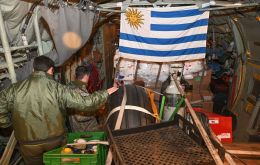
Uruguay has postponed the second shipment of humanitarian aid to Venezuela, scheduled for Tuesday, after a change in the conditions set by Venezuelan authorities for the entry of cargo, Defense Minister Sandra Lazo said. The Air Force's KC-130H Hercules remains loaded with some 15 tons of supplies intended for victims of the June 24 twin earthquakes.
-
Monday, July 13th 2026 - 08:00 UTC
Argentine buyers slow their push into Uruguay's property market
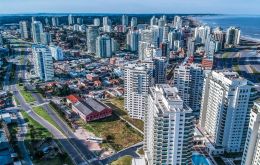
The flow of Argentine investors into Uruguay's property market, which intensified after the pandemic and during the years of greatest economic uncertainty in Argentina, is showing signs of easing. Sector operators attribute the shift to Argentina's economic recovery and to the narrowing price gap between the two countries.
-
Friday, July 10th 2026 - 18:22 UTC
Uruguay reels from rare quintuple homicide as five relatives shot dead in Montevideo

Five members of the same family, including a 14-year-old girl, were killed on Friday in a shooting in the El Monarca neighborhood, on the northeastern outskirts of Montevideo, in an attack that authorities link to violence between criminal groups and that has no recent precedent in Uruguay.
-
Thursday, July 9th 2026 - 16:52 UTC
YPF plans to drill off Uruguay in 2027, says potential could top Vaca Muerta

Argentina's state oil company YPF plans to begin exploratory drilling of an offshore block off the coast of Uruguay between late 2027 and early 2028, its chairman and chief executive, Horacio Marín, confirmed, saying the area holds potential that, if confirmed, could surpass the Vaca Muerta unconventional field.
-
Thursday, July 9th 2026 - 16:23 UTC
Falklands planning business delegation to Uruguay to buy construction materials, ‘costs the crux of the issue”

Talks are continuing over a potential Falkland Islands business delegation to Uruguay later this year. Organized by Falkland Islands Development Corporation and the Chamber of Commerce, the visit would connect Falklands businesses with Uruguayan suppliers. The issue was discussed with Sam Cockwell, Strategic Projects Manager at the Falklands Development Corporation, FIDC