MercoPress. South Atlantic News Agency
Argentina
-
Friday, October 30th 2020 - 13:16 UTC
Dollar strapped Argentine government moves to recover “grabbed” land and evict squatters
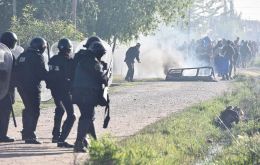
Argentine anti-riot police clashed with a group of protesters on Thursday while evicting them from makeshift homes on a contested property south of the capital, Buenos Aires. Six police officers were injured and some forty people were arrested, according to authorities.
-
Friday, October 30th 2020 - 13:00 UTC
Argentina and Mexico “vote” for Biden and delay nominations at IDB until after the US election

Mexico and Argentina have delayed a key meeting of the Inter-American Development Bank until after the Nov. 3 U.S. election, delivering an early setback to plans by the bank’s new U.S. chief to install vice presidents from smaller countries.
-
Thursday, October 29th 2020 - 14:27 UTC
Alberto Fernández confesses that Néstor Kirchner marked a before and after for his life and is his permanent inspiration

“Néstor, in history and in my heart,” said Argentine President Alberto Fernández emotionally, along with a video recalling his relationship with his former political mentor, former President Néstor Kirchner (2003-2007) on the tenth anniversary of the former president's surprising death.
-
Thursday, October 29th 2020 - 09:42 UTC
Argentina reported on Wednesday over 30,000 deaths from Covid-19

Argentina reported 30,071 deaths from Covid-19 on Wednesday, the Health Ministry confirmed in a statement, while more than 1,130.533 cases have been diagnosed positive since the virus first arrived in the country back in March.
-
Wednesday, October 28th 2020 - 23:53 UTC
“Why all the fuss about Malvinas and not a word on Formosa which Argentina should return to Paraguay?”

“Why all the fuss about the Malvinas, all the indoctrination which starts at school claiming the Islands, and not a word about the province of Formosa which should be returned to Paraguay and we took as spoils of the Triple War in 1870?”, asks Argentine writer Federico Jeanmaire, a well-known author of several best sellers.
-
Wednesday, October 28th 2020 - 09:30 UTC
Dollar strapped Argentina does not discard further financial support from IMF

The Argentine representative before the International Monetary Fund, IMF, Sergio Chodos, admitted that it could be necessary for further financing from the IMF, with which Argentina is in the process of renegotiating conditions for the return of the US$ 44 billion loaned to the previous government of ex-president Mauricio Macri.
-
Wednesday, October 28th 2020 - 09:16 UTC
Argentina pro-life lobbies ready for a major battle when the promised abortion bill is sent to Congress

The Catholic Church, some lawmakers, and the pro-life lobbies are ready for a major battle when the current Argentine government is expected to send a bill to legalize abortion. This follows statements from president Alberto Fernandez pledging to the green scarves movement, who strongly support the initiative that the long-delayed bill will be taken up for consideration soon.
-
Wednesday, October 28th 2020 - 08:40 UTC
Argentina and Pakistan sign MoU to promote trade and technological cooperation
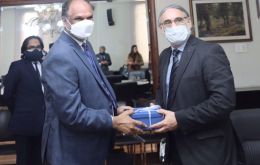
Pakistan and Argentina signed a Memorandum of Understanding on Cooperation in Sanitary and Phytosanitary issues, during a ceremony conducted in Buenos Aires with the purpose of promoting and sponsoring trade in animals, plants, and by-products, as well as technical cooperation.
-
Tuesday, October 27th 2020 - 09:30 UTC
Argentina calls for “solidarity multilateralism” at UN meeting
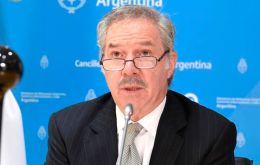
Argentine Foreign Affairs Minister Felipe Sola on Monday called on Latin American and Caribbean countries to embrace “solidarity multilateralism” to overcome the impact of the COVID-19 pandemic.
-
Tuesday, October 27th 2020 - 08:25 UTC
Falklands and privateer/pirate captain David Jewett 1820 adventure
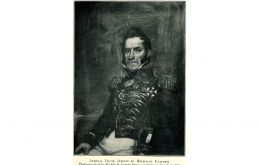
In response to Argentina’s planned commemorations of the 200th anniversary of the visit to the Falklands by the privateer captain David Jewett in 1820 and his purported “taking of possession” of the Islands for Argentina, historian Graham Pascoe has released the paper ‘David Jewett’s visit to the Falklands, 1820-21: no valid “possession-taking.” Dr. Pascoe notes in his abstract that before David Jewett arrived he had captured a neutral Portuguese ship, and he captured another neutral US ship in the Islands.

