MercoPress. South Atlantic News Agency
Brazil
-
Friday, March 11th 2016 - 20:47 UTC
Odebrecht's involvement in Petrobras corruption scandal costing the conglomerate dearly

The Odebrecht group of companies, whose top officials have been sentenced to prison for involvement in the corruption scheme of Brazil's largest company Petrobras, has come under strong pressure from its creditors to use the crown jewel, the petrochemical company Braskem as collateral to avoid filing for bankruptcy.
-
Friday, March 11th 2016 - 20:06 UTC
Brazil's February inflation down, but central bank calls for structural reforms and budget control
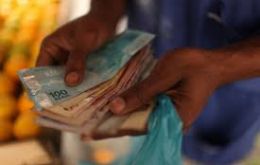
Brazil’s consumer-price index slowed in February, providing relief for the country’s central bank amid its efforts to curb inflationary pressures. The consumer-price index, IPCA, rose 0.90% in February, compared with an increase of 1.27% in January, the Brazilian Institute of Geography and Statistics, or IBGE, said.
-
Friday, March 11th 2016 - 20:03 UTC
Rousseff rejects calls for her resignation and confirms Finance minister Barbosa
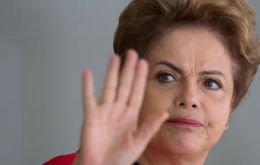
Brazil's President Dilma Rousseff rejected calls for her resignation on Friday midst a political storm deepened by a massive corruption scandal and blamed her opponents for causing a crisis that has damaged the Brazilian economy. She also confirmed her Finance minister Nelson Barbosa.
-
Friday, March 11th 2016 - 06:16 UTC
Sao Paulo prosecutors insist on an arrest warrant for ex president Lula da Silva
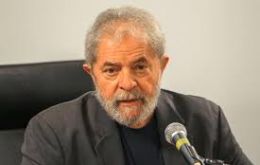
Sao Paulo state prosecutors in Brazil are seeking the arrest of former President Lula da Silva on charges of money laundering and identity fraud for concealing ownership of a beachfront apartment, his foundation said on Thursday. The effort to arrest the former president raised the stakes dramatically in the current crisis and was likely to further polarize protests on Sunday calling for the impeachment of president Dilma Rousseff.
-
Thursday, March 10th 2016 - 06:47 UTC
Prosecutors ask for Lula da Silva to be placed under formal investigation
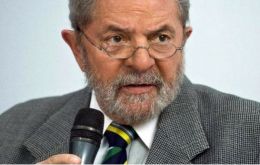
Prosecutors in Brazil asked Wednesday that powerful ex-president Luiz Inacio Lula da Silva, who was questioned this week in a huge corruption probe, be placed under formal investigation. The press service of the Sao Paulo state prosecutors' office said precise details of the request were not yet known and that a news conference would be held Thursday.
-
Wednesday, March 9th 2016 - 06:28 UTC
Falklands, “an indescribable mix of emotions and experiences”

A group of Brazilian academics, students and journalists recently visited the Falkland Islands, invited by the local elected government. One of the visitors, Guilheme Lacerda wrote a small piece in the social network about what the describes as an incredible experience.
-
Wednesday, March 9th 2016 - 05:14 UTC
Construction tycoon sentenced to 19 years in prison for Petrobras corruption scandal
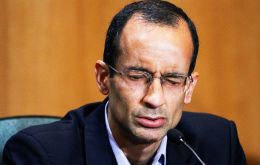
Brazilian construction tycoon Marcelo Odebrecht, 47, was sentenced Tuesday to 19 years in prison for corruption and money laundering in the giant Petrobras embezzlement scandal shaking Latin America's biggest country Petrobras in what prosecution has identified as Operation Car Wash.
-
Wednesday, March 9th 2016 - 05:08 UTC
Sambo fish to combat mosquitoes in the upcoming Olympic Games in Rio
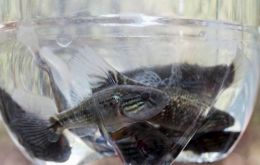
Governments have been using various tools to fight the spread of the Zika virus in Latin America: fumigation, spraying of insecticides and even a plan to distribute mosquito repellents to athletes during the upcoming Summer Olympic Games in Rio de Janeiro, Brazil.
-
Tuesday, March 8th 2016 - 14:29 UTC
Senior judges concerned about Lula's arrest but admit “evidence is very serious”
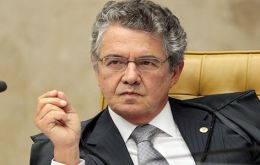
Senior judges in Brazil voiced concern over the detention of former President Lula da Silva, even as they threw their support behind the sweeping corruption investigation that threatens to topple his embattled successor. Lula’s three hours of questioning in police custody on Friday was the highest profile development in the two-year probe focused on state oil firm Petrobras.
-
Tuesday, March 8th 2016 - 08:03 UTC
Brazil expected to contract 3.5% this year, says Central Bank survey
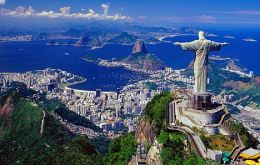
Analysts expect Brazil's economy to contract by 3.5% this year, the Central Bank said Monday. Private sector economists, who expected the GDP to contract by 3.45% in the previous weekly survey, also raised their inflation projection from 7.57% to 7.59%.