MercoPress. South Atlantic News Agency
Economy
-
Wednesday, November 7th 2012 - 22:42 UTC
India becomes main world beef exporter in 2012, and probably 2013
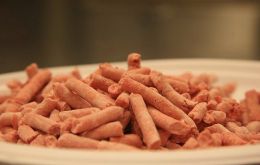
While the mantle of the world largest beef exporting nation has traditionally been a three-way race between Australia, Brazil and the US, 2012 has seen India race ahead of the pack, with expectations for Indian beef exports to grow again in 2013.
-
Wednesday, November 7th 2012 - 22:29 UTC
Falklands’ experience helps revolutionize oil and gas industry technology
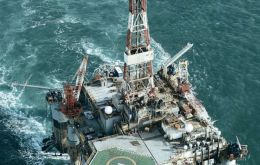
Working on experience gained from the relocation of thousands of tons of equipment from Aberdeen to the Falkland Islands for the round of exploratory drilling started in 2010 has helped a Scottish company launch a software program set to revolutionize the oil and gas industry.
-
Wednesday, November 7th 2012 - 22:22 UTC
“Crystal Serenity” licensed to operate a casino while in Chilean waters

“Crystal Serenity” became the first cruise vessel licensed to operate and exploit casinos in Chilean waters, reported this week the country’s Casino Games Commission, SCJ. However the ruling also points out that the company authorized to operate the on board casinos must suspend gambling during docking and departure and while sailing inside the three miles.
-
Wednesday, November 7th 2012 - 04:34 UTC
Ex Mexican finance minister named IMF Western Hemisphere director

Mexican economist Alejandro Werner was named on Tuesday to the position of IMF Director, Western Hemisphere Department. His appointment will become effective early in January 2013. Mr. Werner succeeds Mr. Nicolas Eyzáguirre, who resigned effective July 26, 2012.
-
Wednesday, November 7th 2012 - 04:27 UTC
Soy crop prospects fin South America down: Argentina excessive water, in Brazil lack of rain
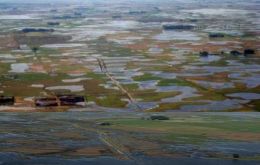
South America’s crop prospects deteriorated because of excessive rainfall in Argentina and dry conditions in central Brazil, according to Oil World. Argentina’s estimated 55/56 million tons soybean crop could drop anywhere from 3 6o 6 million tons because of delays in sowing caused by torrential rains and flooding.
-
Tuesday, November 6th 2012 - 20:41 UTC
Real estate activity drops dramatically in Argentina because of ‘dollar-clamp’

Argentina’s real estate sector is already feeling the negative consequences of the ‘dollar-clamp’ implemented by the government of President Cristina Fernandez a year ago, and in 2013 the effect could have an even greater impact for the construction industry.
-
Tuesday, November 6th 2012 - 20:04 UTC
Argentina reiterates it will use all legal means to defend position against US court ruling

Argentina will use all legal means to defend its position against a US court ruling that would force the country to repay creditors who sued to collect on defaulted Argentine bonds, Economy Minister Hernan Lorenzino reiterated in Mexico.
-
Tuesday, November 6th 2012 - 18:22 UTC
Uruguay confirms in Argentina incentives for arriving tourists this summer season

The Uruguayan government confirmed on Monday a raft of measures to attract Argentine tourists and compensate the restrictions in Argentina to purchase foreign currency (dollar-clamp) and the 15% retention fund for credit or debit cards operations outside the country.
-
Tuesday, November 6th 2012 - 06:59 UTC
Mujica after in-depth discussion on ‘a real integration of Mercosur” with Chavez
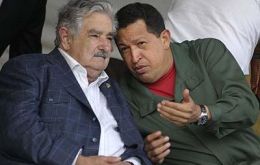
Uruguayan president Jose Mujica has plans to meet two, probably three times before the end of the year with his peer from Venezuela, Hugo Chavez to address “a real integration” of Mercosur, not limited to trade, but at the same time admitting that Venezuela is rapidly becoming one of the main markets for Uruguayan exports.
-
Tuesday, November 6th 2012 - 06:56 UTC
G20 adopts soft approach on deficits fearing risks of worsening the slowdown
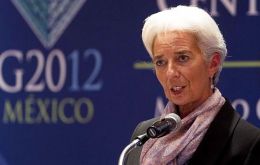
The world's leading economies gave themselves a bit more space on Monday to meet targets for cutting budget deficits rather than risk worsening a slowdown in many countries, chief among them the United States.