MercoPress. South Atlantic News Agency
Economy
-
Saturday, August 4th 2012 - 22:29 UTC
Chile expects a 30% increase in cruise vessel calls this 2012/13 season
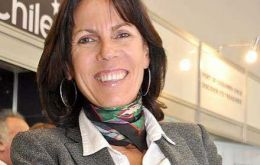
Chile is expecting an increase of 30% in the number of cruise vessels calls this coming season with Puerto Montt and Punta Arenas receiving the most, said the country’s Under Secretary for Tourism Jacqueline Plass.
-
Saturday, August 4th 2012 - 19:24 UTC
Falkland Islands’ assessing options for the expansion of port facilities
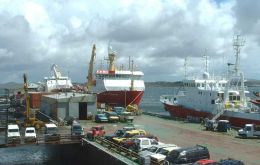
Falkland Islands port facilities are under assessment given the prospects of oil industry activities in the near future and two options are being considered by the local government: a new port project, and an interim development of the current facilities at FIPASS.
-
Saturday, August 4th 2012 - 05:00 UTC
YPF and PDVSA advance in the energy strategic alliance; next meeting in Caracas
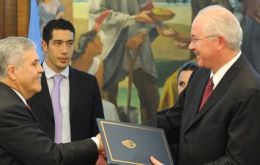
Argentina and Venezuela gave their first step in the creation of an energy strategic alliance between oil companies YPF and PDVSA, after the agreement signed by President Cristina Fernández and her Venezuelan counterpart, Hugo Chávez, in Brasilia last Tuesday.
-
Saturday, August 4th 2012 - 03:14 UTC
Venezuela accession to Mercosur “by the back door”, according to The Economist

Under the heading of “In by the back door” referred to the expansion of Mercosur, The Economist says “bringing Venezuela certainly was smart, in the sense of cunning rather than wise”, but it was done ignoring the block’s rules which call for unanimity in admitting new members.
-
Friday, August 3rd 2012 - 22:11 UTC
Uruguay’s July inflation record low on government successful electricity saving campaign
Uruguay’s annual consumer-price inflation dropped in July to 0.27% the lowest in 58 years, accumulating 7.48% in the last twelve months (down from 8% in June), and 4.41% in the first seven months of 2012.
-
Friday, August 3rd 2012 - 08:36 UTC
CFK defends Argentina’s economic model and capacity to honour debts

While addressing the nation from the Buenos Aires stock exchange floor, Argentine President Cristina Fernández strongly defended the policy of drastically cutting debts, which guarantees “greater independence”, and of stimulating the economy because only with resources can debts be paid, “the dead don’t pay debts”.
-
Friday, August 3rd 2012 - 08:25 UTC
Falkland Islands debates and prepares for the development of the oil industry
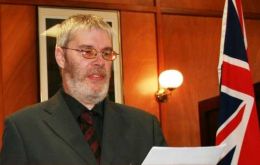
A public debate on the future of the Falkland Islands in the face of income from oil exploitation is required rapidly, according to a Member of the elected Legislative Assembly.
-
Friday, August 3rd 2012 - 08:06 UTC
IMF calls for “policy game changer” in the Euro zone to arrest spread of debt crisis
The IMF called on Thursday for a “policy game changer” in the Euro zone to arrest the spread of the debt crisis it now says is clearly engulfing the entire currency bloc and its smaller neighbours.
-
Friday, August 3rd 2012 - 08:01 UTC
ECB disappoints but keeps markets’ expectations of bold actions alive
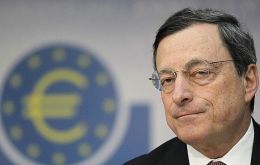
Asian shares and the Euro eased on Friday as the European Central Bank, as happened with the Federal Reserve on Wednesday, disappointed markets looking for an imminent move to deal with the Euro zone debt crisis.
-
Friday, August 3rd 2012 - 07:57 UTC
Bank of England waiting for the latest stimuli measures to filer into the economy

The Bank of England has kept interest rates on hold for August, and also held off from any more stimulus measures, as had been expected. Its rate-setting Monetary Policy Committee (MPC) has voted to maintain rates at the historic low of 0.5%.

