MercoPress. South Atlantic News Agency
Economy
-
Tuesday, September 11th 2012 - 05:02 UTC
Falkland Oil & Gas expected to announce results of drilling in next few days

Falkland Oil and Gas has provided an update on drilling operations at its Loligo prospect, following market speculation which has seen the value of the companies shares fall by almost 30% at one point on Monday.
-
Tuesday, September 11th 2012 - 04:49 UTC
Brazil total harvest estimate, 164.5 million tons; corn up 29%; soy down 12%

Brazil’s harvest of cereals, legumes and oilseeds reached an estimated 164.5 million metric tons in 2012, which is 2.8% above the figure of 2011 (160.1 million metric tons) and 0.7% above the July estimate (163.3 million metric tons).
-
Tuesday, September 11th 2012 - 03:57 UTC
Brazilian population increases “one Uruguay” in two years, and totals 194 million

The Brazilian population amounts to 193,946,886 people, according to estimates from the Brazilian Institute of Geography and Statistics (IBGE), based on the 2010 Census, as released in Brasilia last week.
-
Monday, September 10th 2012 - 05:29 UTC
In spite of God and Cristina, several Argentine governors teaming up as an option
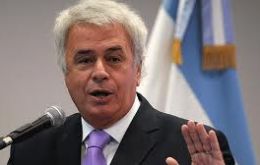
Cordoba’s governor picked up the glove and replied to Argentine President Cristina Fernandez statements on God and fear arguing that God cannot be feared; I learned not to fear God or any other kind of governing body, however powerful they are”.
-
Monday, September 10th 2012 - 05:26 UTC
Argentine budget numbers ever so red in the seven months of 2012

The Argentine financial deficit soared to 13.5 billion Pesos in the first seven months of the year and could have reached 25.9bn Pesos had it not been for extraordinary resources from Social Security funds and the Central bank, according to the numbers published in the last release from the Central Bank.
-
Monday, September 10th 2012 - 01:35 UTC
Soros calls on Germany “to lead or leave the Euro”; suggests Euro zone target of 5% growth

International financier George Soros has called for Germany to “lead or leave the euro” days before a crucial ruling on the Euro zone's bailout fund by Germany's constitutional court. Mr Soros argued that the euro zone should target 5% economic growth.
-
Monday, September 10th 2012 - 00:47 UTC
Falklands’ oil offers an exit strategy from the dispute
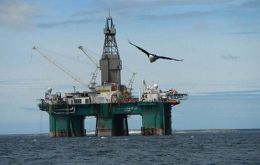
By Graham Bound - The discovery of a large field of natural gas beneath the seabed south of the Falklands received appropriate coverage in the UK press. Rockhopper Exploration’s agreement with Premier Oil, which is likely to involve an investment by the latter of up to £750m, has also been noticed.
-
Saturday, September 8th 2012 - 06:58 UTC
Banking group Lloyds selling Uruguay’s operations to Swiss Banque Heritage

Banking group Lloyds announced on Friday its intention to sell its operations in Uruguay to Banque Heritage (Uruguay) SA in an effort to scale back its international presence.
-
Saturday, September 8th 2012 - 06:49 UTC
Net capital outflows from Spain equalled more than 50% of country’s output
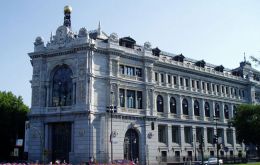
Bank of Spain figures show that net capital outflows—including bank withdrawals and sell-offs of Spanish stocks and bonds—equaled more than 50% of the country’s economic output over the year ended July 31.
-
Saturday, September 8th 2012 - 06:41 UTC
Indian national named World Bank chief economist senior Vice-president

World Bank Group President Jim Yong Kim announced the appointment of Indian national Kaushik Basu as the institution’s new Chief Economist and Senior Vice President.