MercoPress. South Atlantic News Agency
Economy
-
Saturday, July 28th 2012 - 11:01 UTC
US Justice and securities regulators probing credit-rating agency S&P
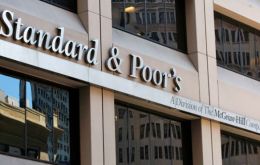
The US Department of Justice and securities regulators are probing potential violations by credit-rating agency Standard & Poor's in connection with its ratings of structured products, the company said this week.
-
Saturday, July 28th 2012 - 03:03 UTC
Mexican regulators impose highest fine ever on HSBC for money-laundering
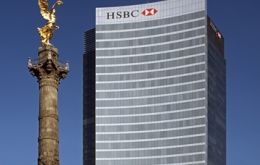
Mexican regulators have imposed a fine of 27.5 million dollars on banking giant HSBC for its failure to comply with money-laundering regulations.
-
Saturday, July 28th 2012 - 02:35 UTC
Despite profits in Brazil, Santander bank profits halved following write-downs

Profits at Spanish banking giant Santander have halved after it made more write-downs against unrecoverable loans secured against property. The bank, which is the Euro zone biggest, said first-half profits halved to 1.7bn Euros in the six months to the end of June.
-
Saturday, July 28th 2012 - 02:12 UTC
Mujica forecasts Venezuela will rapidly become Uruguay’s third trade partner

Uruguayan president Jose Mujica strongly defended the incorporation of Venezuela to Mercosur and forecasted that in a short time the country will become Uruguay’s third trade associate, behind China and Brazil.
-
Saturday, July 28th 2012 - 01:25 UTC
Rousseff pledges to tackle the “Brazil cost” with new stimulus package

Brazilian President Dilma Rousseff said on Friday her government will unveil more measures to stimulate the economy in the next few months, including investments in ports, airports, railroads and highways.
-
Saturday, July 28th 2012 - 01:13 UTC
Plans for a 300bn Euro rescue of Spain and writing down of Greek bonds
Spain has for the first time conceded it might need a full EU/IMF bailout worth 300 billion Euros if its borrowing costs remain unsustainably high, a Euro zone official was quoted in the Madrid media.
-
Saturday, July 28th 2012 - 00:32 UTC
US economy playing against President Obama’s re-election bid
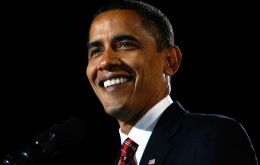
The White House cut its outlook for US growth in 2012 and 2013 on Friday, hours after data showed the economy grew at a tepid pace in the second quarter, raising concerns about a slowdown that could mar President Barack Obama's re-election chances.
-
Saturday, July 28th 2012 - 00:10 UTC
Russia investing heavily in becoming self sufficient in beef production

Russian President Vladimir Putin has an ambitious plan to cut his country's 3 billion dollars annual import bill for beef. He even aspires to return Russia's beef industry to its pre-revolutionary stature.
-
Friday, July 27th 2012 - 23:59 UTC
“Veggie” diet blamed for poor performance of China’s women volleyball team

Fearing tainted meat, China's women's volleyball team has stuck to a strict vegetarian diet for the last three weeks, which the team's coach is now blaming for his athletes' abysmal performance.
-
Friday, July 27th 2012 - 05:50 UTC
US urges Argentina to normalize relations with international financial community
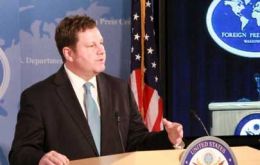
US Department of State Assistant Secretary for Public Affairs Mike Hammer urged the Argentine Government to normalize its relations with the international financial community and confirmed President Obama’s administration intention of having “the best possible relations” with Argentina.