MercoPress. South Atlantic News Agency
Economy
-
Saturday, March 1st 2014 - 02:32 UTC
Cry for Me, Argentina

Veteran New York Times reporter and columnist, Roger Cohen, who on several occasions has visited Argentina recently called at Ushuaia. He wrote the following piece, which is not very enthusiastic about the current situation or the heavy burden of populist history in one of the richest countries of the world.
-
Saturday, March 1st 2014 - 02:24 UTC
Euro-zone inflation stabilized at what central bank calls 'danger zone'
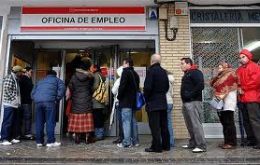
Euro zone inflation stabilized in what the European Central Bank has called the “danger zone” in February, data showed on Friday, while unemployment remained stuck near record highs ahead of an ECB policy meeting next week.
-
Saturday, March 1st 2014 - 02:22 UTC
US economy expanded at a 2.4% annual rate, down from the 3.2% estimated

The US government slashed its estimate for fourth-quarter growth as consumer spending and exports were less robust than initially thought, leaving the economy on a more sustainable path of modest expansion. GDP expanded at a 2.4% annual rate, the Commerce Department said on Friday.
-
Friday, February 28th 2014 - 03:28 UTC
Brazil GDP expanded 2.3% in 2013; agriculture again the main engine

Brazil's economic output grew 2.3% in 2013 for a third straight year of modest expansion by Latin America's biggest economy, the government announced on Thursday. GDP for the final quarter of the year rose a 0.7% compared to the third quarter, according to Brazil's Institute for Geography and Statistics, IBGE.
-
Friday, February 28th 2014 - 02:55 UTC
Brazil and Cuba, for different reasons, trying to unravel Venezuela's political crisis

The visit this week of Brazil's former president Lula da Silva to Havana could help to unravel the current political crisis in Venezuela according to Argentine political analyst Rosendo Fraga, since both countries have much to lose if the conflicting situation continues.
-
Friday, February 28th 2014 - 02:36 UTC
Fed asks US Congress to look into legal option for regulating virtual currencies such as bitcoin

The US Congress should look into legal options for regulating virtual currencies such as bitcoin, said Federal Reserve Chair Janet Yelleny. Japan-based bitcoin exchange Mt. Gox went dark leaving customers unable to access their accounts. Experts have warned they might not have much recourse to recover their money.
-
Thursday, February 27th 2014 - 04:47 UTC
Inter-American Development bank holds its annual meeting in Bahía

The Inter-American Development Bank (IDB) will hold its 2014 Annual Meeting in Bahía, Brazil, March 27-30, bringing top economic and business leaders to discuss how the private sector can help boost economic and social development in Latin America and the Caribbean.
-
Thursday, February 27th 2014 - 04:41 UTC
Brazil raises basic interest to 10,75%; same rate as when Rousseff took office
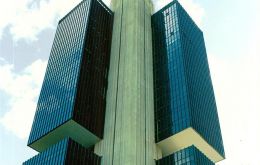
Brazil's central bank raised its benchmark interest rate Wednesday to 10.75% from 10.5%, and left the door open for more rate increases while slowing the pace of the hikes. The move continues the bank's yearlong fight against inflation even as rising interest rates and the poor performance of the country's exporters jeopardize already feeble growth in an election year.
-
Thursday, February 27th 2014 - 03:19 UTC
Booming world fish trade generating more wealth than ever, says FAO report

The booming world fish trade is generating more wealth than ever before, but countries must help small-scale fishers and fish farmers benefit too, says FAO.
-
Thursday, February 27th 2014 - 03:08 UTC
Argentine social programs praised by FAO and World Bank, says government

Argentina praised some of the “positive and favorable comments” by the United Nations Food and Agriculture Organization (FAO) and the World Bank regarding the country’s social and economic agenda, regretting that “certain” media “downplay” such news.