MercoPress. South Atlantic News Agency
Economy
-
Saturday, October 14th 2023 - 10:00 UTC
Chilean fruit exporters sue major shipping line

Chilean fruit exporters have filed a lawsuit for a “systematic succession of abuses” before the Court of Defense of Free Competition (TDLC) against the Mediterranean Shipping Company (MSC), it was reported in Santiago.
-
Friday, October 13th 2023 - 09:26 UTC
Argentina: “Blue” dollar falls back after illegal exchange parlors raided

The “blue” (a euphemism for “black market”) dollar pierced the AR$ 1,000 threshold downward and closed Thursday at AR$ 980 after law enforcement raids at unofficial exchange parlors led to at least six people arrested ahead of the 4-day weekend, it was reported in Buenos Aires.
-
Friday, October 13th 2023 - 08:49 UTC
September's inflation hits new monthly ceilings in Argentina

Argentina's National Institute of Statistics and Census (Indec) Thursday announced that the Consumer Price Index (CPI) went up 12.7% in September, thus hitting an all-time monthly high since 1991, it was reported in Buenos Aires.
-
Wednesday, October 11th 2023 - 19:41 UTC
Economics Nobel to Claudia Goldin for women's participation in the global labor market

The Royal Swedish Academy of Sciences has decided to award the Sveriges Riksbank Prize in Economic Sciences in Memory of Alfred Nobel 2023 to Claudia Goldin, who has provided the first comprehensive account of women’s earnings and labor market participation through the centuries.
-
Wednesday, October 11th 2023 - 15:18 UTC
“Blue” dollar skyrockets past AR$ 1,000 threshold
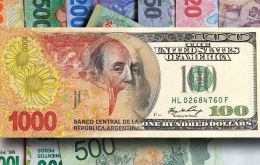
The “blue” (a euphemism for the “black market” dollar) pierced the psychological AR$ 1,000 barrier Tuesday and closed the day at AR$ 1.010 after reaching AR$ 1.040 at some point, it was reported in Buenos Aires.
-
Tuesday, October 10th 2023 - 10:50 UTC
Argentina: “Blue” dollar hits AR$ 945 for hew all-time high

The “blue” (a euphemism for “black market”) dollar traded at AR$ 945 on Monday, thus reaching a new all-time high, it was reported in Buenos Aires as the Oct. 22 presidential elections loom over.
-
Monday, October 9th 2023 - 04:15 UTC
The Fintech Boom in Latin America

After COVID, the trendiest industry in emerging markets has likely been fintech. Financial services have a famously sluggish rate of development, but the pandemic sparked a remarkable digital acceleration that tipped institutions, small and medium-sized companies and even the government toward adopting fintech and making infrastructure investments.
-
Saturday, October 7th 2023 - 07:49 UTC
Argentina: Unstoppable “blue” dollar nears AR$ 900

The so-called “blue” (a euphemism for “black market”) dollar traded at AR$ 885 on Friday for a total increase of AR$539 so far this year and AR$ 42 overnight, it was reported in Buenos Aires. At some point Friday, it hit the psychological AR$ 900 landmark.
-
Saturday, October 7th 2023 - 07:32 UTC
Argentina/Brazil bilateral trade continues to fall, contracting 19,5% in September
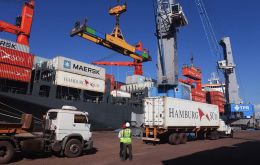
Trade between Argentina and Brazil reached US$ 2.1 billion in September, marking a 19.5% decline compared to the US$ 2.66 billion recorded in the same month last year. This fact was brought to attention in a report by Argentina’s Chamber of Commerce and Services (CAC), which used official data from Brazil.
-
Saturday, October 7th 2023 - 07:27 UTC
WTO cuts 2023 global trade growth by half to 0,8%; forecasts a great 3,3% leap in 2024
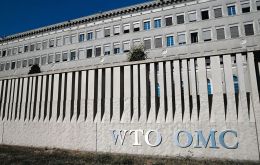
The World Trade Organization (WTO) expects international trade to grow by 0.8% this year, down from the 1.7% estimated in April. In its updated forecasts released this week, the organization justifies the downgrade with an inflationary environment, rising interest rates in the United States and the European Union, as well as tension in the Chinese real estate market.

