MercoPress. South Atlantic News Agency
Economy
-
Wednesday, November 28th 2018 - 09:39 UTC
President Xi leaves Beijing on a four-country tour, plus G20 in Buenos Aires

Chinese President Xi Jinping on Tuesday left Beijing to visit Spain, Argentina, Panama and Portugal, and to attend the G20 summit. President Xi will pay state visits to the four countries from November 27 to December 5. During his trip to Argentina, Xi will attend the G20 summit from November 30 to December 1 in Buenos Aires.
-
Wednesday, November 28th 2018 - 08:45 UTC
UK economic analysis in support of Brexit deal; Theresa May visits Scotland
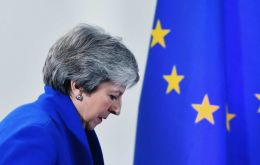
The British government is due to publish its economic analysis on the long-term effects of Brexit on the UK. Various scenarios will be set out by the Treasury - with the Daily Telegraph saying it will predict £150bn in lost output over 15 years under no deal, with Theresa May's plan costing £40bn.
-
Wednesday, November 28th 2018 - 08:41 UTC
Trump open to a deal with China on certain conditions, says advisor Kudlow

U.S. President Donald Trump is open to reaching a deal on U.S.-China trade irritants over dinner on Saturday with Chinese leader Xi Jinping but is ready to hike tariffs on Chinese imports if there is no breakthrough, White House economic adviser Larry Kudlow said on Tuesday.
-
Wednesday, November 28th 2018 - 08:26 UTC
Buenos Aires sealed off for G20; anarchists and anti capitalists pledge to stage protests
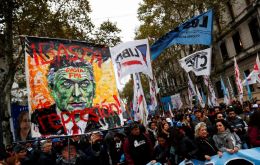
Argentine authorities say that Buenos Aires will be an armored city when world leaders arrive for this week's G-20 summit. But security failures that marred a football championship and deeper unrest over an economic austerity program are raising concerns about the country's ability to ensure safety.
-
Tuesday, November 27th 2018 - 15:18 UTC
Sharp fall in Brazil's Petrobras fuel but not so fast at pumps
The average price of gasoline at Petrobras' refineries has dropped around 20% in November as of Tuesday but that decrease will not hit retail prices anytime soon. The state-run petroleum company made the announcement Monday, but gas stations were reluctant to follow suit, at least not at the same level.
-
Tuesday, November 27th 2018 - 09:51 UTC
Bad start for Bolsonaro: Temer signs 16% pay raise for Justices, which is a benchmark for other public sector
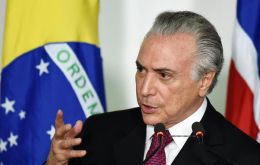
Brazil’s exiting President Michel Temer signed into law a 16% pay raise for Supreme Court justices on Monday, disregarding a request from his President-elect Jair Bolsonaro that he veto the bill to avoid increasing next year’s budget deficit.
-
Tuesday, November 27th 2018 - 09:27 UTC
IMF praises Argentina's reforms program and anticipates rebound of activity in 2019
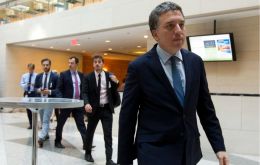
The International Monetary Fund has completed its second review of Argentina, the fund said on Monday, paving the way for the country to receive US$7.6 billion under a US$ 56.3 billion financing deal.
-
Tuesday, November 27th 2018 - 09:00 UTC
Brazil Eyes US$ 30 Billion Offshore Oil Boom
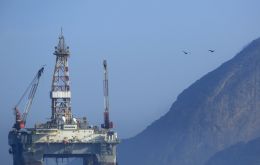
Over the past few years, Brazil has held several very successful oil auctions under production-sharing contracts in its pre-salt layer, attracting major oil companies to its prized offshore oil area.
-
Tuesday, November 27th 2018 - 08:59 UTC
US and Argentina ready to sign a two-way fresh beef deal
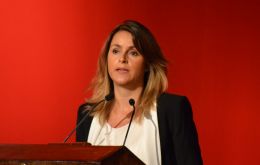
Argentina is on the verge of signing a deal with the United States that would allow two-way trade of fresh beef for the first time in nearly two decades, the country's international trade secretary, Marisa Bircher, said. The agreement, expected to be signed within days, would simultaneously open beef imports to both countries, Bircher told Reuters in an interview.
-
Tuesday, November 27th 2018 - 08:51 UTC
Trump downplays a trade deal with China ahead of Saturday's meeting with Xi in Buenos Aires
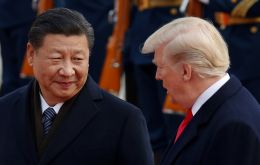
United States president Donald Trump and Chinese leader Xi Jinping will meet on Saturday in Argentina on the sidelines of a Group of 20 summit in Buenos Aires, a U.S. media outlet reported on Monday. The two leaders will meet a day after the United States, Mexico and Canada sign a new trilateral trade agreement, the online edition of Inside U.S. Trade said.