MercoPress. South Atlantic News Agency
Economy
-
Friday, September 11th 2015 - 09:58 UTC
FAO's August Food Price Index at its lowest in almost seven years

International food commodity prices continued to decline in August as ample supplies, a slump in energy prices and concerns over China's economic slowdown all contributed to the sharpest fall of the FAO Food Price Index in almost seven years.
-
Friday, September 11th 2015 - 09:41 UTC
Brazilian Real falls to its lowest against the dollar since 2002; central bank injected funds

A day after Standard & Poor’s slashed Brazil’s credit rating to junk, the Brazilian Real lost close to 2% by the end of the day to 3.865 per dollar—its weakest level since 2002. In an effort to stem the decline, Brazil’s central bank injected $1.5 billion into the financial system Thursday.
-
Friday, September 11th 2015 - 06:45 UTC
UN Assembly overwhelmingly supports Argentina in the sovereign debt debate

The United Nations General Assembly has approved a resolution put forward by Argentina regarding sovereign debt restructuring, which seeks to limit the movement of speculative funds in influencing such actions.
-
Thursday, September 10th 2015 - 08:50 UTC
Business lobbies feeling the pinch, impatient with Rousseff's budget cuts

After months of trying to shore up Brazil's public finances, President Dilma Rousseff now faces political and business pressure to ease up on painful austerity measures in a country long hooked on the helping hand of a big state.
-
Thursday, September 10th 2015 - 07:52 UTC
Brazil loses investment-grade credit rating, with outlook remaining negative
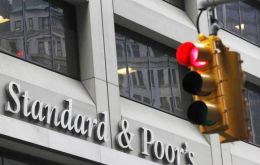
Standard & Poor's has stripped Brazil of its investment-grade credit rating, further hampering President Dilma Rousseff's efforts to regain market trust and pull Latin America's largest economy out of recession.
-
Thursday, September 10th 2015 - 07:35 UTC
Economists' open letter to UN: political power must be preeminent in handling economic policy

European countries must support the United Nations’ proposals for sovereign debt restructuring! – Open letter to the UN by 19 economists.On Thursday September 10, the United Nations General Assembly will vote on nine principles concerning the restructuring of sovereign debts.
-
Wednesday, September 9th 2015 - 08:10 UTC
No end to Brazil's bad news: two consecutive years of recession ahead

Analysts expect Brazil's economy to contract by 2.44% this year, marking the worst performance since 1990, and inflation will hit 9.29%, the Central Bank said Tuesday. The latest figures represent a downward revision from last week, when analysts expected Latin America's largest economy to contract by 2.26% and inflation to come in at 9.28%.
-
Wednesday, September 9th 2015 - 07:45 UTC
World Bank calls on the Fed to delay raising rates fearing 'panic and turmoil' in emerging markets
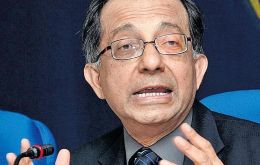
The international economics establishment has stepped up pressure on the Federal Reserve to delay raising interest rates, with the World Bank the latest institution to warn that the US central bank risks sparking “panic and turmoil” in emerging markets if it increases rates next week.
-
Tuesday, September 8th 2015 - 08:54 UTC
Brazil confident it can stand 'first period of volatility' if Fed raises rates

Brazil is well prepared to cope with any market volatility resulting from a U.S. interest rate rise, Finance Minister Joaquim Levy said on Monday. The minister told a meeting in Madrid that Brazil's banks were well capitalized and the country has large foreign exchange reserves.
-
Tuesday, September 8th 2015 - 08:42 UTC
IMF cautions Fed on conditions when it decides to increase interest rates
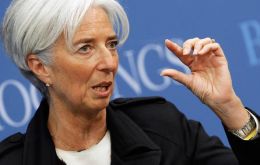
The US Federal Reserve must be certain that the job market and inflation are strong enough to justify raising interest rates, IMF managing director Christine Lagarde said after a G20 meeting focused on the pressure the increase might place on the global economy.