MercoPress. South Atlantic News Agency
Energy & Oil
-
Friday, March 27th 2026 - 23:04 UTC
Uruguay raises fuel prices 7% over Middle East war and shifts to monthly price-setting
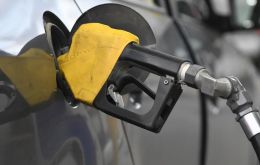
Uruguay's government announced on Friday a 7% fuel price increase effective April 1, as a direct consequence of rising oil prices driven by the U.S.-Israeli war against Iran and the effective closure of the Strait of Hormuz, through which approximately 20% of the world's crude oil supply transits.
-
Thursday, March 26th 2026 - 01:48 UTC
International project validates renewable hydrogen energy systems in Antarctica
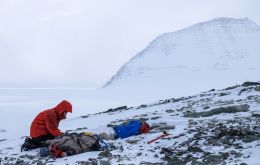
A delegation of Chilean and European authorities and institutions completed a technical visit to the “Profesor Julio Escudero” research station operated by the Chilean Antarctic Institute (INACH) on King George Island, where progress was presented on a pilot renewable hydrogen and energy infrastructure project designed to validate hybrid energy systems in one of the planet's most demanding environments.
-
Wednesday, March 25th 2026 - 20:22 UTC
Iran rejects Trump's 15-point proposal and asserts sovereignty over the Strait of Hormuz

Iran rejected on Wednesday the 15-point proposal put forward by the Trump administration to end the war, calling its terms “excessive and detached from reality,” while international mediators scramble to arrange a direct meeting between representatives of both countries that could be, they warn, the last chance to prevent a broader escalation.
-
Wednesday, March 25th 2026 - 00:23 UTC
Lula warns he will not allow others to seize Brazil's critical minerals
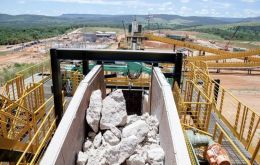
Brazilian President Luiz Inácio Lula da Silva said on Tuesday he will not allow other countries to take the nation's rare earths and critical minerals, in remarks widely interpreted as a direct warning to the United States amid a growing dispute over control of these strategic resources.
-
Wednesday, March 25th 2026 - 00:18 UTC
Peru confirms large-scale geothermal system in southern Andes, near Chilean border
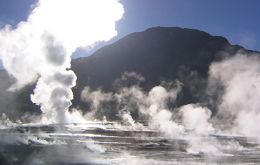
Peru's Geophysical Institute (IGP) confirmed on Tuesday the existence of a large-scale active geothermal system in the country's southern Andes, near the Paucarani-Casiri volcano, approximately 75 kilometers northeast of the city of Tacna and close to the Chilean border, according to EFE.
-
Tuesday, March 24th 2026 - 05:55 UTC
Analysts warn $200 oil is no longer a far-fetched scenario
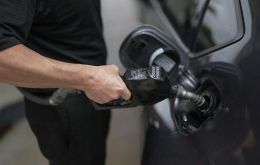
Oil prices could surpass $150 per barrel and approach $200 if the Strait of Hormuz blockade persists, according to energy industry analysts — a level that would make a global recession virtually inevitable.
-
Monday, March 23rd 2026 - 01:53 UTC
Lula and Peña agree to accelerate Itaipú treaty review

The presidents of Brazil, Luiz Inácio Lula da Silva, and Paraguay, Santiago Peña, agreed on Sunday in Campo Grande to intensify negotiations over Annex C of the Itaipú treaty, the instrument that governs the financial terms and energy sales of the binational hydroelectric dam, one of the largest in the world.
-
Thursday, March 19th 2026 - 02:12 UTC
Russian diesel shipment bound for Cuba challenges US blockade
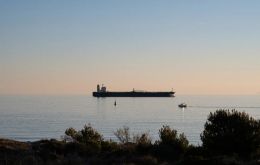
A Hong Kong-flagged tanker that could be carrying fuel to Cuba has resumed navigation in the Atlantic after remaining halted for several weeks, in a move that could offer limited relief to the island’s deepening energy crisis. According to ship-tracking available on Vessel Finder, the Sea Horse loaded fuel in a ship-to-ship operation earlier this year and then resumed course with Cuba as a possible destination. The Financial Times reported that the vessel was part of two Russian energy shipments headed to the island and could arrive within days.
-
Wednesday, March 18th 2026 - 22:21 UTC
Attack on world’s largest gas field raises tensions and jolts markets
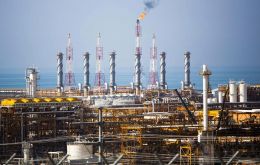
The war involving Iran, Israel and the United States escalated sharply on Wednesday with a strike on South Pars, the Iranian side of the world’s largest natural gas field, which it shares with Qatar. Reuters reported that the hit on the site marked a new phase in the conflict by targeting major Iranian energy infrastructure for the first time in this war, and was followed by Iranian threats and attacks against energy targets across the Gulf.
-
Wednesday, March 18th 2026 - 01:07 UTC
Magnitude 6 quake strikes eastern Cuba as island remained under nationwide blackout

A magnitude 6.0 earthquake struck eastern Cuba early on Tuesday while the island was still dealing with a nationwide blackout caused hours earlier by the collapse of the power grid. The quake was recorded by the European Mediterranean Seismological Centre at a depth of about 15 km, while reports from Cuba’s seismological service placed the epicenter 37 km southeast of Imías, in Guantánamo province, and said it was felt across several eastern provinces.

