MercoPress. South Atlantic News Agency
Energy & Oil
-
Tuesday, March 17th 2026 - 10:00 UTC
Saudi Arabia diverts more crude to the Red Sea to bypass Hormuz, but alternative capacity remains limited
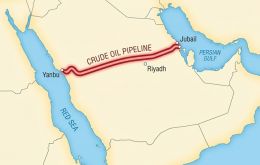
Saudi Arabia is stepping up the use of its pipeline network to the Red Sea to keep crude exports moving while the Strait of Hormuz remains heavily disrupted by the war with Iran. The key route is the Abqaiq-Yanbu system, also known as the East-West Pipeline or Petroline, which links Gulf oil fields with the Yanbu terminal on the Red Sea. That infrastructure has become the kingdom’s main escape route around Hormuz, the chokepoint that normally carries about a fifth of global oil and liquefied natural gas supply.
-
Monday, March 16th 2026 - 21:08 UTC
Cuba suffers nationwide blackout after total collapse of national power grid

Cuba suffered a nationwide blackout on Monday after the Ministry of Energy and Mines reported a “complete disconnection” of the National Electric System, leaving virtually the entire island without power. The collapse hit a country of roughly 10 to 11 million people and came amid an energy crisis that had already been causing prolonged outages and severe generation deficits.
-
Monday, March 16th 2026 - 01:10 UTC
Oil tops US$100 a barrel as Middle East war and Hormuz disruption rattle markets
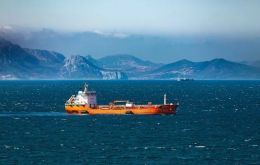
Oil prices moved back above US$100 a barrel on Monday as the conflict involving the United States, Israel and Iran intensified and shipping disruption in the Strait of Hormuz hit one of the world’s most critical energy chokepoints. Brent crude rose to US$105.15 a barrel and U.S. West Texas Intermediate climbed to US$100.32 in early Asian trading, according to market data.
-
Saturday, March 14th 2026 - 16:07 UTC
Experts say BR privatization weakened Brazil’s ability to contain fuel prices
According to a report by Agência Brasil, industry specialists and oil-sector groups say what they describe as abusive fuel price increases in Brazil are not explained by international volatility alone. The report cites cases of gasoline being sold for R$9 a liter at some stations in São Paulo and links part of the distortion to the loss of state control over the distribution chain after the privatization of BR Distribuidora.
-
Saturday, March 14th 2026 - 16:03 UTC
U.S. again backs Argentina in YPF case, urging halt to “intrusive” discovery

The U.S. government has filed a new memorandum before the Second Circuit Court of Appeals in New York backing Argentina’s request to suspend post-judgment discovery in the YPF expropriation case. Argentina’s Treasury Solicitor’s Office said the filing supports the emergency motion submitted on March 6 seeking to pause document production, a sanctions request and an evidentiary hearing scheduled for April.
-
Saturday, March 14th 2026 - 01:54 UTC
Global volatility hits Argentine assets as country risk edges back toward 600 points

Argentine assets ended the week under pressure, pulled lower by international volatility linked to the Middle East war, in a session marked by falling stocks and bonds, a higher country risk index and renewed oil-driven pressure on inflation and financial expectations. Brent crude settled at $103.14 a barrel, while Wall Street extended its weekly losses amid concern over global energy supply.
-
Friday, March 13th 2026 - 04:34 UTC
U.S. temporarily allows sales of Russian oil already loaded on tankers to ease energy pressure

The United States has temporarily authorized the sale of Russian oil and petroleum products already loaded on tankers, in a limited easing of sanctions adopted as global energy prices rise because of the Middle East war. The measure was announced by the Treasury Department and will remain in force until April 11.
-
Thursday, March 12th 2026 - 10:40 UTC
Argentina: Fuel price rises complicate March inflation and tighten the government’s peso strategy

Rising fuel prices have added new pressure to Argentina’s March inflation outlook, in a month already burdened by the start of the school year, utility adjustments and seasonal pressure on food prices. In the local market, gasoline prices have risen by roughly 7% to 8% so far in March, increasing the risk that monthly inflation could move back toward the 3% range.
-
Thursday, March 12th 2026 - 03:00 UTC
Trump releases 172 million barrels from strategic reserve to curb fuel price surge
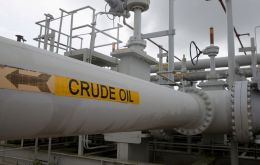
U.S. President Donald Trump has authorized the release of 172 million barrels of crude from the Strategic Petroleum Reserve as part of a coordinated action with the International Energy Agency, in a bid to contain rising fuel prices after market disruption caused by the war with Iran. The Department of Energy said deliveries will begin next week and will take about 120 days to complete.
-
Thursday, March 12th 2026 - 02:50 UTC
U.S. formalizes before court its recognition of Delcy Rodríguez as Venezuela’s state authority

The U.S. government has formally recognized Delcy Rodríguez before a federal court in New York as the Venezuelan authority empowered to act on behalf of the state, giving legal effect to the diplomatic shift toward Caracas announced last week. The move appears in a “statement of interest” filed on March 10 in response to a court order on who legally represents Venezuela in ongoing litigation in U.S. courts.