MercoPress. South Atlantic News Agency
Investments
-
Friday, June 8th 2012 - 21:06 UTC
Fitch downgrades Repsol rating to BBB- on fears of YPF seizure impact
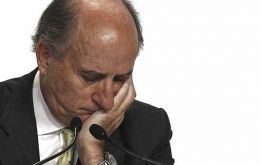
Repsol, the Spanish oil producer whose Argentine unit YPF was nationalized in April, was cut to the lowest investment grade by Fitch Ratings, the first downgrade since reducing dividends to shore up its finances.
-
Friday, June 8th 2012 - 20:35 UTC
Artefacts from controversial 1804 wreck stored in Gibraltar returned to Spain

Archaeological artefacts recovered from a controversial wreck and stored in a warehouse in Gibraltar were handed to Spanish authorities this week. The items were recovered by Odyssey Marine Exploration in 2007 from the wreck of “Nuestra Señora de las Mercedes”, a Spanish galleon that sank off Portugal in 1804.
-
Friday, June 8th 2012 - 01:35 UTC
China interested in a trade agreement with Mercosur reveals Uruguay
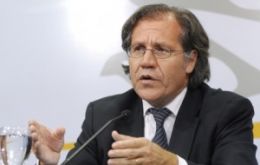
China has offered Mercosur to consider the possibility of negotiating a free trade agreement revealed Uruguay, when the South American block is going through one of its worst moments ever so distant from the integration process pledges of 1991.
-
Wednesday, June 6th 2012 - 04:28 UTC
YPF unveils plan to invest 35bn dollars in five years with he help from partners
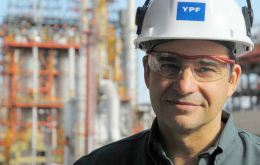
Argentina's state-controlled energy company YPF will need to invest 35 billion dollars to boost falling natural gas and oil output by more than a quarter by 2017, the new chief executive said on Tuesday in Buenos Aires.
-
Tuesday, June 5th 2012 - 23:53 UTC
Brazil re-assessing its 3bn dollars potash project in Argentina due to ‘political risk’
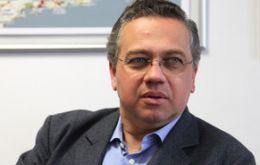
Brazil’s Vale Doce, the world's second-largest miner, expects to overcome obstacles that prompted management to re-assess a 3 billion dollars potash project in the Argentine province of Mendoza, the company's head of fertilizers, Roger Downey, said.
-
Tuesday, June 5th 2012 - 23:34 UTC
Uruguay lost competitiveness for sixth month running in April with main trade partners

External competitiveness of Uruguayan goods dropped for the sixth month running in April because locally produced goods’ prices in US dollars dropped less than those of its main trade partners according to figures released by the Central bank.
-
Tuesday, June 5th 2012 - 07:46 UTC
Canada and US closely monitoring Uruguay’s flag air carrier in the brink of default
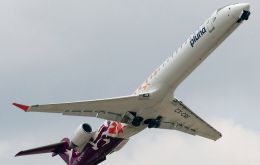
The governments of Canada and the US are “concerned” and “closely following” events in Uruguay’s flag air carrier Pluna since banks and an investment fund from the two countries are heavily involved in the running of the money-loosing company is spite of repeated financial support from the Uruguayan government.
-
Friday, June 1st 2012 - 01:33 UTC
Repsol regains 6% warranty-stake in YPF and now owns 12.43% of the company

Spain energy Group Repsol regained rights on a 6% warranty-stake in the Argentine oil and gas giant YPF after the Petersen Group, which used to own 25.46% of the company, lost it as the result of not having met payments for the loan through which they initially enter the business without paying a single cent.
-
Thursday, May 31st 2012 - 06:07 UTC
Natural resources rich Brazil plans to increase defence spending to 2% of GDP

Defence Minister Celso Amorim said on Wednesday Brazil’s growing need to protect its borders, the Amazon rainforest, and massive offshore oil discoveries would lead it to gradually increase defence spending by a quarter to reach roughly 2% of the country’s GDP.
-
Wednesday, May 30th 2012 - 17:32 UTC
Repsol pulls out from Cuba oil search after drilling a second dry well

Spanish company Repsol has said it is pulling out of Cuba after failing in a recent attempt to find oil off the island. Chairman Antonio Brufau told journalists and investors that Repsol “won't do another” well in Cuba.