MercoPress. South Atlantic News Agency
Latin America
-
Friday, November 6th 2020 - 08:55 UTC
E-commerce firm Mercado Libre benefits from a surge of online shopping in Latam

Mercado Libre Inc, Latin America's top e-commerce firm, reported better-than-expected third-quarter revenue and profit on Wednesday, helped by a surge in online shopping and digital payment transactions during the COVID-19 pandemic.
-
Wednesday, November 4th 2020 - 09:35 UTC
Peru with Canadian funds joins the South American lithium rush

Canada’s Plateau Energy Metals has raised nearly US$ 600 million to develop Peru’s sole lithium project and expects to start mining in 2023, a year later than planned, as the country lags its neighbors in developing the battery mineral, a company official said.
-
Tuesday, November 3rd 2020 - 08:44 UTC
Peru's congress approves motion for an impeachment to remove president Vizcarra
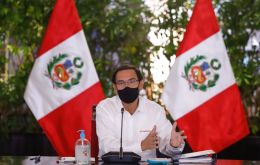
Peru’s Congress approved on Monday a motion to initiate a process to remove President Martín Vizcarra from office over corruption allegations, a month and a half after he survived a prior impeachment trial.
-
Monday, November 2nd 2020 - 09:29 UTC
Colombian demobilized ex guerrillas demand an end to killings of members
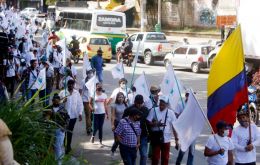
Hundreds of demobilized former members of the FARC rebel group marched in Colombia's capital Bogota on Sunday to demand more security, implementation of a 2016 peace deal, and an end to the killings of former combatants.
-
Saturday, October 31st 2020 - 17:25 UTC
“Day of the Dead” at Frida Kahlo's iconic home in Mexico City

A traditional Day of the Dead “offering” in Frida Kahlo's iconic home in Mexico City has taken on a wider artistic homage, with an exhibition helped by French designer Jean Paul Gaultier also remembering artists who have died in past pandemics.
-
Saturday, October 31st 2020 - 16:07 UTC
Colombia's central bank pauses interest rate cuts as it gauges recovery strength
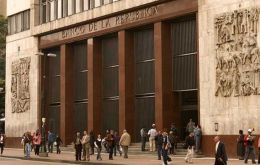
Colombia became the latest emerging market to end a series of interest rate cuts, joining peers from Brazil to South Africa as it recovers from the pandemic. After the decision, the central bank said that Governor Juan Jose Echavarria will retire early next year.
-
Saturday, October 31st 2020 - 08:23 UTC
Cemeteries in Peru closed on Sunday, “Day of the Dead” to avoid agglomerations

Peru’s government, wary about the coronavirus pandemic despite a slowdown of new cases, has asked people to stay away from cemeteries for the important Day of the Dead celebration when millions usually pay respects to relatives who have died.
-
Saturday, October 31st 2020 - 07:57 UTC
Bolivia's congress recommends lawsuit against out-going conservative interim president Jeanine Añez
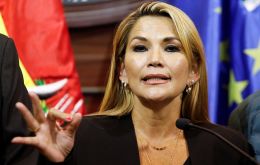
Bolivia's Congress, controlled by the socialist party of the former indigenous President Evo Morales, approved on Thursday night a report that recommends a lawsuit against outgoing right-wing President Jeanine Añez for genocide and other alleged crimes.
-
Friday, October 30th 2020 - 13:00 UTC
Argentina and Mexico “vote” for Biden and delay nominations at IDB until after the US election

Mexico and Argentina have delayed a key meeting of the Inter-American Development Bank until after the Nov. 3 U.S. election, delivering an early setback to plans by the bank’s new U.S. chief to install vice presidents from smaller countries.
-
Thursday, October 29th 2020 - 09:34 UTC
Ex Bolivian president calls for calm after right-wing protestors called for a “military junta”

Exiled former Bolivian president Evo Morales called for calm after several hundred right-wing protesters demanded that a “military junta” replace socialist president-elect Luis Arce.

