MercoPress. South Atlantic News Agency
Latin America
-
Wednesday, August 29th 2012 - 21:35 UTC
Foreign Office says Ecuador and UK have resume dialogue on the Assange case
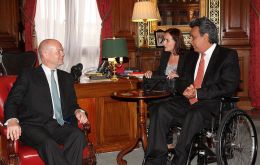
Ecuador and the UK have confirmed the resumption of talks on the Assange case following the meeting of Ecuadorean Vice president Lenin Boltaire Moreno and Foreign Secretary William Hague at the Foreign Office on Wednesday.
-
Wednesday, August 29th 2012 - 06:36 UTC
Ecuadorean court ratifies political refugee status for Belarus former investigator

A judge on Ecuador's highest court has thrown out an extradition request for a former police investigator from Belarus who has been jailed since June, ordering him to be freed immediately.
-
Wednesday, August 29th 2012 - 06:30 UTC
Brazil donates Argentina Malvinas Spanish charts dating back to 1770
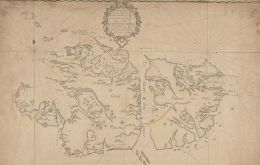
Four certified charts of the Falklands/Malvinas Islands dating back to the XVIII century and belonging to the Pedro de Angelis collection of Brasilia’s National Library were given by the Brazilian Foreign ministry to the argentine delegation currently holding a bilateral meeting in the country’s capital.
-
Wednesday, August 29th 2012 - 03:20 UTC
Magallanes Region has a new governor and will take office on Sunday

The Chilean Executive announced this week the new Intendente (governor) of the extreme south region of Magallanes and Chilean Antarctica. His name is Mauricio Peña y Lillo Correa and replaces Arturo Storaker who resigned to the post last 9 August.
-
Wednesday, August 29th 2012 - 03:02 UTC
Daughter of Cuban economy “reforms tsar” flees to the US and is living in Tampa

The 24-year-old daughter of Cuban Vice President Marino Murillo, sometimes mentioned as a possible successor to ruler Raul Castro, defected earlier this month and is now living in Tampa, Florida, according to Miami’s El Nuevo Heraldo.
-
Wednesday, August 29th 2012 - 02:43 UTC
Argentina blasts UK “arrogant” approach to Assange case and Falklands’ dispute
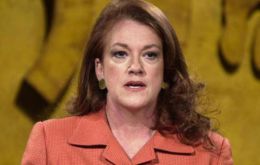
The Argentine Ambassador to the United Kingdom Alicia Castro said on Tuesday that the UK’s “arrogant” approach to the Julian Assange’s case “was similar” to its approach to Argentina and particularly, the sovereignty dispute over the Falklands/Malvinas Islands.
-
Tuesday, August 28th 2012 - 06:46 UTC
Europe waiting for Mercosur to overcome ‘Paraguay situation’ and resume trade talks
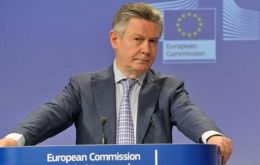
The European Commission remains “on hold” waiting for the evolution of events in Mercosur with the incorporation of Venezuela as full member and the suspension of Paraguay, before addressing a new round of association and trade negotiations.
-
Tuesday, August 28th 2012 - 06:36 UTC
Ecuador, boosted by Latam support ready to resume talks with UK on the Assange case
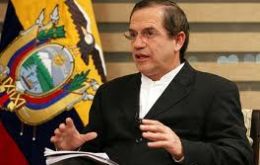
Following the strong unanimous support from Latin America approved by OAS, Ecuador will resume talks with the UK over the future of Wikileaks founder Julian Assange currently holed in at the Ecuadorean embassy in London, announced on Monday the country’s Foreign minister, Ricardo Patiño.
-
Tuesday, August 28th 2012 - 06:24 UTC
OAS mission in Paraguay to follow electoral process and political conditions
The OAS, Organization of American States, cabinet chief and head of political affairs are expected in Paraguay to continue with the organization’s mandate of establishing an electoral committee and helping with the process of strengthening democracy in the country.
-
Tuesday, August 28th 2012 - 05:53 UTC
Peruvian prosecution insists former guerrilla leaders must pay compensations
The Peruvian anti-terrorist Attorney General Office said that civil compensation to the tune of 1.4 billion dollars with be collected from members of the guerrilla groups Shinning Path and the leaders of Tupac Amaru Revolutionary Movement, MRTA.