MercoPress. South Atlantic News Agency
Mercosur
-
Tuesday, December 29th 2015 - 21:54 UTC
Environmental groups blame massive deforestation for floods in Mercosur members
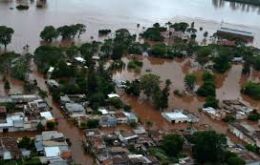
Deforestation is one of the main causes of the floods in South America that have left at least 160,000 people, 25,000 of them in Argentina alone, homeless, environmental groups said.
-
Monday, December 28th 2015 - 07:46 UTC
Tierra del Fuego applauds end of dollar clamp in Argentina but cautions about domestic and Mercosur tourists
Tierra del Fuego tourism industry praised the Argentine government's decisions to end the dollar clamp and make more transparent the foreign money exchange because “this will make the country, and Tierra del Fuego, highly competitive internationally”. However they also cautioned that consideration must be given to domestic and regional tourists which make up almost 45% of the number of the people visiting the extreme south of Argentina.
-
Wednesday, December 23rd 2015 - 09:17 UTC
Macri's priorities: Mercosur, trade agreement with EU and the Pacific Alliance
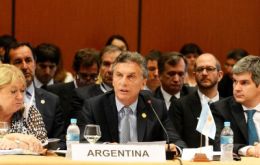
Argentine president Mauricio Macri pledged full support for Mercosur which he defined as a 'long term strategic project', called for a quick trade agreement with the European Union and closer ties with 'our partners from the Pacific Alliance'.
-
Wednesday, December 23rd 2015 - 08:02 UTC
Argentina's Falklands' claim and rejection of oil activities reiterated at the 'new' Mercosur summit
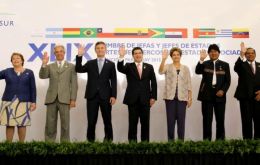
Mercosur full and associate members ended their Paraguay summit signing six joint statements, one of which in support of Argentina's sovereignty claim over the Falklands/Malvinas Islands and rejecting 'non authorized' hydrocarbons exploration in the Argentine continental shelf. This is the first regional document related to the Falkland Islands Argentine claim since Mauricio Macri took office last 10 December.
-
Tuesday, December 22nd 2015 - 15:37 UTC
Strong exchange on human rights between Macri and Maduro's representative
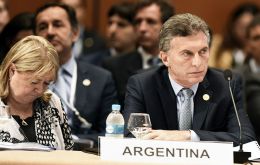
At a summit marked by strong differences between Argentina and Venezuela, Mercosur signed a statement in defense of the “unrestricted support of human rights”. Earlier in the day there was a serious exchange between Argentine president Mauricio Macri who demanded all political prisoners in Venezuela be set free, and president Nicolas Maduro foreign minister who replied that Macri was 'meddling' in Venezuela's affairs and was applying a 'double standard' on the issue.
-
Tuesday, December 22nd 2015 - 15:29 UTC
Chile calls for a South American convergence; pledges to bring together Mercosur and Pacific Alliance
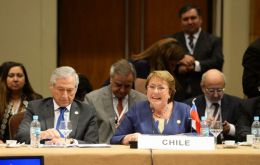
Chilean president Michelle Bachelet called for “a convergence among governments” of South America despite the “political and ideological differences”, and anticipated that Chile will strongly promote the rapprochement between Mercosur and the Pacific Alliance.
-
Tuesday, December 22nd 2015 - 14:31 UTC
Brazil welcomes and supports Macri's policies regarding the dollar and trade
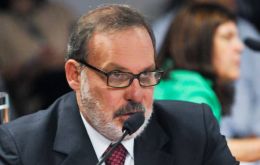
The Brazilian government has welcomed Argentina's realistic foreign exchange policy unifying the Argentine peso exchange rate, saying the latest economic measures taken by the Mauricio Macri administration will be “very positive” for the commercial relationship between the two countries.
-
Monday, December 21st 2015 - 07:00 UTC
Mercosur summit agenda includes trade, energy, human rights; Venezuela's Maduro absent
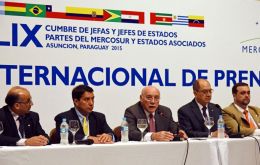
Paraguay foreign minister Eladio Loizaga advanced some of the issues that will addressed on Monday's Mercosur presidential summit, when all of the members of the group's heads of state have confirmed their attendance, except Venezuela's Nicolas Maduro, plus leaders from associate members.
-
Monday, December 21st 2015 - 06:50 UTC
Mercosur identifies 80 intra-trade non tariff barriers and discuss their elimination
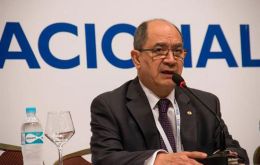
Mercosur members have identified over eighty non tariff barriers currently effective in intra-trade and have agreed on their gradual elimination, a proposal to be considered by the group's presidential summit when they meet Monday in Asuncion, Paraguay.
-
Friday, December 18th 2015 - 20:22 UTC
The Islands are 'Falklands', according to Aerolineas Argentinas magazine 'Alta'
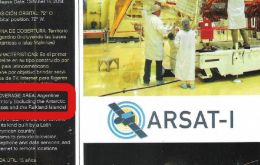
Aerolínas Argentinas magazine “Alta” has committed an 'un-excusable' blooper in its English edition. In effect, in a long article from the November edition, and praising Argentina's aeronautic and space industry, available in all Aerolíneas flights the Islas Malvinas are referred to as the Falkland Islands.