MercoPress. South Atlantic News Agency
Mercosur
-
Saturday, August 30th 2014 - 07:00 UTC
Mercosur is a ‘success’; intra-trade has grown at double the world rate
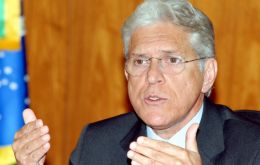
Mercosur is a success, intra-trade has expanded at double the rate of world trade and despite all the bad press, the block is advancing on other fields such as social affairs and citizenship, according to Ivan Ramalho, Mercosur's High Representative, who is a former Brazilian deputy minister of trade and development issues.
-
Friday, August 29th 2014 - 06:46 UTC
Mercosur main partners in another attempt to re-launch withering economies

Argentine Economy minister Axel Kicillof left Buenos Aires on Thursday for Brazil, where he will meet with fellow ministers from the country to discuss the current situation of bilateral trade and the automotive industry.
-
Wednesday, August 27th 2014 - 02:51 UTC
Chile ready to act as a 'bridge' between Mercosur and the Pacific Alliance

Chile is ready to act as a 'bridge' between Mercosur and the Alliance of the Pacific so that Latin American can have a greater presence in the world state, said Chilean Deputy foreign minister Edgardo Riveros during a conference in Sao Paulo at the Lula da Silva think-tank.
-
Friday, August 15th 2014 - 07:13 UTC
Cristina Fernandez will use anti-terrorism law against US company that closed its Argentine plant

Argentina's government will use an anti-terrorism law for the first time to seek criminal charges against a U.S.-based international printing firm which closed its Argentine plant without warning, president Cristina Fernández said on Thursday. She linked the company to some of the hedge funds in litigation with Argentina over defaulted bonds.
-
Friday, August 15th 2014 - 06:51 UTC
Auction 21 August to settle (and possible payout) of Argentina's defaulted swaps

The International Swaps and Derivatives Association (ISDA) will hold an auction on August 21 to settle Argentina’s default swaps. The auction, run by Creditex and Markit, will determine the payout that holders of protection on Argentine debt (CDS) will receive as a result of the default on July 30.
-
Friday, August 15th 2014 - 06:47 UTC
New record for the US dollar in Argentina's 'blue market', 13.20 Pesos

The US dollar in Argentine money markets continued its rising path on Thursday with a new record climb to close at 13.20 Pesos. This so-called “blue” dollar had jumped 20 cents to 13.15 pesos on Wednesday, breaking its 13.06 Pesos record from 23 January.
-
Friday, August 15th 2014 - 06:44 UTC
Argentine July inflation 2.47% and 39.71% in twelve months, according to Congress index

July consumer prices index in Argentina according to the so called Congressional index, climbed 2,47% and 39.71% in the last twelve months. The same index marked 2.2% in June indicating a growing tendency.
-
Friday, August 15th 2014 - 06:40 UTC
Chilean lawmakers approve initiative to ban trawling in territorial waters
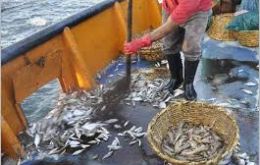
The House of Representatives approved this week a draft agreement to ban trawling in Chile. With 55 votes in support, six against and five abstentions, the deputies voted in favor of the Draft Resolution No. 100, which requests the Executive to submit a legislative initiative to amend Article 49 of Act No. 18,892 in order to ban fish catching by trawling.
-
Friday, August 15th 2014 - 06:34 UTC
Mujica, Latin America's most original leader according to The Economist

Under the heading of “The sage of Montevideo”, The Economist visited the Uruguayan president at his farmhouse in the outskirts of Montevideo where they had a long chat.
-
Friday, August 15th 2014 - 02:26 UTC
All phone calls inside Chile become local; Punta Arenas code area is 61
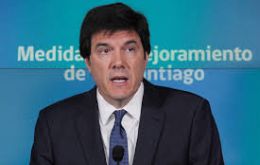
Chile has become a single territory for telecommunications and long distance calls with different rates for fixed lines will no longer exist beginning Saturday. This in practical terms will also means a 50% reduction on normal phone calls.