MercoPress. South Atlantic News Agency
Mercosur
-
Sunday, March 18th 2012 - 19:48 UTC
Unasur supports Argentine Malvinas and call on UK to resume negotiations

Foreign ministers from the Union of South American Nations (UNASUR) reaffirmed their support for Argentina over the Malvinas Islands sovereignty dispute at the annual meeting held in Asunción, Paraguay.
-
Saturday, March 17th 2012 - 07:21 UTC
YPF is an Argentine asset run by Spanish investors, De Vido tells Madrid
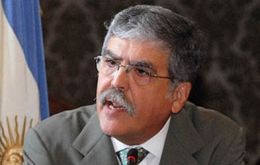
Argentine Planning Minister Julio de Vido lashed out at Spanish Industry Minister José Manuel Soria by saying that oil company YPF is an Argentine corporation run by Spanish investors and should not be considered an asset of the European country.
-
Saturday, March 17th 2012 - 06:13 UTC
EU/Mercosur will exchange market access proposals when Brazil chairs the round
The European Union and Mercosur concluded Friday in Brussels the eighth round of negotiations for a free trade agreement with the commitment to begin exchanging market access proposals at the next meeting.
-
Saturday, March 17th 2012 - 06:10 UTC
US confirms ‘neutral position’ in Falklands’ dispute; hopes for cooperation on practical issues
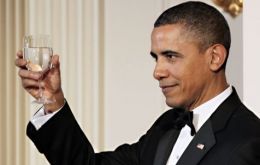
United States stated that it maintains its “neutral position” over the Falklands/Malvinas Islands dispute between Argentina and UKand hopes for an agreed solution, an official source of the US government assured after the three day visit of British Prime Minister David Cameron which included several meetings at the White House
-
Saturday, March 17th 2012 - 06:07 UTC
Argentina/Israel honour victims of 1992 terrorist attack and accuse Iran
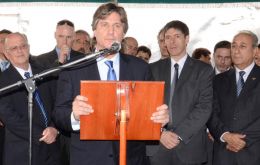
Argentina and Israel gathered on Friday to honour the 29 victims of the 1992 terrorist car bombing at the Israeli embassy in Buenos Aires, the first of two deadly attacks against Jewish interests in Argentina. The second in July 1994 against the Jewish community organization AMIA claimed 85 lives.
-
Saturday, March 17th 2012 - 06:01 UTC
EU ministers agree to free trade pact with Colombia and Peru
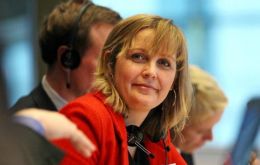
EU trade ministers agreed on Friday to approve a free trade pact with Colombia and Peru that could boost European car and chemical exports and lift food and mineral exports from the South American countries.
-
Friday, March 16th 2012 - 19:05 UTC
Falklands tells Argentina latest intimidation and bullying efforts are entirely counter-productive
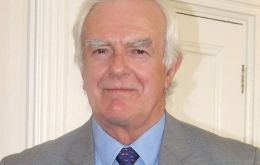
The elected government of the Falkland Islands said on Friday it regrets the latest attempt by the Argentine government to economically undermine the Islanders way of life, which is yet another example of intimidation and bullying towards a country of 3.000 people.
-
Thursday, March 15th 2012 - 02:52 UTC
Cristina Fernandez censors television program; former CNN reporter privileged witness
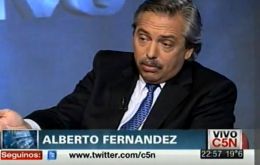
A former CNN in Spanish journalist Alberto Padilla was a privileged witness of censorship in Argentina, minutes before he was to be interviewed by a television channel in Buenos Aires: “the order to stop the program came directly from (Federal planning) minister De Vido”.
-
Tuesday, March 13th 2012 - 07:21 UTC
“Argentina completely ignores the Mercosur treaty and spirit” says Uruguay
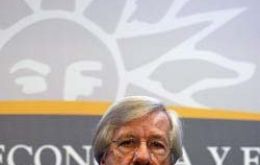
Uruguayan Vice-president Danilo Astori strongly criticized the current situation in Mercosur blasting protectionist measures of both Argentina and Brazil, which together with Paraguay are full members of the block
-
Monday, March 12th 2012 - 20:49 UTC
Argentina expected to announce more protectionist measures this week
Argentina plans to intensify its policy of protecting the trade surplus and impeding the outflow of hard currency and this week is expected to add another one hundred tariff positions which will be submitted to an increase in import levies.