MercoPress. South Atlantic News Agency
Politics
-
Tuesday, September 27th 2011 - 22:35 UTC
Argentina’s bumpy ride (and hopefully smooth landing)

The following piece was written by Andrés Velasco, a former Minister of Finance of Chile, and visiting professor at Columbia University for 2011-2012. As a neighbour of Argentina, first, and then as an economist he is well entitled to give an accurate briefing.
-
Tuesday, September 27th 2011 - 05:15 UTC
UK reaffirms Falklands’ sovereignty: ‘they are British and not negotiable’
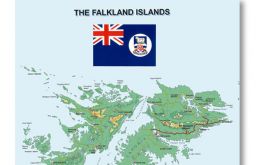
The UK has no doubts about Falkland Islands sovereignty: ‘they are British and they are not negotiable’, said on Monday a Foreign Office spokesperson in reply to a Sunday statement from the G77 plus China calling on Argentina and UK to resume sovereignty negotiations over the South Atlantic Islands.
-
Tuesday, September 27th 2011 - 01:44 UTC
Deloitte Touche Tohmatsu face 7.6bn dollars claim for failing to detect major auditing frauds

Giant accounting and consulting firm Deloitte Touche Tohmatsu has been accused of failing to detect fraud during audits of a mortgage firm which failed during the US housing crash.
-
Tuesday, September 27th 2011 - 01:17 UTC
Bolivian Indians defending their lands expose divisions in Morales government
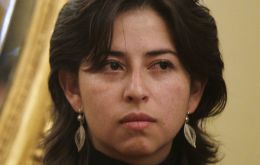
Bolivia's Defence minister resigned on Monday to protest a police crackdown and arrests on anti-highway demonstrators which according to unconfirmed reports also caused the death of a baby and several disappeared.
-
Monday, September 26th 2011 - 21:11 UTC
Falklands’ governor praises local Chilean community and links with Chile
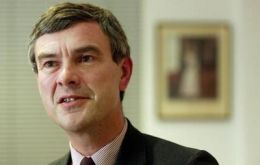
The Falklands Governor praised the Chilean members of the Islands community, described them as well integrated and good workers and said he hoped to further increase and consolidate the good longstanding relations with Chile and its people.
-
Monday, September 26th 2011 - 18:53 UTC
Venezuelan opposition requests Unasur observers for elections and primaries
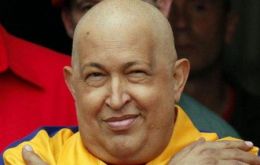
Venezuela’s Democratic Unit Panel, MUD, which brings together most opposition forces, has requested Unasur observers for the 2012 presidential election and for the different parties’ primaries.
-
Monday, September 26th 2011 - 17:10 UTC
Spanish Conservatives poised for absolute majority in November election

Spanish Prime Minister Jose Luis Rodriguez Zapatero dissolved parliament on Monday, but pledged more measures to tackle Spain's economic crisis before a November election that is expected to hand power to the conservative opposition.
-
Monday, September 26th 2011 - 06:42 UTC
Palestinians ready for negotiations if Israel freezes construction of settlements
Palestinian President Mahmoud Abbas repeated his refusal to talk with Israel without a settlement freeze after international mediators, responding to his United Nations bid for statehood, urged negotiations within a month.
-
Monday, September 26th 2011 - 04:43 UTC
Argentine inflation controversy reaches the courts: Judge subpoenaed reporters
An Argentine Judge has subpoenaed six newspapers for the names and phone numbers of all reporters and editors who have covered Argentina's economy the past five years, so they can be called as witnesses against their sources.
-
Monday, September 26th 2011 - 04:37 UTC
Chavez says he’s fine but admits feeling “a little diminished’ and short in red cells
Venezuelan President Hugo Chavez said Sunday that he is recovering “favourably” from the “impacts” of his fourth and latest round of chemotherapy, although he admitted that he feels that his physical strength is “a little diminished”.

