MercoPress. South Atlantic News Agency
Politics
-
Friday, August 3rd 2012 - 08:11 UTC
Cristina Fernandez support eroding but no rivals on sight to challenge her
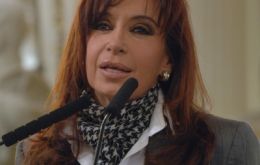
The positive image of Argentine president Cristina Fernandez has dropped 25 points and now stands at 40% after having reached 65% when her re-election last October according to an opinion poll from consultants Management & Fit.
-
Friday, August 3rd 2012 - 08:06 UTC
IMF calls for “policy game changer” in the Euro zone to arrest spread of debt crisis
The IMF called on Thursday for a “policy game changer” in the Euro zone to arrest the spread of the debt crisis it now says is clearly engulfing the entire currency bloc and its smaller neighbours.
-
Friday, August 3rd 2012 - 07:52 UTC
Peruvian police seize 2.3m counterfeit US dollar notes; so far this year 17m

Police in Peru have seized 2.3m dollars in counterfeit notes. Prosecution said the notorious Quispe Rodriguez family clan is behind the production of fake currency. Peruvian police chief, Raul Salazar, said the gang was planning to smuggle the counterfeit 50 dollar bills into the United States, hidden inside Peruvian souvenirs.
-
Friday, August 3rd 2012 - 07:46 UTC
State of emergency in south Peru to protect mining projects from guerrillas
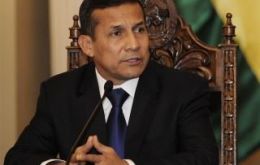
Peru’s government has extended a state of emergency for 60 days in several districts of south-central regions because of the presence of the guerrilla group Shining Path remnants.
-
Friday, August 3rd 2012 - 07:38 UTC
Venezuela fishing vessels caught in French Guiana waters will be destroyed
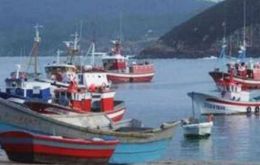
Two Venezuelan fishing vessels were caught illegally operating n French Guiana waters by a French Navy patrol and will be destroyed as is normal procedure in the territory, according to Cayenne media.
-
Friday, August 3rd 2012 - 07:24 UTC
Colombian court ruling favours indigenous people; government to appeal
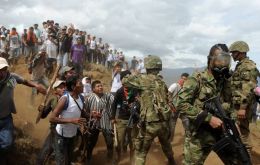
Colombian Defence minister said on Thursday the Constitutional Court’s decision to order armed forces to leave indigenous territories in south-eastern Colombia will not affect military presence in the volatile south-western Cauca department.
-
Friday, August 3rd 2012 - 07:18 UTC
Ecuador president limits publicity to “friendly” media and raids magazine office
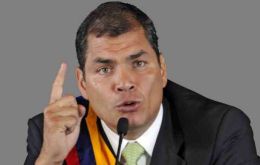
The Inter American Press Association (IAPA) described as “contrary to the principles of freedom of expression and press freedom” an order by the Government of Ecuador to withdraw official advertising from independent news media.
-
Friday, August 3rd 2012 - 07:10 UTC
Bolivia seizes silver and indium mine operated by Canadian firm
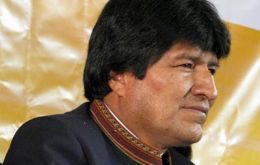
Confirming the growing trend in several South American countries, Bolivia expropriated a silver and indium mine operated by a local unit of Canadian firm South American Silver, a move criticized by Ottawa and likely to scare off foreign investors.
-
Friday, August 3rd 2012 - 00:11 UTC
Trial of the century takes off in Brazil; at stake Lula da Silva’s legacy
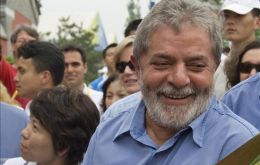
Seven years after a corruption scandal rattled the government of former President Lula da Silva, Brazil's Supreme Court began on Thursday a landmark trial that could mar the wildly popular leader's legacy.
-
Thursday, August 2nd 2012 - 22:57 UTC
Argentina’s noose on Falklands: Buenos Aires province bans UK flagged vessels
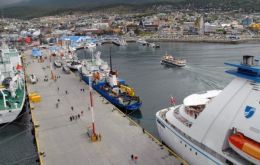
In what is seen as another step of Argentina’s noose-tightening of the Falkland Islands’ economy and development, the Buenos Aires Province Senate passed a law on Thursday banning British flagged vessels from calling at Argentina’s largest province ports.

