MercoPress. South Atlantic News Agency
Politics
-
Wednesday, April 4th 2012 - 01:37 UTC
Brazil announces 35bn dollars stimulus measures to prop industry

Brazil announced on Tuesday tax cuts and other stimulus measures worth about 65 billion Reais (35 billion dollars) to protect the country’s struggling industry from what she said were “predatory” trade practices by rich nations.
-
Tuesday, April 3rd 2012 - 22:36 UTC
Foreign Office condemns violent actions against UK embassy in Buenos Aires
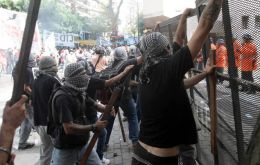
The Foreign Office condemned on Tuesday today what it called “violent actions of a minority” following Monday’s demonstration on the surroundings of the British Embassy located at the Recoleta neighbourhood, Buenos Aires City.
-
Tuesday, April 3rd 2012 - 22:33 UTC
Argentine Malvinas war June 14 surrender telegram auctioned for £ 7.250
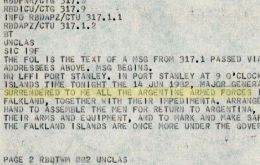
One day after the 30th anniversary of the beginning of the Malvinas war, Bonhams auction house sold a copy of the telegram with which Argentina surrendered in 1982, for £7.250.
-
Tuesday, April 3rd 2012 - 22:28 UTC
Ecuador will not attend Americas summit in solidarity with Cuba’s exclusion
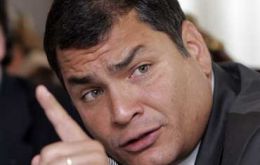
Ecuador's President Rafael Correa confirmed he will not attend this month's Summit of the Americas in Colombia, nor any other gathering that excludes Cuba or fails to address what he calls the region's most pressing issues.
-
Tuesday, April 3rd 2012 - 21:16 UTC
Standing invitation to C24 chair and fact finding commission to travel to Falklands
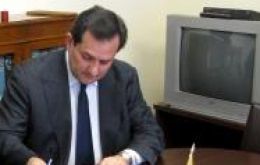
The Falklands government repeated on Tuesday its standing invitation to any current or future chair of the UN Decolonization Committee to visit the Islands and reiterated it welcomes any fact finding commission the C24 wishes to send.
-
Tuesday, April 3rd 2012 - 20:47 UTC
“The Falklands belong to the Islanders” and are the key to the question
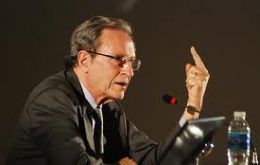
“The Falkland Islands belong to you, the Islanders”, said one of Argentina’s top political analysts and journalists Mariano Grondona. Although the quote, from the Penguin News, dates back to October 1998 when he was invited to the Islands by the Falklands Legislative Council, Mr. Grondona has not betrayed the statement and reiterated his opinion.
-
Tuesday, April 3rd 2012 - 05:15 UTC
The Peruvian Exocet connection in the Falklands/Malvinas war
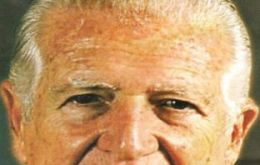
It was 1982 and Peru had returned to the path of democracy. Belaunde Terry was elected president, the same man the military ousted in 1968, and he was no friend of military or right wing dictatorships.
-
Tuesday, April 3rd 2012 - 03:44 UTC
FARC free ten military hostages held in jungle prisons for more than a decade
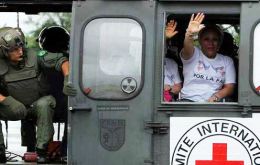
Colombia's FARC rebels on Monday freed 10 members of the armed forces held hostage in jungle prison camps for more than a decade, the last of a group of captives the drug-funded group has held as bargaining chips to pressure the government.
-
Tuesday, April 3rd 2012 - 03:33 UTC
Americas Summit expected to release support-statement for Argentina’s Falklands claim

Thirty years after the Falklands/Malvinas war, Latin America seems to be closing ranks behind Argentina's sovereignty claim over the disputed islands and reviving a bid for control in the resource-rich South Atlantic.
-
Tuesday, April 3rd 2012 - 00:47 UTC
Argentine invasion of the Falklands, ‘a profound wrong’ says PM Cameron
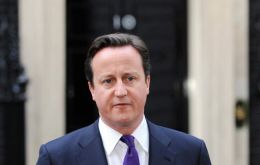
British Prime Minister David Cameron on Monday April 2 called Argentina's invasion of the Falkland Islands three decades ago a “profound wrong” aimed at depriving the Islanders of their freedom.

