MercoPress. South Atlantic News Agency
Tag: Central Bank of Uruguay
-
Tuesday, September 1st 2026 - 09:49 UTC
Uruguay's central bank marks five years without intervening in the currency market
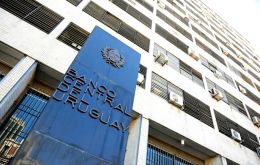
The Central Bank of Uruguay completed five years on Monday without intervening in the foreign exchange market. Its last operation was a purchase of 31.2 million dollars in 2021. Its president, Guillermo Tolosa, described the milestone as of “enormous” importance and said the country is going through a period of “absolutely free floating of the currency”.
-
Wednesday, June 17th 2026 - 08:27 UTC
Uruguay enjoys 'positive discrimination' but must lift investment and productivity, BBVA says
Uruguay enjoys a “positive discrimination” relative to other economies for its institutional solidity, respect for agreements and political maturity, but its economic growth has been low over the past decade and its potential GDP —now at 2.1%— is declining. That was the assessment of economists from BBVA Research, one of Europe's largest banks, at the “Situación Uruguay” webinar, where they said the country's main challenge is to boost investment and raise productivity.
-
Thursday, April 23rd 2026 - 12:28 UTC
Latin America's largest investment bank targets Uruguay as regional hub after acquiring local HSBC unit

Brazilian group BTG Pactual, Latin America's largest investment bank, is awaiting authorisation from Uruguay's Central Bank (BCU) to begin operating in the local financial market following its $175 million acquisition of HSBC Uruguay, agreed in July 2025. Group executives expect regulatory approval to come through by mid-year, allowing them to begin operations gradually in the second half of 2026.
-
Wednesday, March 4th 2026 - 13:27 UTC
Uruguay cuts policy rate to 5.75% after external shock, with inflation still below target
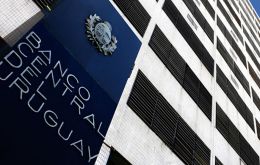
Uruguay’s Central Bank cut its benchmark policy rate by 75 basis points to 5.75%, from 6.5%, in a unanimous decision and the seventh consecutive reduction, as it weighed the market impact of the renewed Middle East conflict and a rebound in the U.S. dollar.
-
Monday, February 16th 2026 - 13:28 UTC
Uruguay's Conexión Ganadera case: founder’s daughter moved $15.9m, BCU says

Uruguay’s Conexión Ganadera investigation — a criminal case stemming from the collapse of a livestock-linked investment operation that led to fraud charges and, in some instances, money-laundering allegations — has moved forward after the Central Bank of Uruguay (BCU) sent prosecutors a report detailing bank transfers made by Marcela Carrasco, the daughter of Pablo Carrasco, a founder of the firm who is currently in pre-trial detention and charged with money laundering.
-
Tuesday, February 3rd 2026 - 22:12 UTC
Uruguay’s peso the most “overvalued” currency as it tops Big Mac index ranking
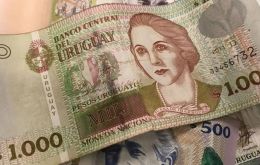
Uruguay’s peso has been labelled the world’s most “overvalued” currency against the U.S. dollar on a GDP-per-capita-adjusted basis, according to the latest Big Mac Index published by The Economist and cited by Uruguayan media. Under the adjusted methodology, the peso is estimated to be 83.9% above its implied “long-run equilibrium.” In the unadjusted ranking, Uruguay places second, with 43.1% overvaluation, behind the Swiss franc.
-
Thursday, January 29th 2026 - 00:01 UTC
Uruguay’s farm sector warns low dollar threatens jobs as peso strength squeezes exports

Uruguay’s Rural Association (ARU) is warning that the slide in the U.S. dollar is pushing the farm sector into a “critical situation,” arguing that while a stronger peso may feel beneficial for people paid in local currency, the broader impact can be job losses in export-oriented activities.
-
Tuesday, January 27th 2026 - 10:18 UTC
Uruguay Central Bank accelerates easing, cuts key rate to 6.5% as dollar hits lows

Uruguay’s Central Bank (BCU) cut its benchmark policy rate by 100 basis points to 6.5% and said monetary policy “enters an expansionary phase,” framing the move as a way to prevent inflation from drifting away from its 4.5% target and to respond to recent strains in the foreign-exchange market.
-
Tuesday, January 6th 2026 - 09:06 UTC
Uruguay records lowest yearly inflation in over two decades

Uruguay's inflation last year fell below the Central Bank’s (BCU) official target of 4.5%, hitting 3.65% after December's -0.09%, making President Yamandú Orsi's first annual National Institute of Statistics (INE) report a historic one with figures not recorded since 2001.
-
Saturday, July 5th 2025 - 10:53 UTC
Uruguay's inflation closer to target
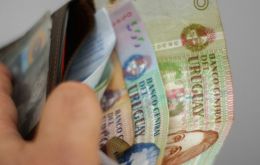
Uruguay's year-on-year inflation rate dropped to 4.59% in June, marking its fourth consecutive monthly decline. This figure is very close to Uruguay's Central Bank (BCU) target of 4.5% and keeps inflation within the 3% to 6% tolerance range for the 25th consecutive month.