MercoPress. South Atlantic News Agency
Tag: China
-
Wednesday, March 16th 2016 - 06:05 UTC
Argentina sinks Chinese jigger which refused to stop and even tried to ram the patrol vessel

Argentina's coast guard has sunk a Chinese flagged jigger that was fishing illegally within its territorial waters, the coast guard said on Tuesday, marking a first test for relations between President Mauricio Macri and Beijing.In a high-seas chase, a coast guard vessel pursued the fishing vessel Lu Yan Yuan Yu 010 toward international waters, firing warning shots across the Chinese boat's bow as it attempted to raise the crew by radio.
-
Monday, March 7th 2016 - 04:47 UTC
China anticipates rough times as it tries to create jobs and restructure the economy
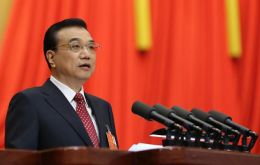
China faces a tough battle to keep its economy growing by at least 6.5% over the next five years while creating more jobs and restructuring inefficient industries, Premier Li Keqiang said as he opened China's annual parliament.
-
Tuesday, March 1st 2016 - 07:55 UTC
Chinese injects liquidity and helps boost volatile stock markets
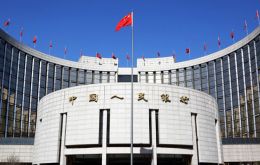
Chinese shares traded higher on Tuesday morning after a fresh stimulus push from the central bank to boost liquidity. The mainland benchmark Shanghai Composite rose 0.3% to 2,696.96 points.
-
Tuesday, March 1st 2016 - 07:32 UTC
China to the rescue of debt-burdened Petrobras with a US$10bn credit

Bonds issued by Brazil's Petrobras ended one to two points higher on Monday as the beleaguered oil company eased refinancing pressure by clinching a US$10bn loan from China. The US$10bn loan from China Development Bank, which can be repaid in cash or oil, will do much to reduce refinancing risks for what is one of the world's most indebted companies.
-
Monday, February 29th 2016 - 09:03 UTC
G20: Beijing tailors generic final declaration with no specific mention to China's problems
China pulled off a defensive win at the Shanghai Group of 20 (G20) meeting of global finance leaders after months of angst abroad over its economic and policy direction. For starters, there was no specific concern over China in the communiqué released late Saturday.
-
Monday, February 22nd 2016 - 08:28 UTC
Brazil heading for a record crop of 100 million tons of soybeans
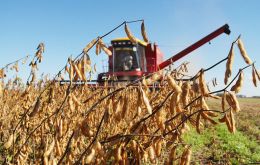
As the soybean harvest gets under way in Brazil, analysts are having a clearer picture of whether the forecast record-setting crop will hit the century mark of 100 million tons despite hot and dry weather in Mato Grosso and northeastern Brazil as pods set and fill.
-
Monday, February 15th 2016 - 07:20 UTC
With Chinese New Year over, central bank reaffirms strong Yuan policy
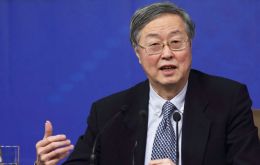
Chinese central bank governor Zhou Xiaochuan has accused “speculative forces” of targeting the country's currency, the Yuan, and argued there was no reason for the Yuan to keep depreciating in value and that China would not let international speculators dominate market sentiment.
-
Monday, February 1st 2016 - 09:36 UTC
China's manufacturing contracts for sixth month running in January
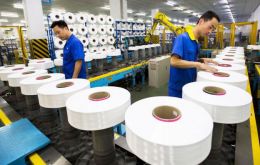
Activity in China's manufacturing sector contracted for the sixth month in a row in January - and hit its lowest level since 2012. According to the government's latest factory survey, the Purchasing Managers' Index (PMI) showed a reading of 49.4 for the month compared to December's reading of 49.7.
-
Tuesday, January 12th 2016 - 06:25 UTC
Chile seaweed exports net 209 million dollars in nine months

Seaweed exports from Chile reached 209 million dollars in the first nine months of the year, which is 16.4% below the same period in 2014.According to the latest Boletín de Exportaciones Pesqueras y de Acuicultura de Chile, (Fisheries and Aquaculture exports report) prepared by the Economy Department of the Fisheries Development Institute (IFOP), the contribution of these products to total income received from the sector's exports was 5%.
-
Thursday, January 7th 2016 - 08:46 UTC
World bank slashes 2016 global economy growth forecast; points to disappointing “China and Brazil”

World Bank slashed its growth forecast for the global economy in 2016, citing “disappointing” growth in major emerging market economies like China and Brazil. The bank has cut its previous June forecast for global economic expansion in 2016 by 0.4 percentage point to 2.9%, though that is still faster than 2015's sluggish 2.4%, which itself missed an earlier prediction.