MercoPress. South Atlantic News Agency
Tag: Donald Trump
-
Friday, February 8th 2019 - 10:10 UTC
Trade deal: Trump said no meeting with Xi before the March first deadline

President Donald Trump said on Thursday he did not plan to meet with Chinese President Xi Jinping before a March 1 deadline set by the two countries to achieve a trade deal.
-
Wednesday, February 6th 2019 - 09:53 UTC
Trump announces meeting with Kim, calls for unity and blasts “ridiculous partisan investigations”
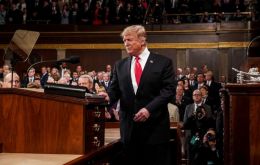
United States President Donald Trump has announced in his State of the Union speech that he will hold a second nuclear summit with North Korea's leader this month. In an address to the nation with the theme “Choosing Greatness”, he vowed once again to build a border wall.
-
Tuesday, February 5th 2019 - 09:35 UTC
Trump's pick for the World Bank, a skeptic of multilateral institutions
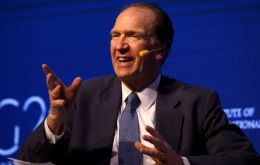
The Trump administration has notified World Bank shareholders that President Donald Trump intends to pick senior Treasury Department official David Malpass as the U.S. nominee to lead the development lender, people familiar with the decision said on Monday.
-
Tuesday, February 5th 2019 - 09:07 UTC
European allies bend to join 'gringo empire' approach

The decision to promote Juan Guaidó as a rival president to Nicolás Maduro in Venezuela was clearly made in Washington, not in Caracas. The speed with which U.S. allies in the Americas and western Europe recognised Guaidó’s claim on Jan. 23 to be the legitimate president of Venezuela would not have been possible without a lot of prior coordination — and a lot of pressure by the Trump administration.
-
Monday, February 4th 2019 - 07:44 UTC
United States sending more troops to the border with Mexico
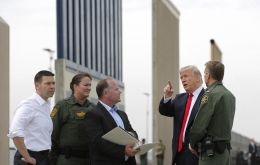
The US is to send an additional 2,000 troops to its border with Mexico, the Pentagon has announced. It will bring the total number of troops stationed on the southern border to about 4,300. The Pentagon said the soldiers would help border-patrol agents, carry out surveillance work and install miles of razor wire.
-
Friday, February 1st 2019 - 09:56 UTC
Summit with Xi, “soon”, should seal “the biggest deal ever made” forecasts Trump

U.S. President Donald Trump said on Thursday he will meet with Chinese President Xi Jinping soon to try to seal a comprehensive trade deal as Trump and his top trade negotiator both cited substantial progress in two days of high-level talks.
-
Thursday, January 31st 2019 - 09:25 UTC
Washington warns traders not to deal with gold or oil “stolen from the Venezuelan people”

The White House warned traders on Wednesday not to deal in Venezuelan gold or oil following its imposition of stiff sanctions aimed at forcing socialist President Nicolas Maduro from power.
-
Wednesday, January 30th 2019 - 09:00 UTC
Corruption remains mainly unchanged in the Americas, according to Transparency International

With an average score of 44 for three consecutive years, the Americas region continues to fail in making any serious inroads against corruption, according to the latest report from Transparency International. Compared to other regions, the Americas is similar to Asia Pacific (average score: 44), but behind Western Europe and the European Union (average score: 66).
-
Tuesday, January 29th 2019 - 09:25 UTC
Rough times ahead: US Justice files several criminal charges against Huawei and the owner's daughter

The United States Justice Department has filed a host of criminal charges against Chinese telecoms giant Huawei and its chief financial officer, Meng Wanzhou. The charges against the world's second largest smart-phone maker include accusations of bank fraud, obstruction of justice and theft of technology.
-
Saturday, January 26th 2019 - 08:23 UTC
Trump yields and agrees to lift 35-day government shutdown...until 15 February
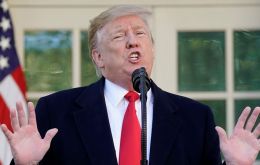
President Donald Trump agreed under mounting pressure on Friday to end a 35-day-old partial U.S. government shutdown without getting the US$5.7 billion he had demanded from Congress for a border wall, handing a political victory to Democrats.