MercoPress. South Atlantic News Agency
Tag: Indec
-
Wednesday, September 9th 2026 - 08:59 UTC
Argentine industry contracted 5% in July from June, its steepest monthly drop this year

Argentina's manufacturing output fell 5% in July from June in seasonally adjusted terms, the sharpest monthly decline so far in 2026, the National Institute of Statistics and Census (INDEC) reported on Tuesday.
-
Tuesday, August 25th 2026 - 21:39 UTC
Argentine trips abroad fall 21.2% as Brazil and Uruguay lead arrivals

The number of Argentine residents leaving the country in July fell 21.2% year on year, to 1.22 million people, according to the international tourism statistics report released on Tuesday by the National Institute of Statistics and Censuses. In the opposite direction, 830,200 foreign visitors entered the country, 17.9% more than a year earlier.
-
Tuesday, July 21st 2026 - 01:05 UTC
Argentina's June trade surplus rises 149% year-on-year on stronger exports

Argentina posted a trade surplus of $2.194 billion in June, a 149.6% increase from the same month in 2025, driven by growth in exports, the National Institute of Statistics and Census (Indec) reported on Monday.
-
Wednesday, April 15th 2026 - 10:23 UTC
Milei blames opposition and Iran war for 3.4% inflation and calls for patience

Argentine President Javier Milei devoted his speech on Tuesday at the American Chamber of Commerce (AmCham) summit to addressing the March inflation figure released hours earlier by statistics agency INDEC: a monthly 3.4%, the highest reading in a year and the tenth consecutive month of acceleration since the 1.5% recorded in May 2025.
-
Monday, February 23rd 2026 - 04:48 UTC
IMF flags risks of outdated inflation metrics in fast-changing economies

The International Monetary Fund (IMF) is urging countries to modernize how they measure inflation and other key indicators, integrating point-of-sale and online data to reduce “blind spots” that, the institution argues, are widening as the economy becomes more digital and traditional surveys lose accuracy.
-
Tuesday, February 10th 2026 - 21:14 UTC
Argentina: January inflation hits 2.9% and 12-month rate reaches 32.4%, INDEC says
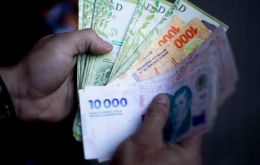
Argentina’s inflation came in at 2.9% in January, taking the 12-month rate to 32.4%, according to the national statistics agency INDEC. The reading marked an acceleration of 0.1 percentage points from December.
-
Wednesday, February 4th 2026 - 02:51 UTC
Argentine shares slide in New York as country risk climbs above 500 points

Argentine stocks and hard-currency bonds fell on Tuesday, hit by a risk-off turn in global markets and fresh domestic uncertainty tied to the stalled overhaul of inflation measurement following Marco Lavagna’s departure from INDEC.
-
Friday, September 19th 2025 - 09:37 UTC
Argentina records 21st straight trade surplus
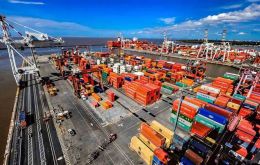
Argentina's trade surplus last month was US$1.402 billion, which was way higher than expectations. According to the National Institute of Statistics and Censuses (Indec), this marks the 21st consecutive month of a trade surplus for the country.
-
Thursday, May 15th 2025 - 10:24 UTC
Argentina: Indec says April's inflation stood at 2.8%

Argentina's Consumer Price Index (CPI) reached 2.8% in April 2025, the National Institute of Statistics and Census (Indec) reported Wednesday in Buenos Aires, much to President Javier Milei's content and the bafflement of the population coping with an unmatching reality.
-
Friday, February 14th 2025 - 10:37 UTC
Argentina: Indec says January's inflation stood at 2.2%
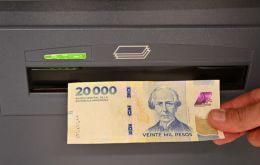
Argentina's inflation in January 2025 stood at 2.2%, down from 2.7% in December, the National Institute of Statistics and Census (Indec) said in a report released Thursday, which also showed yoy values of 84.5%. January's was the lowest Consumer Price Index (CPI) since July 2020 - 1.9% amid the Covid-19 pandemic - and also the best under Javier Milei, who took office on Dec. 10, 2023. The President's best previous CPI was in November 2024 at 2.4%.

