MercoPress. South Atlantic News Agency
Tag: Miguel Diaz-Canel
-
Wednesday, April 18th 2018 - 07:37 UTC
Who is Miguel Díaz-Canel who is expected to lead Cuba after 60 years of the Castro dynasty
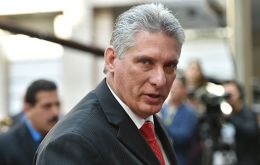
Cuba is set to undergo a historic shift this week, elevating a relatively unknown Communist Party official to replace retiring President Raúl Castro. But who is Miguel Díaz-Canel? And what does his ascension to the top of Cuba's government mean for a country that has been run by the Castro brothers for nearly 60 years?
-
Monday, March 12th 2018 - 09:43 UTC
Raul Castro succession process takes off; heir apparent blasts US for “resuming a Cold War rhetoric”
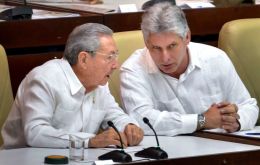
Cuba Vice President Miguel Diaz-Canel, tipped to succeed President Raul Castro, accused the US yesterday of “resuming a Cold War rhetoric” and of “attacking” the Cuban revolution. Diaz-Canel spoke to state television after casting his vote in elections for a parliament that will choose Castro’s successor on April 19.
-
Tuesday, December 26th 2017 - 10:41 UTC
Cuba preparing for transition to new generation: Díaz-Canel should replace Raul Castro in April
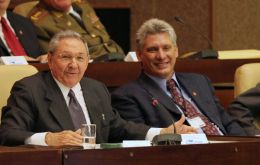
The Cuban parliament enacted a proposal that extends Raúl Castro’s term from the original February 24 deadline. The Council of the State underscored that the extension was based on the “exceptional situation” Cuba finds itself in due to costly damages Hurricane Irma inflicted on the island last September.
-
Tuesday, May 2nd 2017 - 06:30 UTC
End of an era in Cuba? Last of a May Day celebration without a Castro brother
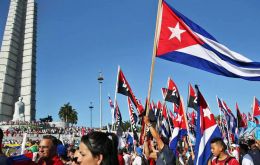
The Cuban government's traditional May Day parade Monday is the last to be overseen by President Raul Castro, and the first without his late brother and revolutionary predecessor Fidel.
-
Monday, February 25th 2013 - 05:48 UTC
Cuba re-elects Raul Castro and unveils his de facto political heir: Diaz-Canel
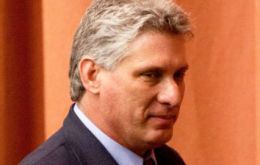
Raul Castro was re-elected as Cuba's president Sunday, officially to his last five-year term, with a new regime number two, Council of State Vice President Miguel Diaz-Canel, official media said.