MercoPress. South Atlantic News Agency
Tag: oil price
-
Friday, July 6th 2018 - 08:16 UTC
The new oil cartel threatening OPEC

When reports emerged that India and China are in talks about forming an oil buyers' club, OPEC was probably too busy with its upcoming June 22 meeting to concern itself with that dangerous alliance. Now, it may be time for it to start worrying.
-
Wednesday, May 30th 2018 - 08:58 UTC
Truckers union calls an end to the crippling strike, but some still resist

One of the main unions behind a crippling truckers' strike in Latin America's largest nation on Tuesday called on its members to return to work, warning that failing to do so would erode hard-won gains.
-
Friday, May 18th 2018 - 08:24 UTC
Oil hits US$ 80, its highest level since 2014; London's FTSE on new all time-high

Benchmark oil contract Brent North Sea hit its highest level since late 2014 on Thursday, breaching US$ 80 per barrel, with some market players predicting it could rise all the way to US$ 100. Higher oil prices, in turn, pushed the shares of energy firms in European stock markets higher, helping London's FTSE to set a new all-time high, and the Paris CAC to establish a fresh 2018 peak.
-
Monday, March 5th 2018 - 09:19 UTC
YPF recovers from 2016 and posts full year profit of US$ 627m for 2017

Argentina’s state-owned oil company YPF SA posted a full-year 2017 profit of 12.7 billion pesos (US$ 627.16 million), the company said, rebounding from a 28.4 billion-peso loss in 2016.
-
Sunday, March 4th 2018 - 15:58 UTC
Oil Market Fears: War, Default And Nuclear Weapons
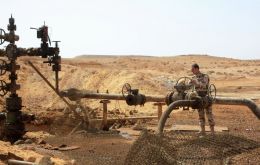
The U.S. is one of the few areas of the world in which there is an energy investment boom underway, a development that could smooth out the uncertainties of geopolitical events around the world. At the same time, outside of the U.S., there is a deterioration of stability in many oil-producing regions, aggravating risks for both oil companies and the oil market, according to a new report.
-
Sunday, February 25th 2018 - 13:48 UTC
Why The Next Oil Boom Will Be Fueled By Blockchain

Big Oil is due for a disruption.
-
Wednesday, February 21st 2018 - 01:26 UTC
Petro, the Venezuelan cryptocurrency is online

The pre-sale of Petro began early on Tuesday, the cryptocurrency proposed by the Venezuelan government in recent weeks and backed by the country's natural resources. According to experts, it is “ridiculous”, arguing that the creation of a new currency would aggravate the economic crisis in the Caribbean country.
-
Wednesday, February 14th 2018 - 16:28 UTC
Clean Oil That Only Costs $20

The United States is in the midst of an energy revolution.
Oil production has risen by 5 million barrels per day (bpd) since 2010, an increase of nearly 100 percent. New technology, particularly techniques in shale oil drilling, has opened up vast new opportunities for oil and gas companies. -
Wednesday, February 7th 2018 - 14:41 UTC
Oil Prices Ravaged By Financial Turmoil
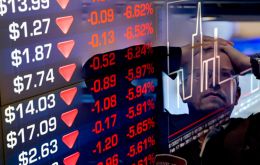
By Nick Cunningham of Oilprice.com
Oil prices fell back suddenly over the last few trading sessions, dragged down by some forces beyond the oil market. -
Wednesday, January 17th 2018 - 09:32 UTC
Hard times in Cuba: electricity and fuel cuts, slashed imports and payments to suppliers delayed
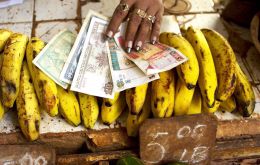
Cuba has not provided a detailed breakdown of key economic activity in its annual statistical abstract for the first time this century, leaving would-be investors more in the dark than usual about the cenrtralized-run economy.