MercoPress. South Atlantic News Agency
Uruguay
-
Tuesday, June 17th 2014 - 07:06 UTC
Argentina questions UPM-Botnia's political influence on Uruguayan government

Argentine foreign minister Hector Timerman said that the pulp mill dispute with Uruguay is 'political' and wondered how great is Finland's' Botnia-UPM influence in the country, but at the same time underlined that all chances of dialogue have been 'exhausted'.
-
Monday, June 16th 2014 - 06:26 UTC
Cristina Fernandez and Mujica, so close but ever so distant

The lasted chapter of the resurgent diplomatic conflict between Argentina and Uruguay was not addressed during a brief encounter of presidents Cristina Fernandez and Jose Mujica in Bolivia where they attended the G77 plus China summit over the weekend.
-
Saturday, June 14th 2014 - 09:29 UTC
Argentina on the war path against Uruguay following re-ignition of pulp mill dispute

Argentina reacted strongly and with a letter in harsh terms to Uruguay's decision to authorize Finland's UPM-Kymmene pulp mill to increase annual production by 8%. The letter addressed by Foreign minister Hector Timerman to his peer Luis Almagro informs Argentina will take the case to international tribunals and is currently 'reassessing' bilateral relations.
-
Friday, June 13th 2014 - 08:37 UTC
Uruguay's main parties completed their presidential tickets for 26 October

Uruguay's ruling coalition and the main opposition National party have finally worked out their presidential tickets for October's general election, following on the results, and subsequent negotiations, of the June first primary elections.
-
Thursday, June 12th 2014 - 07:39 UTC
Beijing hosts this year's Meat Congress; China has become Uruguay's main beef client

China will be holding this year's World Meat Congress in Beijing, an event traditionally hosted by meat producing and exporting countries. However the significance of the world's second largest economy and its booming demand for meat have made it the right place for the 14/16 June conference.
-
Wednesday, June 11th 2014 - 01:48 UTC
Uruguay issues 2 billion dollars of new 2050 global bond to help spread the country's debt
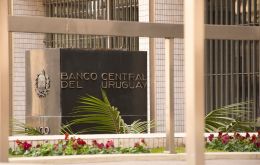
Uruguay issued 2 billion dollars of a new 2050 global bond on Tuesday at a spread of 165 to 170 basis points over U.S. Treasuries as part of the government's bid to put less strain on its accounts in the near- and medium-term, it was reported.
-
Wednesday, June 4th 2014 - 09:14 UTC
Uruguay ready to receive Guantanamo prisoners and displaced Syrian children

Uruguayan government negotiations with Washington to receive detainees from the US jail in Guantanamo base, and with the UN to host Syrian children and their families are well advanced, revealed Foreign minister Luis Almagro.
-
Wednesday, June 4th 2014 - 09:03 UTC
Timid S&P ignores Moody's and leaves Uruguay' risk rating unchanged

Standard & Poor's (S&P) decided on Tuesday to maintain Uruguay's sovereign debt risk rating unchanged at the lowest investment grade BBB-, because although it has solid growth prospects, predictable policies and a favorable debt profile, the country still has limited fiscal and monetary flexibility and lives in a neighborhood experimenting 'economic stress'.
-
Tuesday, June 3rd 2014 - 05:51 UTC
Uruguay's primaries give birth to a new young leader in the ruling coalition

Yet more surprises from last Sunday's primaries in Uruguay to choose candidates for the October presidential election. Not only did the main opposition vote overwhelmingly for renewal, but now it has emerged that in the ruling coalition, which suffers from a generation of Jurassic leaders, a young challenger has emerged as the most voted and is now demanding a place in the presidential ticket.
-
Monday, June 2nd 2014 - 08:21 UTC
Moody's upgrades Uruguay's rating to Baa3, based on reduced 'vulnerabilities'

Moody's Investors Service last Friday announced it had upgraded Uruguay's government bond rating to Baa2 from Baa3, and assigned a stable outlook to the Baa2 rating. The upgrade was driven by the strengthening of Uruguay's sovereign credit profile, as reflected by the convergence of fiscal and debt metric, an overall government debt profile that is currently associated with moderate credit risks, and the country's reduced vulnerabilities to regional and commodity shocks.