MercoPress. South Atlantic News Agency
Venezuela
-
Thursday, April 30th 2026 - 13:18 UTC
European Parliament urges sanctions on Venezuela to remain until verifiable democratic progress
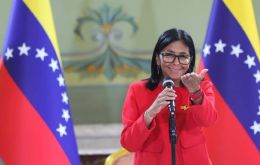
The European Parliament approved on Thursday, by a wide majority, a resolution urging the Council of the European Union not to lift sanctions imposed on those responsible for human rights violations in Venezuela until the country adopts “significant measures toward a peaceful transition to democracy.” The text, promoted by the European People's Party, gained 507 votes in favor, 31 against, and 35 abstentions, and was backed even by the Socialists and Democrats group despite internal divergences over the strategy toward the government of acting President Delcy Rodríguez.
-
Thursday, April 30th 2026 - 13:09 UTC
US intervention forces end to decade of statistical opacity at Venezuela's Central Bank
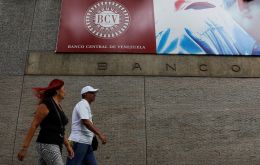
The Central Bank of Venezuela (BCV) has begun systematically publishing economic indicators that had been held under wraps for at least a decade, in an institutional shift driven by the US military intervention that culminated on January 3 with the capture of former president Nicolás Maduro and by the subsequent reconfiguration of Venezuela's financial system under Washington's oversight. The updating of historical series on the central bank's website now makes it possible to learn for the first time in years that monthly inflation reached 32% in January, 14.6% in February and 13.1% in March, while the year-on-year figure stood at 649.5% at the end of the first quarter.
-
Friday, April 24th 2026 - 11:31 UTC
Petro travels to Caracas to meet Delcy Rodríguez following failed Cúcuta summit
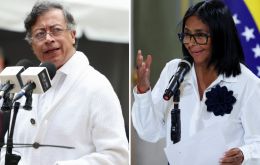
Colombian President Gustavo Petro will meet at midday on Friday in Caracas with Venezuela's acting President Delcy Rodríguez, in what marks the first official meeting between a head of state and the Venezuelan leader since she took office on January 5, following the capture of former president Nicolás Maduro in a US military operation on January 3 of this year.
-
Monday, April 20th 2026 - 18:02 UTC
Irregular Venezuelans in Chile want to leave but can't: no papers, no consulate, no return mechanism
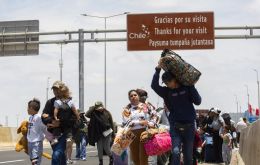
As President José Antonio Kast's government ramps up its campaign against irregular immigration with deportation flights and promises of mass expulsions, thousands of undocumented Venezuelans in Chile face a paradox: they want to leave but cannot do so legally. Without valid passports, without Venezuelan consular services in the country and without a formal voluntary return mechanism, they are trapped between a government that does not want them and a homeland they cannot reach.
-
Sunday, April 19th 2026 - 10:51 UTC
Maria Corina Machado draws thousands of Venezuelans in Madrid, declares: “Today we begin the journey home”
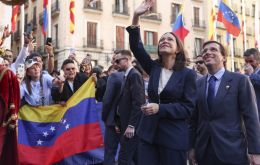
Venezuelan opposition leader and Nobel Peace Prize laureate María Corina Machado on Saturday drew thousands of Venezuelans to Madrid's Puerta del Sol, where she received the Gold Medal of the Community of Madrid from regional president Isabel Díaz Ayuso and proclaimed the start of a new phase in the push for free elections in Venezuela.
-
Thursday, April 16th 2026 - 23:55 UTC
Venezuela dismantles Nestor Kirchner Room at Miraflores and repurposes it to receive US officials
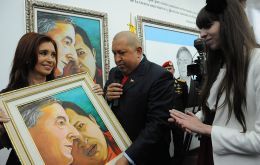
Venezuela's acting President Delcy Rodríguez ordered the dismantling of the “Néstor Kirchner Room” at Miraflores Palace, a space that for nearly fifteen years served as a symbol of the political alliance between Chavismo and Kirchnerism. The measure involved removing portraits, paintings, quotations and objects linked to the former Argentine president, and converting the room into a meeting space with a neutral aesthetic that, according to Venezuelan outlet Monitoreamos, is now used to receive US officials.
-
Wednesday, April 15th 2026 - 00:59 UTC
US lifts sanctions on Venezuela's Central Bank and backs its return to the IMF
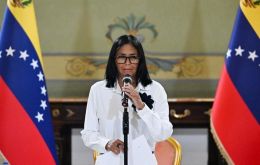
The US Treasury Department on Tuesday lifted financial sanctions on Venezuela's Central Bank and three other state-owned banking institutions, in the most significant easing of the punitive regime in place since 2017. On the same day, Treasury Secretary Scott Bessent publicly endorsed efforts by the International Monetary Fund to reintegrate Venezuela into the international financial system.
-
Monday, April 13th 2026 - 21:37 UTC
Venezuela expands Chevron operations in Orinoco Belt following hydrocarbon reform
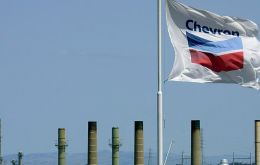
Venezuela's government on Monday signed an agreement expanding US oil company Chevron's operations in the country, weeks after a hydrocarbon reform opened the sector to private and foreign investment. The signing ceremony took place at the Miraflores presidential palace in Caracas.
-
Friday, April 10th 2026 - 02:18 UTC
Venezuelan parliament passes law opening mining sector to private capital amid rapprochement with US
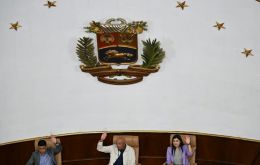
Venezuela's National Assembly unanimously approved on Thursday a new 131-article Organic Mining Law that opens the door to private and foreign investment in the mining sector, on a day also marked by police repression of thousands of workers who marched to demand an increase in the minimum wage, frozen since 2022.
-
Tuesday, April 7th 2026 - 21:06 UTC
“Has anyone talked about democracy? No”: OEI secretary criticizes Trump's oil-driven approach to Venezuela

The secretary general of the Organization of Ibero-American States for Education, Science and Culture (OEI), Mariano Jabonero, said that US President Donald Trump's primary interest in Venezuela is energy-related and has nothing to do with promoting democratic values or civilization.
