MercoPress. South Atlantic News Agency
Agriculture
-
Friday, November 4th 2016 - 19:44 UTC
Brazilian soy and corn yields on the rise, according to Conab data

Brazilian farmers’ soy and corn yields have been on the rise, according to data from Conab, an agency from the Ministry of Agriculture. Conab just issued a report putting numbers to the yield growth numbers, and it’s clear that not only are acres on the rise for both soybeans and corn, but productivity is up, too.
-
Tuesday, November 1st 2016 - 18:36 UTC
Argentina invests heavily in major dry bulk and vegetable oils port terminal

Bunge and Aceitera General Deheza S.A. (AGD) announced they will jointly invest US$100 million in Puerto General San Martin’s T6 industrial complex and port terminal. Puerto General San Martin is an inland port in Argentina that sits on the Paraná River.
-
Tuesday, November 1st 2016 - 08:11 UTC
Argentina 2016/17 wheat production estimated at 14.4m tons and 8m tons exports
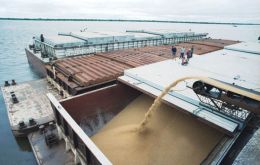
Argentina’s wheat production is estimated at 14.4 million tons in 2016-17 and total exports are estimated at 8.03 million tons, the U.S. Department of Agriculture’s (USDA) Foreign Agricultural Services (FAS) said in its latest report. The main market is expected to be Brazil, the historic, natural market for Argentine wheat and flour.
-
Thursday, October 27th 2016 - 01:42 UTC
Epic cheese glut in US; farmers dumping milk into lagoons

The United States is currently in the midst of an epic cheese glut — with 1.2 billion pounds of cheese sitting in cold storage. This in practical terms means every man, woman, and child would have to grab an extra three pounds chair. That’s over and above the 36 pounds of cheese per year the average American already eats.
-
Friday, October 21st 2016 - 14:20 UTC
Falklands in short supply of fresh produce, because of changes in Chilean Customs procedures
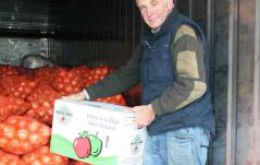
Falkland Islanders has been warned that fresh produce may be in short supply for some time to come due to changes in the Chilean Customs' procedures. Stanley Growers owner Tim Miller said that a large order for fruit and vegetables was not shipped from Santiago last week, as Customs officials at Punta Arenas insisted for the first time that LATAM airline provide them, in advance, with exact weight and contents of the cargo.
-
Friday, October 14th 2016 - 11:47 UTC
Symbolic trial will try to hold Monsanto accountable for “ecocide”

This weekend 30 witnesses and legal experts from five different continents will testify before five international judges at the three-day Monsanto Tribunal in The Hague, Netherlands. Their testimonies will attempt to hold the agrochemical giant accountable for their alleged “crimes against humanity” and destruction of the environment, or “ecocide”
-
Friday, October 14th 2016 - 09:37 UTC
Falkland Island farmers tour Australia for improved sheep genetics

Three Falkland Islands farmers and the general manager of Falklands Landholdings Corporation recently travelled to Australia as part of the ongoing search for improvements to lamb survival rates in the Falklands. Touring farms in both Queensland and New South Wales, the group spent three weeks inspecting Australian studs in search of better fat and muscle values in young rams.
-
Monday, October 10th 2016 - 11:38 UTC
Record global productions of wheat, rice and corn will keep prices low

Global food markets will likely remain “generally well balanced” in the year ahead, as prices for most internationally-traded agricultural commodities are relatively low and stable, FAO said. The benign outlook, especially for staple grains, is poised to lower the world food import bill to a six-year low, according to the Food Outlook.
-
Saturday, October 8th 2016 - 09:59 UTC
WTO confirms ruling in favor of Argentina in biodiesel imports dispute with EU

The World Trade Organization confirmed on appeal on Thursday its ruling partially in favor of Argentina in its dispute with the European Union over duties the bloc imposes on imported biodiesel.
-
Wednesday, September 28th 2016 - 08:10 UTC
Argentina lost 12% of national flock to severe drought in north Patagonia

North Patagonia in Argentina is suffering the worst drought is 17 years which has meant the loss of 1.8 million sheep, since 2007, and so far this year rainfall has been 45% below the historic average.
