MercoPress. South Atlantic News Agency
Agriculture
-
Saturday, August 4th 2012 - 03:14 UTC
Venezuela accession to Mercosur “by the back door”, according to The Economist

Under the heading of “In by the back door” referred to the expansion of Mercosur, The Economist says “bringing Venezuela certainly was smart, in the sense of cunning rather than wise”, but it was done ignoring the block’s rules which call for unanimity in admitting new members.
-
Tuesday, July 31st 2012 - 11:20 UTC
Uruguay’s citrus industry hit by frosts accumulates losses of 35m dollars
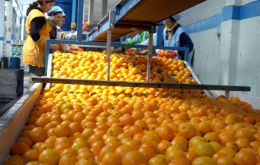
Uruguay estimates that the citrus industry will experience losses of 35 million dollars because of the intense frosts. The 35 million includes 12 million dollars in lost salaries and contributions to social security.
-
Tuesday, July 31st 2012 - 02:05 UTC
Uruguay expects to plant a record area of soybeans this coming season
The soybean area and crop of the next harvest in Uruguay is expected to establish a new record with an additional 10% acreage, totalling over a million hectares boosted by excellent international prices and good weather prospects, according to reports from local grain and oilseed operators.
-
Monday, July 30th 2012 - 23:28 UTC
As world food-prices soar World Bank says it is ready to help countries
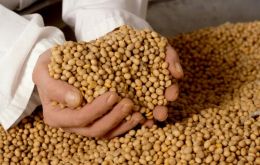
The World Bank on Monday said it stood ready to help governments respond to a broad-based run-up in grain prices that has again put the world’s poorest people at risk and could have lingering detrimental impacts for years.
-
Monday, July 30th 2012 - 05:09 UTC
Argentine farmers’ leader calls for “the end to corruption and intolerance”

Argentine Rural Society (SRA) head Hugo Biolcati said that Argentine institutions are “deteriorating“ and that ”the Constitution” is no longer in use, as he inaugurated this weekend the 126th annual edition of the camp exhibition at the Palermo Rural pavilion in the City of Buenos Aires.
-
Saturday, July 28th 2012 - 11:21 UTC
Argentine grains futures market in shock: government wants operations in Pesos

Argentina could require that grains futures be listed in the local Peso currency the head of the central bank said on Friday, a move that traders said would paralyze markets in the leading global food supplier.
-
Saturday, July 28th 2012 - 02:12 UTC
Mujica forecasts Venezuela will rapidly become Uruguay’s third trade partner
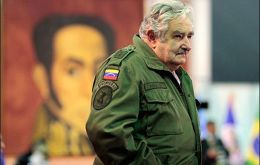
Uruguayan president Jose Mujica strongly defended the incorporation of Venezuela to Mercosur and forecasted that in a short time the country will become Uruguay’s third trade associate, behind China and Brazil.
-
Saturday, July 28th 2012 - 00:10 UTC
Russia investing heavily in becoming self sufficient in beef production

Russian President Vladimir Putin has an ambitious plan to cut his country's 3 billion dollars annual import bill for beef. He even aspires to return Russia's beef industry to its pre-revolutionary stature.
-
Friday, July 27th 2012 - 23:59 UTC
“Veggie” diet blamed for poor performance of China’s women volleyball team

Fearing tainted meat, China's women's volleyball team has stuck to a strict vegetarian diet for the last three weeks, which the team's coach is now blaming for his athletes' abysmal performance.
-
Thursday, July 26th 2012 - 09:10 UTC
Mercosur farmers support Paraguay and call for harmonic relations in the group
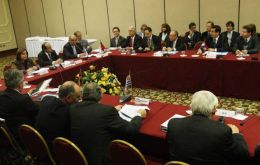
The suspension of Paraguay and the intent to incorporate Venezuela to Mercosur represent a threat to the regional integration process, said the Mercosur Federation of Rural Associations, Farm, currently meeting in Santiago de Chile.
