MercoPress. South Atlantic News Agency
Economy
-
Thursday, March 28th 2013 - 09:40 UTC
“Only a mentally ill would want to govern Italy now” says frustrated Bersani

The head of Italy's centre-left bloc has hit an impasse in his efforts to form a government and said only a mentally ill person would want to govern Italy now. Pier Luigi Bersani was rebuffed by the anti-establishment Five Star Movement on Wednesday.
-
Thursday, March 28th 2013 - 09:30 UTC
All EU eyes on Cypriot banks which open Thursday with tough deposit controls
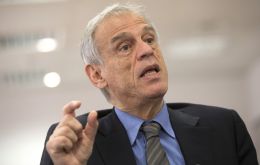
Cyprus trucked out cash for its banks on Wednesday night to prepare them to reopen to a siege by anxious depositors, with tough controls imposed on the use of currency to avert a bank run as a result of its harsh rescue deal.
-
Thursday, March 28th 2013 - 09:19 UTC
China and Brazil sign agreement to trade in their local currencies
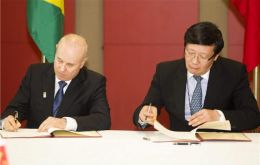
China and Brazil signed an agreement to do billions of dollars of trade in their local currencies, as the five-nation BRICS forum of emerging market powers work to lessen dependence on the US dollar and Euro.
-
Wednesday, March 27th 2013 - 21:04 UTC
African swine desert out of control in Russia and former Soviet republics

African swine fever (ASF) outbreaks in 2012 have been the worst yet in Russia, with over half a million pigs having fallen victim to the disease and subsequently culled. It is hard to pinpoint causes, but lack of bio-security knowledge appears to be part of the problem which seems out of control. Surrounding countries reporting ASF to the OIE included Georgia, Armenia, Azerbaijan and even Ukraine.
-
Wednesday, March 27th 2013 - 07:53 UTC
YPF and US based DOW sign memorandum to develop shale gas in Patagonia

Argentina’s nationalized energy company YPF on Tuesday signed a memorandum of understanding with the local subsidiary of the US Dow Chemical to develop the shale gas deposits in the southern Nequen province.
-
Tuesday, March 26th 2013 - 22:44 UTC
March-bonus for 7 million low income Chileans, handout in presidential election year
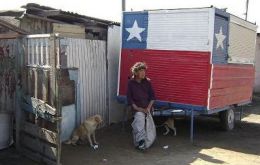
Chilean president Sebastian Piñera signed this week a bill which grants a special ‘March-bonus’ to low-income families and is extensive to seven million people. Each beneficiary will receive the equivalent of 85 dollars which will represent for the Treasury an outlay of 208 million dollars.
-
Tuesday, March 26th 2013 - 21:55 UTC
Argentina’s tax office targets main grain exporters; demands 951 million dollars in alleged arrears
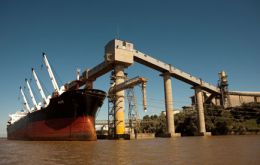
Cargill Inc. and Bunge Ltd. are among grain exporters that allegedly owe the Argentine government 951 million dollars in taxes and won’t be eligible for a reduced interest rate under a payment plan unveiled by the government this week.
-
Tuesday, March 26th 2013 - 21:33 UTC
Setback in New York court for Argentina’s strategy in its battle with bond holdouts
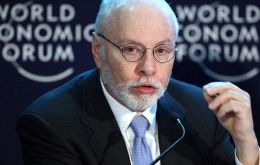
A US court in New York on Tuesday rejected Argentina's request for a full-court rehearing of an appeal it lodged as it struggles to shake off holders of 1.3 billion dollars in defaulted bonds.
-
Tuesday, March 26th 2013 - 20:35 UTC
Cyprus aftermath: Germans fear about their savings accounts despite ‘Euro-supreme’ Merkel

A majority of Germans doubt Chancellor Angela Merkel's guarantee that their savings accounts are safe, an opinion poll published by Stern magazine and RTL TV showed, six months before the federal election.
-
Tuesday, March 26th 2013 - 05:48 UTC
BRICS summit to discuss creation of development bank with 50bn initial capital

Brazilian President Dilma Rousseff will attend this week's BRICS summit of five emerging powers hosted by South Africa to discuss creation of their own development bank, the Planalto office announced.