MercoPress. South Atlantic News Agency
Economy
-
Tuesday, April 2nd 2013 - 02:37 UTC
Brazil postpones until next year increases in car sales taxes to help the economy
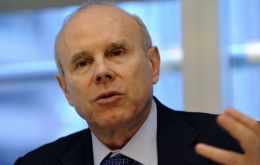
The Brazilian government postponed until next year increases in taxes on the sale of cars and trucks in a bid to stimulate demand for manufactured goods and spur economic growth, announced the Finance Ministry.
-
Monday, April 1st 2013 - 19:56 UTC
Brazil’s power companies report huge losses in 2012 forced by cheaper electricity bills

Latinamerica’s largest power company Eletrobras, managed by the Brazilian government reported losses equivalent to 3.4bn dollars last year which were mostly attributed to a bill promoted by the administration of President Dilma Rousseff ro reduce electricity bills both for industry, agriculture and home consumption.
-
Monday, April 1st 2013 - 19:15 UTC
Chile, Peru, Colombia and Mexico agree to ‘zero tariff’ for 90% of inter-trade

Chile, Peru, Colombia and Mexico plan to sign an accord liberalizing 90% of trade among the group when they meet at the coming Pacific Alliance summit scheduled for May 23 in Colombia announced Chilean Foreign minister Alfredo Moreno.
-
Monday, April 1st 2013 - 10:15 UTC
Argentine central bank says it has enough reserves to contain the run on the US dollar

With insistent rumours of imminent measures to try and control the value of the US dollar in Argentina, Central Bank Governor Mercedes Marcó del Pont, stressed that the country has more than 40 billion dollars in reserves “to manage the foreign exchange market avoiding sharp changes”.
-
Monday, April 1st 2013 - 10:03 UTC
Sao Paulo will host 1.500 political and business leaders from Germany and Brazil

Germany is keen to boost its already substantial investment in Brazil ahead of the 2014 World Cup and the 2016 Rio summer Olympics, the new president of the Brazil-Germany Chamber of Commerce said.
-
Monday, April 1st 2013 - 09:55 UTC
Venezuela auctions dollars; value is estimated at double the official rate
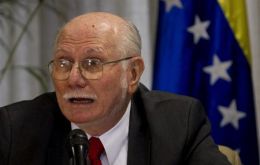
Venezuelan government foreign currency auction for local importers has triggered de-facto currency devaluation, the second in less than 50 days, analysts said. Venezuela has had strict currency exchange controls since 2003 in an attempt to halt capital flight, under which the government sold limited amounts of foreign currency at an official rate.
-
Monday, April 1st 2013 - 09:38 UTC
IMF board of directors continues to support Christine Lagarde
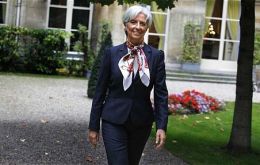
International Monetary Fund Managing Director Christine Lagarde, whose Paris apartment was searched by police March 20 in a case involving businessman Bernard Tapie, retains the backing of the board of directors, an IMF spokesman said.
-
Monday, April 1st 2013 - 09:17 UTC
US economy fourth quarter report positive, but still sluggish
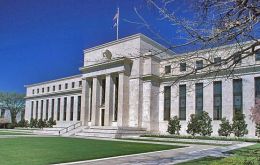
The US economy grew at a faster than expected 0.4% in the fourth quarter of 2012, the Department of Commerce has said. The annualised figure was better than an earlier estimate of 0.1% growth, reflecting increased investments in plant and equipment.
-
Thursday, March 28th 2013 - 10:03 UTC
Uruguay 2012 GDP expanded 3.9% boosted by construction and domestic demand

Uruguay’s GDP expanded 3.9% last in 2012 over the previous year despite a slight contraction in the fourth quarter, according to a late Wednesday release from the Central bank. The bank’s original estimate was 4%. In 2011 the economy grew a revised 6.5%.
-
Thursday, March 28th 2013 - 09:56 UTC
Argentina prepared to offer suing ‘vulture funds’ a 25-year bond, says Ambito

Argentina plans to offer suing “holdout” creditors a 25-year bond equal to the face value of their debt when the country defaulted in 2002, local financial daily Ambito Financiero reported on Wednesday.