MercoPress. South Atlantic News Agency
Economy
-
Tuesday, November 26th 2019 - 08:35 UTC
Tories' lead over Labour is narrowing according to the latest opinion polls

British Prime Minister Boris Johnson's Conservative Party saw its lead over the opposition Labour Party narrow during the last week, an opinion poll by ICM for Reuters showed on Monday, ahead of a Dec 12 election.
-
Monday, November 25th 2019 - 06:29 UTC
US, a source of instability and “baselessly smearing China” blasts top Beijing official
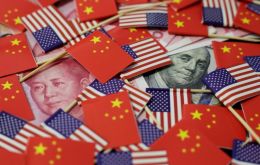
The United States is the world's biggest source of instability and its politicians are going around the world baselessly smearing China, the Chinese government's top diplomat said on Saturday in a stinging attack at a G20 meeting in Japan.
-
Saturday, November 23rd 2019 - 09:51 UTC
The Economist and Chile: the painful birth of a different country

In 2014, Michelle Bachelet a Socialist swept into Chile’s presidency for a second time on a program of radical reform of tax, education and pensions. She also aspired to enact a new constitution that would guarantee “more balance between the state, the private sector and society”, as she told your columnist over tea at the Moneda presidential palace. She argued that her “struggle against inequality” was the last chance to deal with discontents that, if neglected, could push Chile towards populism.
-
Saturday, November 23rd 2019 - 09:33 UTC
Swiss investigation helps expose corruption network involving Vitol, Trafigura and Petrobras

Swiss investigators have executed search warrants at addresses linked to Vitol and Trafigura, their counterparts in Brazil said on Thursday, as a sprawling probe into the global commodity trading industry intensifies.
-
Saturday, November 23rd 2019 - 09:04 UTC
Mexico's giant Pemex, remains world's most indebted oil company

A Mexican government energy policy that gives more weight to state oil company Pemex could cause private sector investment to fall, an analyst with credit ratings agency Standard & Poor’s said on Friday.
-
Friday, November 22nd 2019 - 09:46 UTC
China buying all Brazilian beef available; meat prices in Sao Paulo at record high
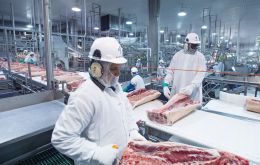
Chinese demand is increasingly swallowing up Brazil's beef supply, pushing the country's cattle prices to a record high. China’s hunger for foreign meat has shot up as an outbreak of African swine fever has reduced its domestic pig population and has sent it looking for substitutes.
-
Friday, November 22nd 2019 - 09:43 UTC
Argentine send first shipment of chilled pork for China
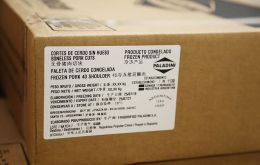
Argentina has sent its first shipment of chilled pork to China, the government announced, as China's pork imports rise due to a devastating outbreak of African swine fever at home.
-
Friday, November 22nd 2019 - 09:11 UTC
US Congress wants to investigate Brazil's meatpacking giant JBS

A top United States Democratic congresswoman on Thursday asked the Agriculture Department (USDA) to investigate and retract tens of millions of dollars in federal contracts with the U.S. subsidiary of a Brazilian meatpacking company facing federal corruption charges.
-
Thursday, November 21st 2019 - 09:55 UTC
Falklands celebrates “touchdown for the Second Flight” and anticipates a new era of development for the Islands

The elected government of the Falkland Islands announced that a new era has opened Islands with the inaugural Second Flight from São Paulo, Brazil, touching down this Wednesday afternoon at Mount Pleasant Airport.
-
Thursday, November 21st 2019 - 09:21 UTC
Fed dismisses the idea of negative interest rates, despite Trump's insistence, according to released minutes

US central bankers last month dismissed the idea of taking interest rates into negative territory, something President Donald Trump has called for many times, according to meeting minutes released on Wednesday.