MercoPress. South Atlantic News Agency
Economy
-
Friday, February 9th 2018 - 09:56 UTC
As Dow Jones plunges 10% points, fears of a bear market and ripples effects on the economy
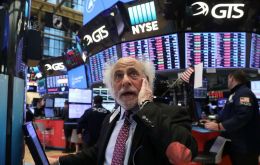
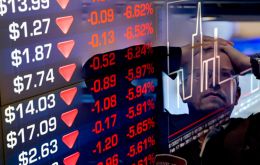
The United States Dow Jones industrial average nosedived more than 1,000 points on Thursday, registering another eye-popping loss for the closely-followed index, as wild trading and fears of rising interest rates around the world took hold of traders. The Dow as well as the S&P 500, a broader stock index, are now down more than 10% from their all-time highs, passing an important psychological barrier known as a “correction” for the first time in two years.
-
Thursday, February 8th 2018 - 09:17 UTC
Brazil's central bank beats inflation and recession: eyes now on the presidential election

Brazil’s central bank cut its benchmark interest rate on Wednesday to a new low of 6.75%, but hinted it was now done with a historic easing cycle. The bank lowered the Selic rate by 0.25 percentage point, its 11th consecutive cut aimed at helping Latin America’s largest economy emerge from a stifling two-year recession.
-
Thursday, February 8th 2018 - 09:11 UTC
Falklands and MoD agree to address rotor winds at MPA airport
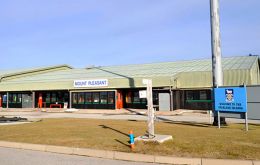
The Falkland Islands government and the Ministry of Defense have agreed to address the challenge of rotor winds, which have become a serious problem for the operations at the Mount Pleasant Complex.
-
Thursday, February 8th 2018 - 09:11 UTC
With NAFTA on the cliff, Mexico betting strongly to update free trade agreement with Europe
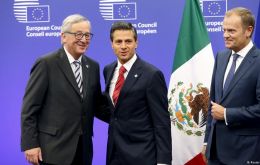
Mexico believes it can conclude a new free-trade agreement with the European Union before the end of February, Mexican officials have said. The EU and Mexico intend to update a trade deal agreed 21 years ago that largely covers industrial goods. They want to add farm products, more services, investment and government procurement, and include provisions on labor standards and environmental protection.
-
Wednesday, February 7th 2018 - 15:23 UTC
Powell becomes chairman of the Fed in a turbulent trading day
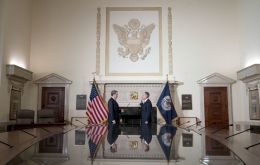
Jerome Powell was sworn as the 16th chairman of the Federal Reserve on what turned out to be a turbulent day for Wall Street, with the Dow Jones industrial average plunging by more than 1,100 points. Powell, 65, was given the oath of office by Randal Quarles, the Fed's vice chairman for supervision, in a ceremony that took place before stock trading opened on Wall Street.
-
Wednesday, February 7th 2018 - 14:41 UTC
Oil Prices Ravaged By Financial Turmoil
By Nick Cunningham of Oilprice.com
Oil prices fell back suddenly over the last few trading sessions, dragged down by some forces beyond the oil market. -
Wednesday, February 7th 2018 - 09:56 UTC
Brazil's second largest private bank names new CEO in a major shakeup
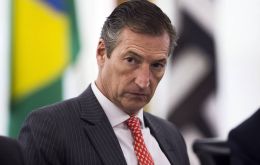
Banco Bradesco SA, Brazil's second-largest private-sector lender, appointed a new chief executive who told journalists that demand for credit has already improved in the first month of 2018. Octavio Lazari, 54, head of Bradesco's insurance unit, was appointed as the bank's next CEO amid a broader management shakeup with younger executives joining the board and upper management ranks to tackle increasing competition from all-digital banks.
-
Wednesday, February 7th 2018 - 08:55 UTC
EU draft proposes strict conditions for UK in the post-Brexit transition period
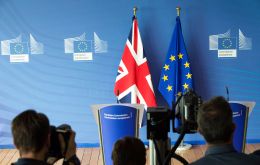
The European Union wants to be able to restrict the UK's access to the single market if there is a dispute after Brexit, a leaked document suggests. The power to suspend “certain benefits” would apply during the post-Brexit transition phase before the final arrangements come into force.
-
Wednesday, February 7th 2018 - 08:44 UTC
Algorithmic trading accelerated Black Monday markets plunge, speculate analysts
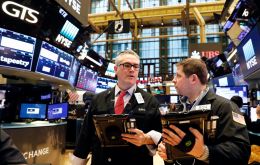
Robot trading has accelerated this week's market dive and may have sparked the sell-off, experts say. Financial firms use computers programmed with complex sets of instructions known as algorithms, which identify trading opportunities and then strike faster than any human could.
-
Wednesday, February 7th 2018 - 07:50 UTC
Venezuela desperate after US dollars; greenback costs 228.000 Bolivars in the black market
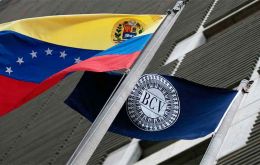
Venezuela’s central bank announced a devaluation of more than 99% of its official exchange rate with the launch of a new foreign exchange platform, a move critics quickly said would not create a functioning currency market.