MercoPress. South Atlantic News Agency
Latin America
-
Saturday, May 12th 2018 - 06:35 UTC
Uruguay ratifies Inter-American Convention against All Forms of Discrimination and Intolerance
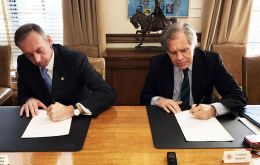
Uruguay on Friday deposited at the headquarters of the Organization of American States (OAS) in Washington DC, the instrument of ratification of the Inter-American Convention against all Forms of Discrimination and Intolerance, becoming the first state to ratify it. Uruguay is also the only one that has ratified all the binding legal instruments of the inter-American system.
-
Wednesday, May 9th 2018 - 07:32 UTC
Peso storm: Argentina requests a US$ 30bn precautionary credit from IMF

Argentina asked the International Monetary Fund for financing to help stem a run from the Peso to the US dollar that is sparking a surge in interest rates and threatening to derail the country's economic recovery. The sum requested is estimated between 25 and 30bn dollars, 500% Argentina's IMF quota and could be disbursed in two forms, a flexible credit line or a precautionary credit line.
-
Wednesday, May 9th 2018 - 07:16 UTC
UK appoints Trade Commissioner for Latin America and the Caribbean
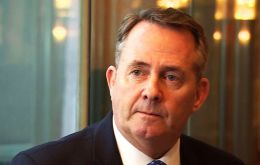
The United Kingdom's International Trade Secretary, Dr Liam Fox, named a new Trade Commissioner to champion British trade with Latin America and the Caribbean, as the UK prepares for future trade agreements with countries around the world.
-
Wednesday, May 9th 2018 - 07:10 UTC
Latin American (and global) currencies hit by strong dollar and Trump's policies
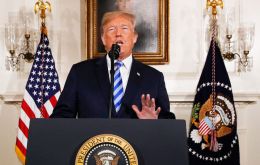
The dollar hovered near a four-month high on Tuesday, continuing to draw support from higher Treasury yields and upbeat prospects for the U.S. economy, leaving its major rivals such as the Euro struggling and other Latin American currencies including the Argentine peso down sharply.
-
Tuesday, May 8th 2018 - 08:32 UTC
Pence calls on Maduro to suspend sham elections and asks OAS to suspend Venezuela
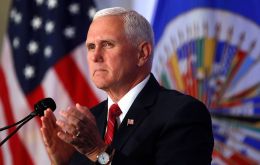
US Vice President Mike Pence on Monday urged Venezuela to suspend a divisive May 20 election he denounced as a “sham,” as Washington slapped fresh sanctions on Nicolas Maduro's regime. In an address to the Organization of American States, Pence slammed the upcoming presidential vote -- boycotted by the opposition and branded illegitimate by much of the international community.
-
Thursday, May 3rd 2018 - 08:29 UTC
Dominican Republic drops Taiwan and establishes relations with Beijing
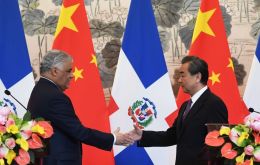
The Dominican Republic and China announced on Tuesday they were establishing diplomatic relations as the Caribbean country became the latest nation to dump Taiwan, leaving it with just 19 diplomatic allies around the globe. Taipei said it was “deeply upset” at the decision, which it blamed on “dollar diplomacy”. The move deepens the island's international isolation while its giant neighbor flexes its economic and political might on the global stage.
-
Monday, April 30th 2018 - 09:00 UTC
Massive peaceful turnout in Nicaragua, with a month mediation of the Church
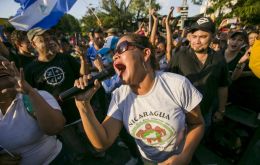
Thousands of Nicaraguans marched peacefully through the capital Managua on Saturday in a mass demonstration to demand justice following the violent suppression of a wave of protests that left at least 43 people dead. During the rally, which was called by the Catholic church, Managua's bishop issued a deadline of one month to see if there was a serious intention to achieve change through a national dialogue aimed at resolving issues that triggered the country's worst unrest in 11 years.
-
Friday, April 27th 2018 - 13:34 UTC
The Washington Post: The political rot in Nicaragua
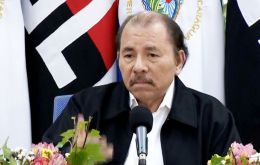
Nicaragua is a volcanic nation, geologically and politically. Forty years ago, seemingly out of nowhere, a series of popular eruptions shook the entrenched regime of Anastasio Somoza, who fell from power on 19 July, 1979. Today, one of the revolutionary architects of that dictator’s ouster, Sandinista party chief Daniel Ortega, rules the country of 6.1 million as high-handedly and corruptly as Somoza ever did.
-
Friday, April 27th 2018 - 08:20 UTC
Chile's Lan cabin workers union return to work after 17 days of strike

The union of cabin workers for LAN Express, a subsidiary of Chile-based LATAM Airlines group, unilaterally said on Thursday that they would revert back to previous working conditions after 17 days of strike that had led to the cancellation of 2,000 flights.
-
Wednesday, April 25th 2018 - 15:17 UTC
Repression and protests in Nicaragua do not mitigate: Daniel Ortega as Nicolás Maduro?
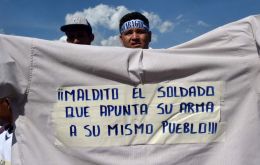
“Ortega and Somoza are the same thing” protesters in Nicaragua yelled last week against the government of Daniel Ortega, after the announcement of a Social Security's reform that unleashed a wave of protests marked by repression and excessive use of force by the authorities. Human rights organizations have announced that at least 30 people have died in the demonstrations, including students, police and a journalist. This surprise wave of civil protests suggests comparing the crisis in the Central American country with the lived in the Venezuela of Hugo Chávez and Nicolás Maduro for years.

