MercoPress. South Atlantic News Agency
Latin America
-
Thursday, August 13th 2026 - 06:55 UTC
The main land crossing between Argentina and Chile passes its winter closure record
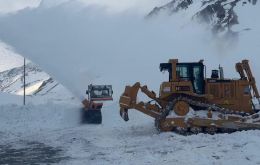
The Cristo Redentor international crossing, which links the Argentine province of Mendoza with Chile's Valparaíso Region through the Andes, has now been closed for close to a month because of a snow and wind storm, surpassing the winter closure record set in 2023. Authorities on both sides estimate it could reopen next week, depending on weather conditions.
-
Wednesday, August 12th 2026 - 00:05 UTC
Colombia asks for supplies but not foreign rescue personnel after the earthquake
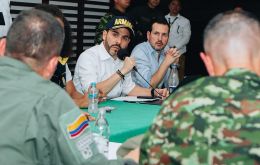
Colombia's government has requested international aid in the form of supplies for those affected by Monday's magnitude 7.4 earthquake, but has not called for foreign rescue teams, despite offers from at least six countries and multilateral bodies.
-
Tuesday, August 11th 2026 - 10:51 UTC
At least 132 dead in the magnitude 7.4 earthquake that struck western Colombia
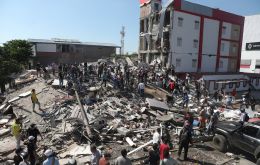
At least 132 people were killed and 570 injured by the magnitude 7.4 earthquake that struck western and central Colombia on Monday, according to the latest report submitted by the Colombian Association of Capital Cities at 7:00 p.m. local time. Authorities warned the figure is preliminary and that rescue work is continuing.
-
Tuesday, August 11th 2026 - 10:11 UTC
Colombia and Venezuela quakes are unconnected despite similar magnitude, experts say
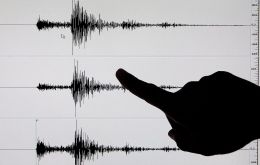
The magnitude 7.4 earthquake that struck western and central Colombia on Monday has a different tectonic origin from the earthquakes recorded in Venezuela in June, despite comparable magnitudes, said Viviana Dionisio, a seismologist with Colombia's National Seismological Network.
-
Monday, August 10th 2026 - 19:16 UTC
De la Espriella gives the first earthquake toll and entrusts Colombia to Jesus Christ
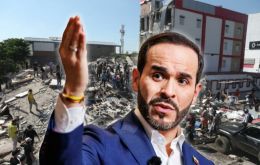
Colombian President Abelardo de la Espriella reported 111 dead and 87 injured on Monday from the magnitude 7.4 earthquake that struck the west and center of the country, in an address containing extensive religious references. “I entrust our country to the Lord Jesus Christ,” he said after chairing a meeting of the unified command post set up at the National Disaster Risk Management Unit.
-
Monday, August 10th 2026 - 14:29 UTC
Colombia records its strongest earthquake in a decade, geological service says
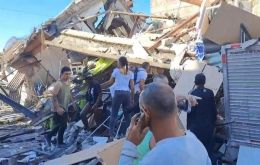
A magnitude 7.4 earthquake shook western and central Colombia on Monday, causing damage in several cities and affecting six airports. It is the strongest earthquake recorded in the country in the past decade, according to the Colombian Geological Service (SGC). No official casualty figures have been released so far.
-
Monday, August 10th 2026 - 10:55 UTC
Reform UK in talks with El Salvador over sending foreign prisoners to Bukele's jails
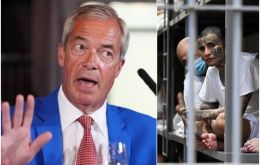
Britain's Reform UK party, led by Nigel Farage, has opened contacts with the government of El Salvador to transfer foreign prisoners to jails in that country should it win the next United Kingdom general election, which must be held by 2029 at the latest. The report was published on Monday by the newspaper The Sun and has not been confirmed by San Salvador.
-
Monday, August 10th 2026 - 08:32 UTC
De la Espriella sets ten armed group leaders as his target for his first 90 days
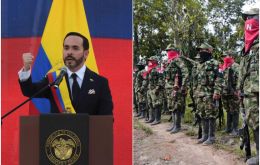
Colombian President Abelardo de la Espriella has pledged to capture or kill ten leaders of illegal armed groups during the first 90 days of his term, which began on Friday in Cali. The commitment, made during his campaign, is the centerpiece of the “shock plan” with which the new president seeks to reverse the negotiation policy of his predecessor, Gustavo Petro.
-
Sunday, August 9th 2026 - 20:58 UTC
Keiko Fujimori starts her term in Peru with 60% approval, Datum poll finds
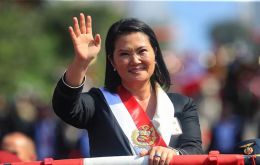
Peruvian President Keiko Fujimori has begun her five-year term with a 60% approval rating, against 24% disapproval and 16% who gave no opinion, according to a Datum Internacional survey published on Sunday by the newspaper El Comercio.
-
Sunday, August 9th 2026 - 20:44 UTC
Bolivia records its first same-sex civil marriage after a court ruling

Bolivia has recorded its first civil marriage between two people of the same sex, held on Friday, August 7, in Santa Cruz, the country's most populous city, following a legal process that lasted three years and ten months.