MercoPress. South Atlantic News Agency
Latin America
-
Monday, August 10th 2026 - 08:32 UTC
De la Espriella sets ten armed group leaders as his target for his first 90 days
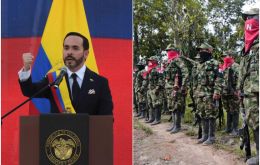
Colombian President Abelardo de la Espriella has pledged to capture or kill ten leaders of illegal armed groups during the first 90 days of his term, which began on Friday in Cali. The commitment, made during his campaign, is the centerpiece of the “shock plan” with which the new president seeks to reverse the negotiation policy of his predecessor, Gustavo Petro.
-
Sunday, August 9th 2026 - 20:58 UTC
Keiko Fujimori starts her term in Peru with 60% approval, Datum poll finds
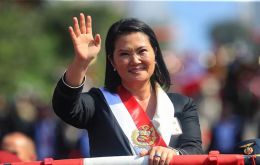
Peruvian President Keiko Fujimori has begun her five-year term with a 60% approval rating, against 24% disapproval and 16% who gave no opinion, according to a Datum Internacional survey published on Sunday by the newspaper El Comercio.
-
Sunday, August 9th 2026 - 20:44 UTC
Bolivia records its first same-sex civil marriage after a court ruling

Bolivia has recorded its first civil marriage between two people of the same sex, held on Friday, August 7, in Santa Cruz, the country's most populous city, following a legal process that lasted three years and ten months.
-
Sunday, August 9th 2026 - 20:05 UTC
Machado congratulates De la Espriella and says Venezuela will soon follow suit
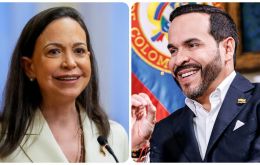
Venezuelan opposition leader and 2025 Nobel Peace Prize laureate María Corina Machado congratulated Colombia's new president, Abelardo de la Espriella, and said Venezuela would “very soon” undertake a process of institutional and democratic strengthening similar to the one she said is beginning in the neighboring country. The Colombian president replied on Sunday thanking her for the support.
-
Saturday, August 8th 2026 - 07:52 UTC
De la Espriella sworn in before Congress in Cali, delivers first speech to the military
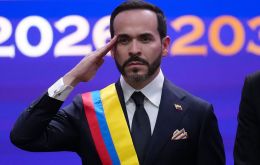
Abelardo de la Espriella took office as president of Colombia in Cali on Friday, the first time a Colombian leader has been sworn in outside Bogotá, and delivered his first speech at an Army battalion rather than before Congress, breaking with the country's institutional tradition.
-
Friday, August 7th 2026 - 21:17 UTC
Venezuelan government and opposition open US-backed talks
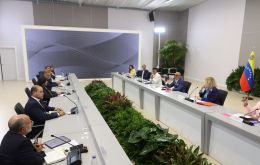
Delegations from the Venezuelan government and one sector of the opposition met on Thursday in Caracas to open negotiations backed by the United States, in the first face-to-face encounter since Nicolás Maduro's detention by US forces on January 3.
-
Friday, August 7th 2026 - 10:43 UTC
Milei promotes a summit of right-wing presidents outside existing regional bodies
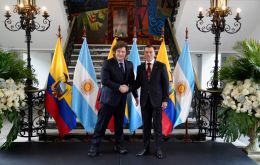
Argentine President Javier Milei is working to convene a summit of right-wing leaders from across the Americas outside existing multilateral organizations, though no date has been set. The initiative comes amid a series of trips that took him this week to Ecuador and Colombia.
-
Friday, August 7th 2026 - 10:40 UTC
Colombia: De la Espriella takes office in Cali without Petro present

Abelardo de la Espriella takes office as president of Colombia on Friday at a ceremony held at the Santiago de Cali University, outside Bogotá and without the attendance of his predecessor, Gustavo Petro, in a handover marked by confrontation between the two men.
-
Thursday, August 6th 2026 - 09:37 UTC
Uruguay to open Pope Leo XIV's first South American tour
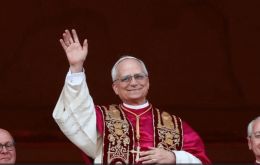
Uruguay will be the first stop on Pope Leo XIV's apostolic journey to South America between November 6 and 17, the director of the Holy See Press Office, Matteo Bruni, confirmed on Wednesday.
-
Tuesday, August 4th 2026 - 06:00 UTC
Toledo seeks release on health grounds, saying he does not want to die in prison
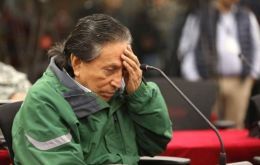
Former Peruvian president Alejandro Toledo, 81, has asked President Keiko Fujimori to expedite the presidential pardon he requested on humanitarian grounds, in an interview given on Sunday from Barbadillo prison to the program Sin Rodeos on Panamericana Televisión.