MercoPress. South Atlantic News Agency
Latin America
-
Monday, August 3rd 2026 - 18:48 UTC
Traditional right-wing technocrats and Christian voices will share Colombia's new cabinet
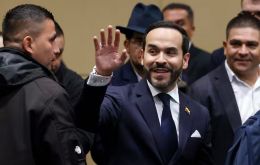
Colombia's president-elect, Abelardo de la Espriella, has completed all eighteen posts in his cabinet four days before taking office, with a team that will combine technical profiles drawn from the traditional right with figures close to Christian movements and to positions aligned with Trumpism.
-
Friday, July 31st 2026 - 22:43 UTC
Nicaragua advances reform that would extend the presidential term to seven renewable years
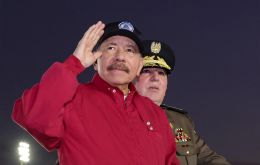
Nicaragua's National Assembly this week opened consultations on a constitutional reform bill that would extend the presidential term from six to seven years on a renewable basis and impose restrictions on the participation of the government's opponents. The text is due to be voted in early September.
-
Friday, July 31st 2026 - 22:05 UTC
Three confederations reject selling part of the World Cup to private funds; Conmebol asks for explanations

The South American Football Confederation asked FIFA on Friday for additional information and clarification on the FIFA Forward Enterprise project, without coming out for or against it, a day after the confederations of Europe and of North and Central America and the Caribbean rejected the plan.
-
Thursday, July 30th 2026 - 06:37 UTC
Bolivia issues arrest order against Morales over May and June road blockades
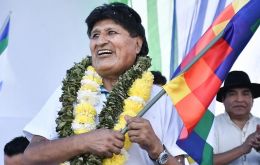
The Santa Cruz departmental prosecutor's office issued an arrest order on Wednesday against former president Evo Morales (2006-2019) over his alleged role in the road blockades and protests that paralyzed parts of Bolivia for 53 days in May and June.
-
Wednesday, July 29th 2026 - 22:54 UTC
US seeks Uruguay as destination for deported migrants; Montevideo stops short of confirming deal
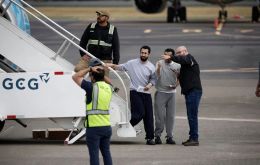
The United States government has been negotiating with Uruguay for months over the possibility that the South American country receive deported migrants, The New York Times reported on Wednesday. Uruguay's foreign ministry confirmed that talks are underway but said nothing has been settled and that the discussions are not limited to Cuban nationals.
-
Tuesday, July 28th 2026 - 22:54 UTC
Milei and Fujimori meet in Lima and agree to strengthen economic and security cooperation
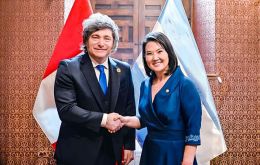
Argentine President Javier Milei met on Tuesday in Lima with Peru's President Keiko Fujimori in a bilateral encounter held at the Torre Tagle Palace, headquarters of Peru's foreign ministry, hours before the handover ceremony. It was the first official contact between the two leaders.
-
Tuesday, July 28th 2026 - 20:54 UTC
Fujimori takes office in Peru and announces the armed forces will join the fight against crime
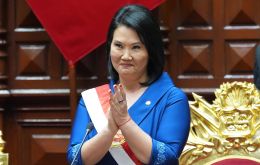
Keiko Fujimori was sworn in as president of Peru on Tuesday and announced that the armed forces will temporarily assume internal control during states of emergency to confront organized crime, in coordination with the National Police. The ceremony took place at Congress on July 28, the anniversary of the country's independence, opening a five-year term.
-
Tuesday, July 28th 2026 - 20:00 UTC
Colombia: official accuses Petro of mistreatment and the president announces legal action against her
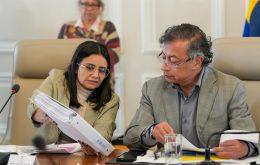
The manager of Colombia's Adaptation Fund and former director of the Administrative Department of the Presidency (DAPRE), Angie Rodríguez, publicly accused President Gustavo Petro of subjecting her to mistreatment during her time in government, in remarks to a local radio station. The president responded that the claims are “slanderous” and announced he will pursue criminal action. The exchange comes ten days before the handover of power to president-elect Abelardo de la Espriella.
-
Tuesday, July 28th 2026 - 10:30 UTC
Fujimori's inauguration brings Southern Cone and Andean presidents together in Lima
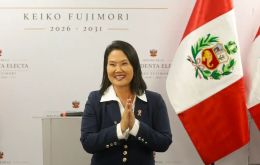
The presidents of Bolivia, Paraguay, Chile, and Honduras arrived in Lima on Monday to attend the handover ceremony at which Keiko Fujimori will assume Peru's presidency for the 2026-2031 term. The leaders of Argentina, Javier Milei; Uruguay, Yamandú Orsi; Panama, José Raúl Mulino; and Ecuador, Daniel Noboa, are also expected to take part.
-
Monday, July 27th 2026 - 20:14 UTC
De la Espriella to close Colombian embassies in 14 countries and cut ties with Cuba and Nicaragua
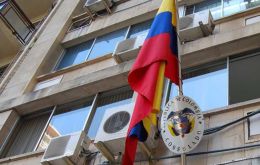
Colombia's president-elect, Abelardo de la Espriella, announced that his government will close the country's embassies in fourteen nations and will not maintain relations with Cuba and Nicaragua, which he described as “tyrannies.” The measure, released on Sunday night in a video on his social media accounts, will take effect from his inauguration on August 7.