MercoPress. South Atlantic News Agency
Latin America
-
Monday, August 31st 2026 - 22:13 UTC
Brazil: Flávio Bolsonaro promises 500,000 prison places inspired by the Salvadoran model
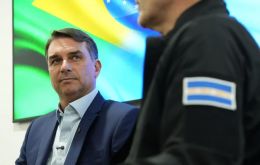
Senator Flávio Bolsonaro, the Liberal Party's presidential candidate and Luiz Inácio Lula da Silva's main rival in October's elections, met on Sunday in São Paulo with El Salvador's justice and public security minister, Gustavo Villatoro, and announced he will incorporate into his programme measures inspired by President Nayib Bukele's security policy.
-
Monday, August 31st 2026 - 08:46 UTC
The Panama Canal will cut daily transits from Wednesday because of drought

The Panama Canal will reduce the number of vessels allowed to cross from 38 to 34 a day from September 3, and to 32 from the 15th, as well as imposing new draught restrictions, because of falling water levels linked to El Niño. According to the waterway's authorities, rainfall since May has been 34% below the historical average and inflows to the basin have dropped 44%. Around 5% of world maritime traffic passes through the canal.
-
Wednesday, August 26th 2026 - 08:00 UTC
Bolivia deploys troops against blockades over a decree its own government wants repealed
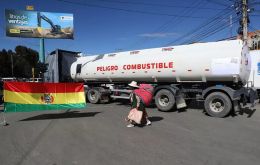
Bolivia's government deployed military and police units on Tuesday in the municipality of Yapacaní, in Santa Cruz department, ahead of announced road blockades called by farming organisations against the decree that raised the price of diesel for large consumers. Hours later, the deputy interior minister acknowledged that the same measure must be annulled.
-
Tuesday, August 25th 2026 - 21:28 UTC
Argentina acknowledges the Magellan treaties and seeks to defuse friction with Chile
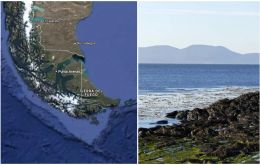
Argentina's foreign ministry issued a statement on Tuesday reaffirming that its position on the Strait of Magellan is the one established by the 1881 Boundary Treaty and the 1984 Treaty of Peace and Friendship, a day after Chile announced it would send a note of protest over remarks by the head of the Argentine Air Force General Staff.
-
Monday, August 24th 2026 - 21:55 UTC
The Pan-American Congress closes with a call for more equal north-south dialogue
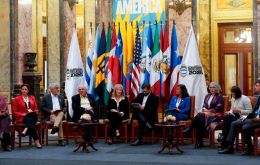
The third Pan-American Congress concluded on Sunday in Montevideo with a call to reframe relations between the north and south of the Americas on more equal terms. The forum, which brought together some 150 lawmakers, governors and former heads of state from fifteen countries, will hold its next edition in Brazil in 2027.
-
Monday, August 24th 2026 - 21:37 UTC
Colombia orders deportation of irregular migrants after a decade as the main host country
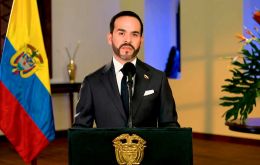
Colombian President Abelardo de la Espriella has ordered coordinated operations between the migration authority and the police to begin this week to identify and deport foreigners without regular migration status, marking a shift from the policy the country has maintained for more than a decade as the main destination for Venezuelan migration.
-
Monday, August 24th 2026 - 21:26 UTC
Milei links Lula to the case of the Argentine former adviser detained in Bolivia
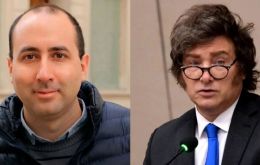
Argentine President Javier Milei has attributed the criminal case against his former adviser Fernando Cerimedo, detained in Bolivia over an attempted femicide, to a regional plot in which he included Brazilian President Luiz Inácio Lula da Silva, former Bolivian president Evo Morales and Argentine lawmaker Marcela Pagano. He offered no evidence to support the claim.
-
Monday, August 24th 2026 - 21:08 UTC
Some 25,000 people are seeking housing in Cali two weeks after Colombia's earthquake
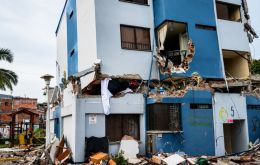
The municipal survey in Cali, Colombia's third city with more than two million inhabitants, now covers 10,000 families affected by the magnitude 7.4 earthquake of August 10 and estimates around 25,000 people have been left without adequate housing. Many have spent recent days in shelters or with relatives while searching for a rental, in a market strained by the sudden loss of supply.
-
Monday, August 24th 2026 - 07:32 UTC
Almost half the minors recruited by armed groups in 2025 were approached via social media
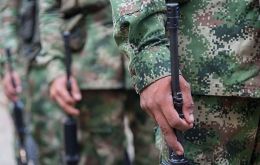
Some 44% of children and adolescents recruited by armed groups in Colombia during 2025 were approached through social media or platforms such as TikTok and Facebook, according to data from the Special Jurisdiction for Peace cited in a Human Rights Watch report published on Monday.
-
Monday, August 24th 2026 - 06:53 UTC
Two newly detained men testify in the case over the shooting of the Bolivian lawyer

Two men held as part of the investigation into the shooting of Bolivian lawyer Nadia Beller gave statements to prosecutors in Santa Cruz de la Sierra on Sunday. One is accused of supplying the weapon used in the ambush; the other, a Colombian national identified as a possible gunman, turned himself in after learning he was being sought.