MercoPress. South Atlantic News Agency
Latin America
-
Saturday, October 20th 2012 - 05:18 UTC
First exchange of blows as Colombian peace talks take off
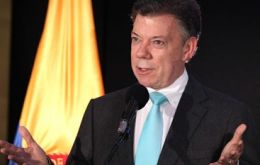
Colombian President Juan Manuel Santos defended his signature law that returns land seized by illegal armed groups to peasants after leftist rebels assailed the measure at the start of peace talks.
-
Friday, October 19th 2012 - 05:25 UTC
Strong message from Lula da Silva to victorious Chavez: prepare your succession
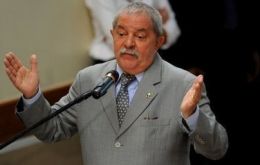
Former Brazilian President Lula da Silva said he believes it is time for Venezuelan leader Hugo Chavez, recently re-elected for another six years, “to begin preparing his succession”
-
Friday, October 19th 2012 - 01:35 UTC
Chilean lawmaker wants Chiloé students to learn English in the Falklands
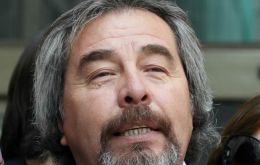
Chilean lawmaker Gabriel Ascencio is promoting a program of scholarships for students from his constituency in the south of Chile to travel to the Falkland Islands to learn English and become proficient in the language.
-
Friday, October 19th 2012 - 00:02 UTC
Obama administration admits trade, security and migration as pending issues with Latam
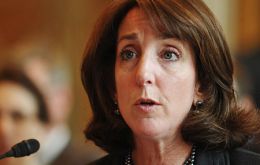
President Barak Obama ends his four years in January with free trade and security, particularly in Central America, as pending issues to develop in Latin America, said Assistant Secretary of State for Western Hemisphere Affairs Roberta Jackson in a press round with foreign correspondents.
-
Thursday, October 18th 2012 - 22:53 UTC
Argentina joins the UN Security Council with overwhelming support of 182 votes
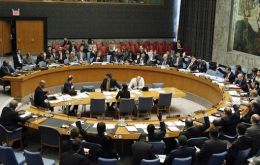
The UN General Assembly elected Argentina, Rwanda and Australia to the 15-national Security Council for 2013 and 2014. Rwanda and Argentina were unopposed in their bids for the Africa seat and the Latin American and Caribbean seat.
-
Thursday, October 18th 2012 - 18:14 UTC
Astronomers working from Chile discover Earth ‘clone’ in ‘our backyard’

Astronomers have found a new planet, the closest yet outside our solar system and just an astronomical stone's throw away at four light years, raising the chances of finding a habitable planet in Earth's neighbourhood.
-
Thursday, October 18th 2012 - 10:41 UTC
Brazil-FAO sign agreement for cotton expertise transfer to small farmers in Africa
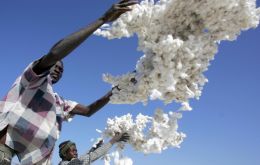
A 20 million dollars agreement signed Wednesday by the United Nations and Brazil will seek to transfer the expertise of the South American country to support cotton farmers in developing economies.
-
Thursday, October 18th 2012 - 07:29 UTC
Mercosur conflict still alive: Venezuela expels Paraguayan diplomats
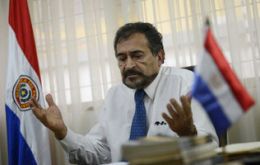
Venezuela's government decided to expel Paraguay's remaining diplomats from the country, the top envoy at the Paraguayan Embassy said on Wednesday. Charge d'affaires Victor Casartelli said that he and three other Paraguayan diplomats in Caracas were told by Venezuela's Foreign Ministry to leave within three days.
-
Thursday, October 18th 2012 - 07:10 UTC
Ecuadorian court orders seizure of 200m dollars in Chevron oil assets
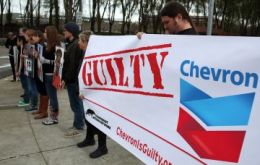
As part of an ongoing lawsuit between US Chevron oil and plaintiffs from various Amazonian villages, an Ecuadorian court has ordered the seizure of approximately 200 million dollars worth of the company's assets.
-
Thursday, October 18th 2012 - 07:02 UTC
Chilean far right push for extradition of Senator murder protected by Argentina
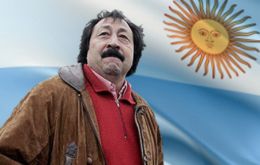
The Inter-American Commission of Human Rights (IACHR) began proceedings this week concerning Argentina’s refusal to extradite Galvarino Apablaza for the 1991 murder of emblematic conservative Senator Jaime Guzmán.