MercoPress. South Atlantic News Agency
Latin America
-
Wednesday, July 18th 2012 - 07:59 UTC
Mexico banking regulator says it repeatedly warned HSBC on money laundering
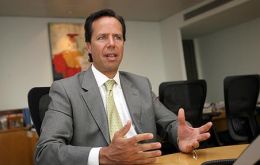
Mexico's banking regulator on Tuesday defended its role in a money laundering scandal engulfing HSBC Holdings Plc, saying it had repeatedly told the bank to improve lax controls over suspect funds passing through its accounts.
-
Wednesday, July 18th 2012 - 07:41 UTC
Spain, Argentina and Brazil the strongest football tournaments in the world

Argentina's First Division is second strongest tournament in the world after Spain, according to the International Federation of Football History & Statistics (IFFHS) July release.
-
Wednesday, July 18th 2012 - 07:34 UTC
Indian company scraps largest iron-steel development plan in Bolivia history
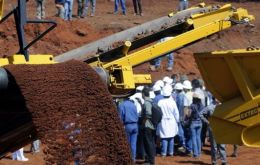
India's Jindal Steel and Power scrapped plans Tuesday to invest 2.1 billion dollars in a Bolivian mining project and blamed the country’s “non-friendly business attitude” for the deal's collapse.
-
Tuesday, July 17th 2012 - 19:49 UTC
Chilean village heartfelt thanks for Falklands support
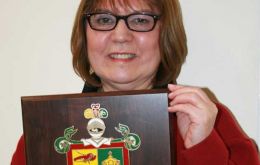
The Chilean village of Lolol in the Colchagua region has sent its heartfelt thanks, in the form of a plaque, to the people of the Falklands and the Chilean Community in the Islands for their very generous support following the devastation of buildings in the area as a result of the earthquake in 2010.
-
Tuesday, July 17th 2012 - 19:07 UTC
Mexican group sells 15 Caesar Park hotels in South America to French operator

Mexican hotel operator Grupo Posadas said Monday it reached an agreement to sell its properties and management contracts in South America to French hospitality company Accor for 275 million dollars.
-
Tuesday, July 17th 2012 - 18:27 UTC
MEP's surprised at Mercosur and Unasur drastic decisions on Paraguay
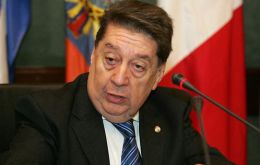
The European lawmakers’ delegation said it was surprised with the drastic and quick determinations, with no right to defence or appeal, decided against Paraguay by Mercosur and Unasur, said Paraguayan Foreign Minister Jose Felix Fernandez Estigarribia, following a meeting in Asuncion with the visiting MEPs.
-
Monday, July 16th 2012 - 23:59 UTC
IMF cuts world growth forecast; Latam drops from 3.7% to 3.4%
International Monetary Fund on Monday cut its global growth forecast and warned that the outlook could dim further if policymakers in Europe do not act with enough force and speed to quell their region's debt crisis.
-
Monday, July 16th 2012 - 19:19 UTC
Brazil loosing influence in South America to Venezuela, claims former president
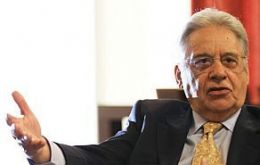
Former Brazilian president Fernando Enrique Cardoso said that his country is rapidly loosing influence in South America to Venezuela, following on remarks about the suspension of Paraguay from Mercosur.
-
Monday, July 16th 2012 - 07:26 UTC
Chavez praises defence cooperation with Argentina, making Mercosur a military power block
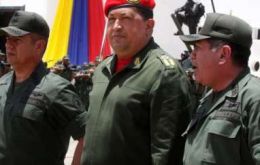
President Hugo Chavez underlined the significance of the defence cooperation memorandum signed between Venezuela and Argentina which is part of “the necessary strategic integration of the armed forces in the framework of Mercosur and turning the block into a military power”.
-
Monday, July 16th 2012 - 07:20 UTC
Cuba says cholera outbreak in under control: 3 dead, 158 confirmed cases
The cholera outbreak in eastern Cuba is diminishing and has not spread to other parts of the country, said the government on Sunday.