MercoPress. South Atlantic News Agency
Mercosur
-
Friday, March 6th 2015 - 09:06 UTC
Mercosur has failed, Argentina needs new partners: the Pacific Alliance?
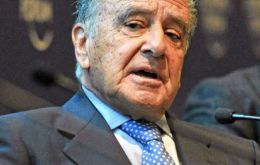
“Mercosur as a unified space has failed and Argentina must start thinking in a new partner, which could be the Pacific Alliance” said one of Argentina's main businessmen with interests in a diversified portfolio, Eduardo Eurnekian. He made the statement on the sidelines of the World's Chambers Federation executive board meeting in Buenos Aires.
-
Tuesday, March 3rd 2015 - 22:32 UTC
UK should support the Pacific Alliance

By Hugo Swire of the UK Foreign and Commonwealth Office - A year ago I spoke at a summit in London hosted by the Financial Times and the Foreign and Commonwealth Office (FCO) about how the UK could work most effectively with the ‘Pacific Alliance’.
-
Sunday, March 1st 2015 - 22:03 UTC
Brazil consumers' power bills increase an average 23.4% as of next Monday

Brazil's utilities were granted an average special rate hike of 23.4% to cover the costs of a energy subsidy program that the government of President Dilma Rousseff has decided to stop funding directly, the country's electrical energy system regulator said on Friday, as reported by Folha de Sao Paulo.
-
Tuesday, February 24th 2015 - 04:52 UTC
Argentina says Mujica's comments on Argentina's integration spirit are 'unfair'
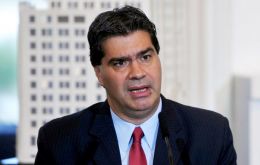
Argentina's Cabinet Chief Jorge Capitanich on Monday responded to Uruguay’s President José “Pepe” Mujica, who accused Argentina of “forgetting about integration” when things go right for the country, saying the statement was “unfair” given Argentina’s role in the “foundation” of regional integration.
-
Tuesday, February 17th 2015 - 19:30 UTC
“EU tired of waiting” for Mercosur to sign a trade agreement; Paraguay a trusted partner
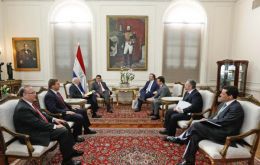
The European Union is tired of waiting for Mercosur to sign a free trade agreement, according to a delegation of Euro members of Parliament visiting Paraguay, a country which they consider a trusted 'ally' in trying to establish closer links with Europe.
-
Tuesday, February 17th 2015 - 19:24 UTC
Mercosur intra-zone trade continues to slide; represents 14% for the block
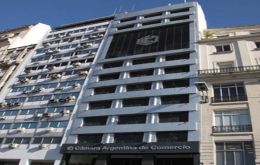
Trade among Mercosur partners contracted 12.3% during the third quarter of last year in annual terms, despite the fact overall trade of its members increased and despite the greater integration commitment of the group's original charter, points out the Argentine Chamber of Commerce
-
Tuesday, February 17th 2015 - 05:13 UTC
Brazil and Argentina agree accords signed with China will not affect Mercosur
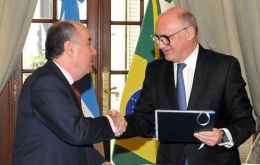
Brazilian foreign minister Mauro Vieira discarded that the recent agreements reached by Argentina with China can interfere with Mercosur, while his Argentine counterpart Hector Timerman said that the package of accords with Beijing will “actually benefit Mercosur”.
-
Thursday, February 12th 2015 - 20:57 UTC
Argentina and Brazil admit trade disagreements between Mercosur main partners
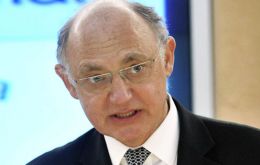
Argentina and Brazil failed to reach an agreement to help unlock the ongoing tension between the two key Mercosur allies over bilateral trade. Argentina's Hector Timerman and his counterpart Mauro Vieira met in Buenos Aires to try and ease Brazil’s growing concerns about restrictions on the flow of goods, but any decisions were pushed forward to an undetermined date.
-
Thursday, February 5th 2015 - 03:31 UTC
China to supply Argentina five “Malvinas Class” offshore patrol vessels
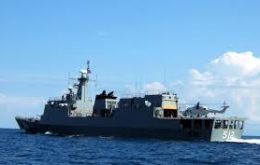
Argentine president Cristina Fernández de Kirchner is expected to sign agreements with China to increase military co-operation, including construction of new warships for the Argentine Navy, during her current state visit to Beijing, according to media reports and Jane's Defense Weekly.
-
Thursday, February 5th 2015 - 03:26 UTC
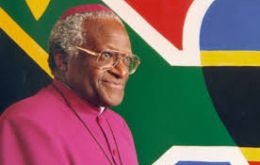
Uruguay with Pope's blessing to try new approach to human rights and disappeared persons issues
Uruguay will be attempting a new approach to the human rights and disappeared persons issues, a still unfinished legacy from the military dictatorship, (1973/1984) and the decade of armed sedition which preceded the collapse of the country's democracy. The announcement is expected later this month and basically means replacing “truth and justice” for “truth and memory”, following to a certain extent the South African experience.