MercoPress. South Atlantic News Agency
Tag: oil
-
Sunday, February 25th 2018 - 13:48 UTC
Why The Next Oil Boom Will Be Fueled By Blockchain

Big Oil is due for a disruption.
-
Wednesday, February 21st 2018 - 01:26 UTC
Petro, the Venezuelan cryptocurrency is online
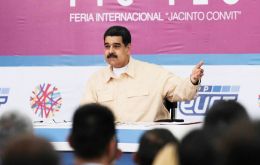
The pre-sale of Petro began early on Tuesday, the cryptocurrency proposed by the Venezuelan government in recent weeks and backed by the country's natural resources. According to experts, it is “ridiculous”, arguing that the creation of a new currency would aggravate the economic crisis in the Caribbean country.
-
Monday, February 5th 2018 - 09:08 UTC
Can The Shale Boom Avoid These Bottlenecks?
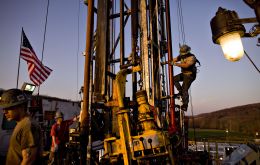
By Nick Cunningham of Oilprice.com <br />
<br />
Shale companies continue to drill at a frenzied pace, adding rigs and breaking U.S. oil production levels with each passing week. Yet, the oil production is becoming increasingly geographically concentrated. Not only is the Permian basin accounting for much of the new oil production in the U.S., but a relatively small number of counties within the Permian are home to most of that action. -
Tuesday, January 9th 2018 - 10:08 UTC
Sixth major oil find offshore Guyana at the Stabroek block
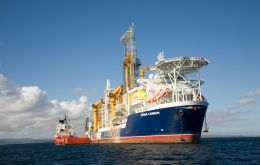
For the sixth time Exxon and partners at the Stabroek block offshore Guyana are celebrating another major find in northern South American waters. In effect, Ranger-1 exploration well, the sixth find since discovering Liza in 2015, hit approximately 70m of high-quality, oil-bearing carbonate reservoirs some 60mi northwest of the Liza development.
-
Wednesday, December 27th 2017 - 14:54 UTC
Gasoline, another kind of business in Venezuelan scarcity
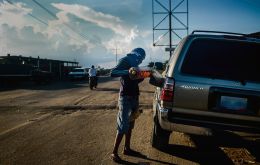
It is paradoxical how a country with the largest oil reserves in the world has a shortage of gasoline. Of course, Venezuela does not produce gasoline as such, but sells crude oil and imports gasoline, so with the sanctions imposed by various nations and the very crisis that PDVSA (State Company) suffers - which according to the unions works approximately 13% of its capacity- complicate the problem.
-
Wednesday, December 27th 2017 - 10:44 UTC
Brazil is the world's ninth largest producer of hydrocarbons
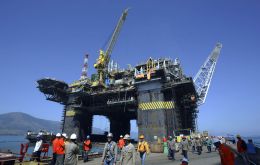
Brazil has produced 3.3 million barrels per day (b/d) of petroleum and other liquids so far in 2017, according to data through August, up from 3.2 million b/d in 2016, making it the ninth-largest producer of petroleum and other liquids in the world. Production of crude oil in Brazil increased in recent years as producers targeted large, offshore, pre-salt oil deposits. Brazil’s pre-salt oil production in 2016 reached a record 1.02 million b/d, surpassing the 2015 production level by 33%.
-
Saturday, December 23rd 2017 - 10:11 UTC
Petrobras 2018/22 business plan foresees US$ 74.5bn investments
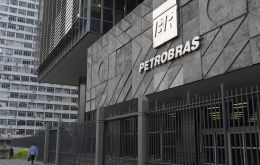
Petrobras' business and management plan for 2018 through 2022, approved by the Brazilian state-owned oil company's board of directors, foresees investments of US$ 74.5 billion, slightly higher than the US$ 74.1 billion projected in the previous 2017-2021 program.
-
Monday, December 18th 2017 - 13:35 UTC
Russia again becomes main supplier of oil for Cuban refinery
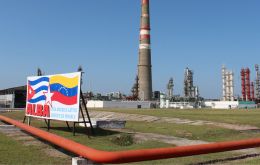
Venezuela has pulled out of a partnership with Cuba in its Cienfuegos oil refinery and the Caribbean island has taken full ownership of the plant, Cuban state media said. Venezuela is grappling with an economic crisis that already forced it to slash cheap oil shipments to Cuba, which has had a knock-on effect on the island’s ailing economy.
-
Wednesday, September 28th 2016 - 12:26 UTC
Iran-Saudi Arabia can't agree on limiting oil supply: “maybe in November”

Iran rejected on Tuesday an offer from Saudi Arabia to limit its oil output in exchange for Riyadh cutting supply, dashing market hopes the two major OPEC producers would find a compromise this week to help ease a global glut of crude.
-
Tuesday, September 6th 2016 - 19:36 UTC
Cuba looking for new oil supplier and begins implementing social security tax

President Raul Castro has asked Russia to consider beginning to supply Cuba with oil. Before the Soviet Union’s disintegration in 1991, the ex URSS was Cuba’s main supplier under favorable trade terms. Russia's official news network revealed the news, allegedly in a direct request from Castro to president Vladimir Putin.