MercoPress. South Atlantic News Agency
Economy
-
Monday, March 2nd 2015 - 06:17 UTC
Argentina's economic activity up 0.6% in December; industrial production down in January

Argentina's economic activity index, EMAE, increased 0.6% in December 2014, compared to the same month of 2013, according to the country's Indec stats office latest release. This marks the third consecutive monthly growth, after previous negative results.
-
Monday, March 2nd 2015 - 05:58 UTC
US economy slowdowns in last quarter, but for Wall Street it remains strong
The slowdown in the US economy at the end of last year was more pronounced than previously thought, official figures have shown. The world's largest economy grew at an annual pace of 2.2% between October and December, against a previous estimate of 2.6%, the Commerce Department said.
-
Monday, March 2nd 2015 - 05:22 UTC
Argentine bond prices going up “as the less time you have left in office”

Joseph Cotterill, the Financial Times journalist who was quoted by Argentine President Cristina Fernández during her Congress address as proof the country has recovered financially, responded critically to the Head of State.
-
Sunday, March 1st 2015 - 22:03 UTC
Brazil consumers' power bills increase an average 23.4% as of next Monday

Brazil's utilities were granted an average special rate hike of 23.4% to cover the costs of a energy subsidy program that the government of President Dilma Rousseff has decided to stop funding directly, the country's electrical energy system regulator said on Friday, as reported by Folha de Sao Paulo.
-
Saturday, February 28th 2015 - 07:28 UTC
Reshuffle in UK's Standard Chartered leadership; Bill Winters next CEO

Britain's Standard Chartered announced on Thursday the exit of its top two bosses in a radical management reshuffle, as the Asia-focused bank battles to transform its fortunes.
-
Saturday, February 28th 2015 - 07:14 UTC
China has become Latin America's leading banker: 22bn dollars in 2014
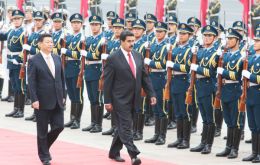
Loans by China's state-owned banks to Latin American countries rose by 71% to 22bn dollars in 2014, according to estimates published by the China-Latin America Finance Database. The figure is the second largest on record for Chinese lending in Latin America, according to the report.
-
Friday, February 27th 2015 - 08:22 UTC
Brazilian hard line unions win conflict and beat moderates in elections

Workers at a General Motors Co car factory in Brazil ended a six-day strike on Thursday after the company dropped plans to lay off 800 employees, the union said, ending the latest labor standoff in the troubled Brazilian auto industry.
-
Friday, February 27th 2015 - 08:14 UTC
Striking Brazilian truckers will be fined for roadblocks, warns government

The Brazilian government will start fining truckers as a strike in its ninth day threatens Latin America’s largest economy with food and fuel shortages. According to a report from Folha de Sao Paulo, the police will fine drivers who block highways as much as 10,000 Reais (3,470 dollars) per hour, Justice Minister Jose Eduardo Cardozo told reporters in Brasilia.
-
Friday, February 27th 2015 - 05:46 UTC
Argentine Congress approves 'strategic integral alliance' agreements with China

Despite the strong questioning from the opposition, the manufacturers' lobby and many unions, the Argentine ruling coalition mustered sufficient votes in the Lower House to pass the controversial package of cooperation, economic and investment agreements between Argentina and China.
-
Thursday, February 26th 2015 - 04:14 UTC
Brazilian lawmaker wants closer ties with 'Falklands' and even considers 'a friendship forum'

Brazilian federal Deputy for the southern state of Santa Catarina Celso Maldaner who last week visited the Falkland Islands said he wants to 'influence and push' for a commercial opening of Brazil with the Islands, since he believes there is great potential for making business particularly regarding fisheries and tourism.