MercoPress. South Atlantic News Agency
Economy
-
Thursday, February 12th 2015 - 06:02 UTC
Holdouts open new front in dispute with Argentina: officials dramatic increase in their personal wealth

US holders of defaulted Argentine bonds have stepped up their campaign for full repayment of their loans by detailing how 14 senior Argentine officials experienced “dramatic and often unexplained increases” in their personal wealth during service in the Kirchner administrations.
-
Thursday, February 12th 2015 - 05:34 UTC
UK's Customs request information on Argentina's criminal case against HSBC
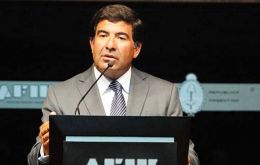
Britain's HM Revenue and Customs (HMRC) department has requested Argentina’s AFIP tax bureau information on the criminal report filed in Buenos Aires against HSBC on allegations the bank helped more than 4,000 clients to evade taxes by stashing their money in secret Swiss bank accounts.
-
Wednesday, February 11th 2015 - 06:39 UTC
English Premier League TV rights break all records: £ 4.2 billion

Pay-TV group Sky has agreed to pay 4.2 billion pounds (6.4 billion dollars) to show 126 live English Premier League matches a season from 2016 to 2019, pressured by fierce rival BT to smash analysts' forecasts and secure the best games.
-
Wednesday, February 11th 2015 - 06:29 UTC
Netflix offers internet video service in Havana, but very few Cubans can afford 8 dollars

Netflix began selling its Internet video service in Cuba on Monday in what appears to be a largely symbolic move driven by the recent loosening of US restrictions on doing business with the Communist-run Island.
-
Tuesday, February 10th 2015 - 23:58 UTC
Venezuela announces yet another concealed devaluation, effective Wednesday
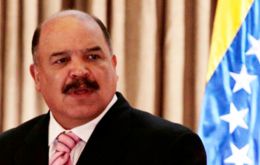
Venezuela's vice president for economic policy announced Tuesday that the government will inaugurate this week a three-tiered exchange-rate regime which includes a “totally free” market open to both individuals and companies.
-
Tuesday, February 10th 2015 - 05:45 UTC
S&P downgrades Venezuela long term credit rating to CCC
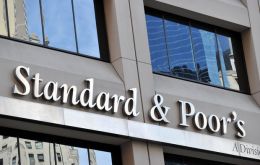
Ratings agency Standard and Poor's on Monday downgraded Venezuelan long-term credit ratings to CCC from CCC+, citing falling oil prices and the government's failure to address economic distortions.
-
Tuesday, February 10th 2015 - 05:35 UTC
Falklands pensions' scheme receives top qualification from UK HM Revenue & Customs

The Falklands Islands Pensions Board is pleased to announce that HM Revenue & Customs in the United Kingdom has approved the Falkland Islands Pensions Scheme (FIPS) as a Qualifying Recognized Overseas Pensions Scheme (QROPS).
-
Tuesday, February 10th 2015 - 03:51 UTC
Falkland Islands Holdings David Hudd steps down; new chairman is Edmund Rowland

Falkland Islands Holdings chairman David Hudd has resigned from the board with immediate effect and been succeeded by non-executive deputy chairman Edmund Rowland, it was reported on Monday. John Foster continues as group managing director.
-
Monday, February 9th 2015 - 17:34 UTC
Food, housing and transportation prices accelerate January inflation in Brazil

Brazil's consumer price inflation accelerated in January, putting the 12-month rate well above the central bank's tolerance band and at the highest level since September 2011, underscoring one of the main challenges facing Latin America's largest economy in the year ahead.
-
Monday, February 9th 2015 - 12:46 UTC
Bank of England unanimously leaves interest rates at 0.5% for the 71st month

Bank of England has held interest rates at 0.5% for the 71st month in a row and kept its stimulus programme of quantitative easing (QE) unchanged. Most forecasters now think interest rates will not rise before next year.

